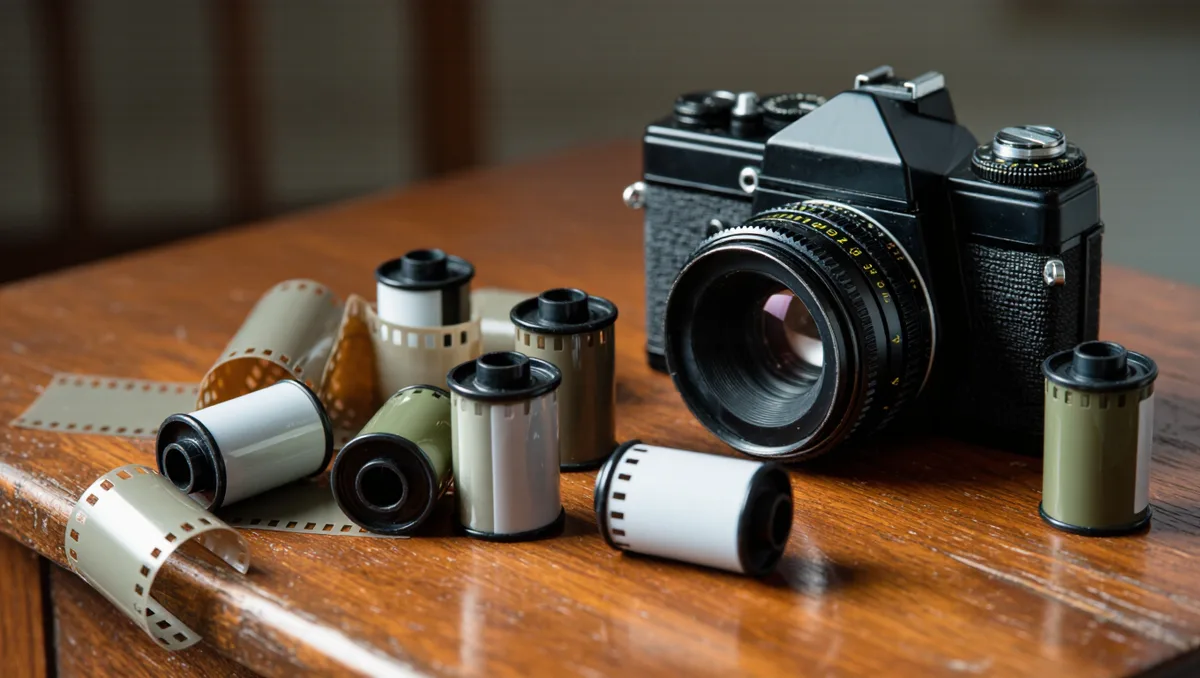
Expired film is worth whatever its storage history, emulsion type and processability say it is worth. Dwayne's Photo in Parsons, Kansas ran the world's last Kodachrome line until December 30, 2010, and every expired Kodachrome roll since has traded as a collectible, not a shootable stock. Most expired film deserves neither premium nor fear — it deserves a test.
What does age actually do to film?
Two things, at different speeds. Black and white film is essentially silver suspended in gelatin, and silver is patient: cold-stored monochrome from the 1970s can still produce clean, printable negatives. Color film carries organic dyes that decay unevenly — typically the cyan layer goes first, shifting palettes toward yellow-pink and adding fog — and its speed sags as the years pass. Heat and humidity accelerate everything, which is why an attic roll from 1998 and a freezer roll from 1998 are barely the same product.
The Library of Congress guidance on caring for photographic materials makes the same point from the archivist's side: cool, dry, stable storage is what separates preservation from slow loss. The market for expired film is, at bottom, a market for storage gossip.
What is the one-stop-per-decade rule?
It is a starting guess, not physics: rate color negative film about one stop slower for every decade since expiry, so a 400-speed stock from 2006 gets shot at EI 200, with a bias toward overexposure because negative film forgives excess light and punishes shortage. Test one roll before committing to a brick of anything. Slide film gets less grace — its narrower latitude means decay shows faster — and expired black and white often needs no compensation at all if it lived somewhere reasonable.
What does the market actually pay?
| Category | What drives the price | Sensible range vs fresh stock |
|---|---|---|
| Cold-stored discontinued color, boxed | Provenance, rarity of emulsion | Above fresh, sometimes multiples |
| Unknown-storage color, loose rolls | Gamble value only | Below the cheapest fresh roll |
| Expired black and white, any storage | Chemistry is stable | Roughly budget-fresh prices |
| Unprocessable collector stocks, e.g. Kodachrome | Object value, not image value | Whatever collectors agree on |
The premiums cluster around dead emulsions with followings. When Fujifilm discontinued Pro 400H in February 2021, well-kept frozen stock moved quickly to prices far above its last list price, because the alternative — buying it new — had stopped existing. Fujifilm's instant packfilm FP-100C, discontinued in 2016, repeats the pattern: boxes that cost little new now trade as small luxuries. The premium is not for the pictures the film will take; it is for the pictures nothing else will take.
Where does expired stock actually come from? Mostly estates, closing pharmacies, studio clear-outs and distributors liquidating slow inventory, which is why big lots appear in waves rather than steadily. Dealers who buy well test a sample roll, grade the lot honestly and price it accordingly; the shooters who profit long-term buy from those dealers, or directly from photographers who froze stock decades ago and can say so. The single worst purchase in this trade is a beautiful box with no story attached.
Why do shooters pay more for old film than fresh?
Three honest reasons and one silly one. Honest: a dead emulsion's look cannot be recreated by current stocks; some expired stock is genuinely cold-stored treasure; and experimenting with decayed color is a legitimate aesthetic, the same logic that drives people to buy Lensbaby optics and redscale. The silly one is the assumption that expired automatically means character — fog, base stain and shifted dyes are only charming when you chose them.
How do you buy expired film without being burned?
- Ask one question first: how was it stored? A seller who cannot answer is selling mystery, and mystery should be priced like the cheapest fresh roll on the shelf.
- Prefer black and white when the storage answer is vague; silver keeps far better than dyes.
- Buy one roll, not the lot, and develop it before committing — a single test is the cheapest insurance in photography.
- Check the physical signs: hardened tape, rust on cassettes, or a vinegar smell from old packaging all predict disappointment.
- Cap your price at fresh-stock equivalents unless provenance is documented; nostalgia does not develop film.
Is expired film a bargain or a trap?
Both, and the difference is entirely knowable in advance. As a bargain it is unmatched: bulk expired monochrome is the cheapest legitimate way to shoot a lot of frames and learn. As a trap it is equally efficient — premium-priced color with unknown storage is where money goes to fog. The trade's real product is information, and the shooters who do best in it are not the ones chasing legendary emulsions but the ones who know what a freezer smells like. Respect the storage, test the roll, and expired film becomes a tool; skip both and you are buying expired hope.