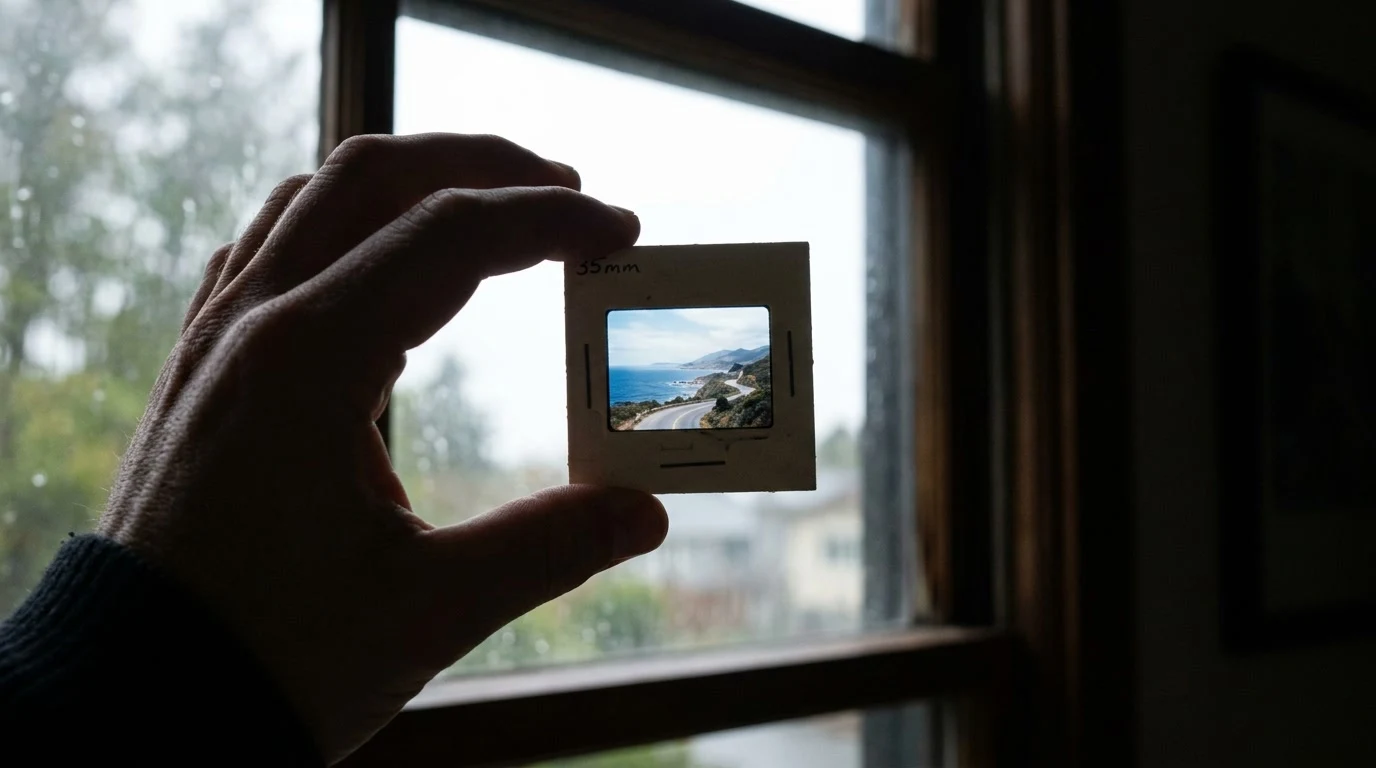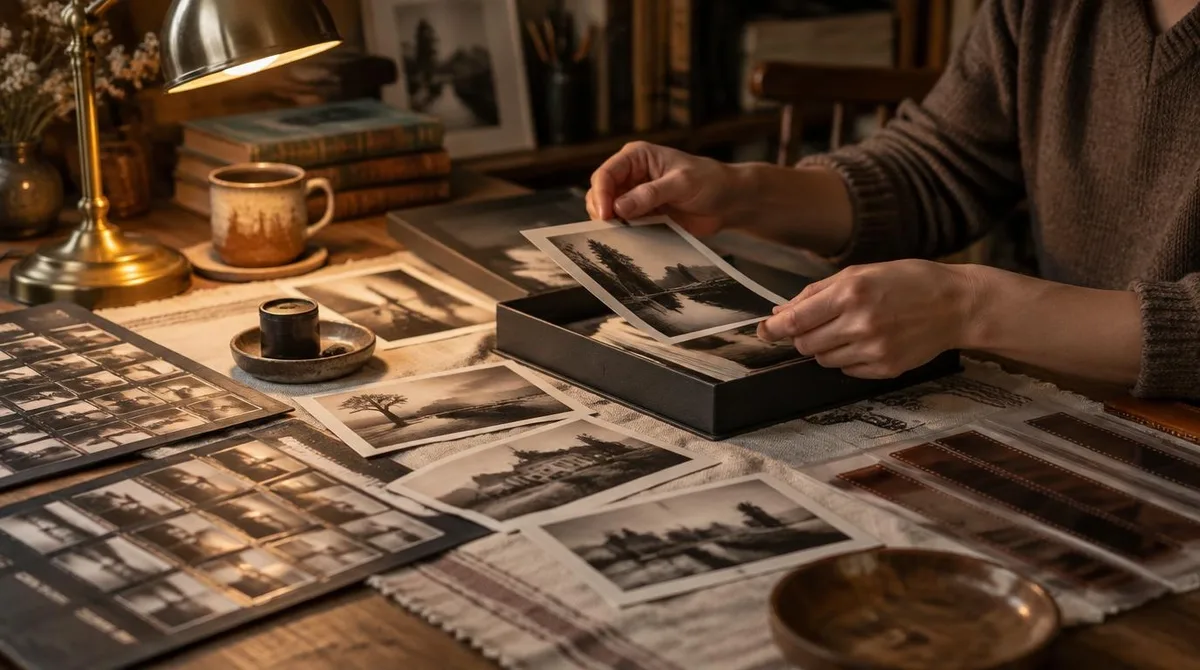
A portfolio gets you work by making one argument well. Pick a single kind of picture you can shoot better than most people, show twelve to twenty of them, and cut everything that argues a different point. Editors reading a submitted portfolio decide quickly; a tight, focused set beats a broad, uneven one every time.
The most common mistake is volume. A portfolio is not an archive of everything you have ever shot. It is a short, confident statement about what you do. Film shooters have an extra wrinkle: the grain, the halation, the color shift of a given stock are part of the argument, so the printing and scanning choices matter as much as the frames themselves. We covered a connected angle in What Keeps a Film Developing Lab Alive: The Real Economics of a Niche Business.
What does an editor actually look for first?
Consistency, then strength. An editor flipping through a submission wants to see that frame five looks like it belongs next to frame one. That tells them you shoot with intent rather than by accident. After consistency comes the single strongest image: if the best picture in the set is only average, the set fails, no matter how tidy it is. Readers following this should also see Kodachrome Only Became Kodachrome After It Left the Camera.
Editors also look for whether you can deliver. A portfolio full of beautiful frames says you got lucky once. A portfolio with a coherent body of work says you can do it again on assignment. That is the real question behind every submission, and it is answered by repetition, not by one heroic shot.
How many images should a portfolio hold?
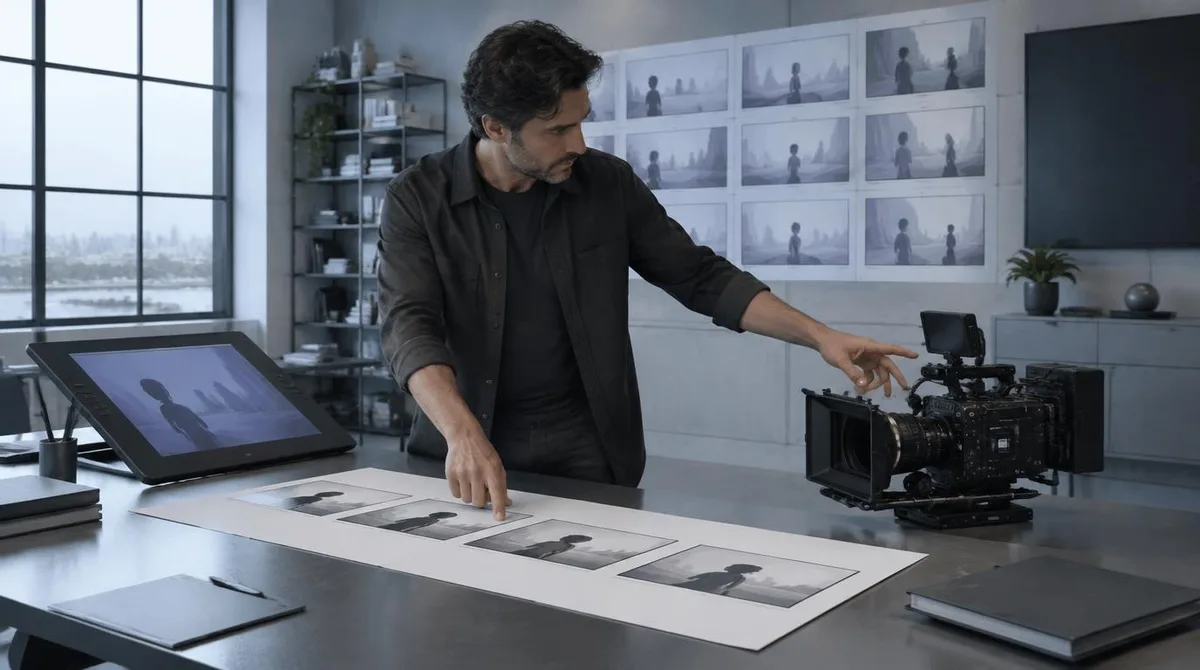
Fewer than you want. Twenty is a sensible ceiling for a general submission; twelve to fifteen is often stronger. Every image past the point where the argument is made dilutes it. The discipline is subtraction: lay out everything you like, then remove images until removing one more would weaken the set.
Order matters almost as much as selection. Open with your second-best image, not your best. The strongest frame lands harder in the middle, where the viewer is already committed, than as an opener that everything after can only disappoint.
Should a film portfolio show the film's character?
Yes, deliberately. If you shoot black-and-white, the tonal range you print for is part of your voice. If you shoot color negative, the stock's palette is a signature, not an accident. What you should not do is mix stocks and processes so freely that the set reads as a lab test. One look, carried through, reads as a photographer. Five looks read as a hobbyist sampling.
That said, the work should not be about the film. A portfolio where every caption is a stock name is telling editors what you buy, not what you see. The film serves the picture. Our analysis of what separates working film photographers from enthusiasts comes down to exactly this: the gear disappears into the images.
What belongs in a caption and contact block?
Keep captions plain: subject, place, and the stock and camera if the client would care. A fashion client wants to know you shot the look on medium format; a wedding client mostly wants to see the pictures. Do not over-annotate. The contact block needs a working email, a phone number, and a statement of what you are available for. Editors abandon submissions they cannot act on.
Practical steps worth taking before you send anything:
- Print the set, or view it on the best screen you own, in sequence. Weak sequencing hides on a phone.
- Ask one person whose judgment you trust to name the weakest image. Remove it. Repeat once.
- Match the portfolio to the pitch. A wedding submission and an editorial submission should not be the same PDF.
- State your turnaround honestly. Film processing takes time, and clients plan around that.
How does a portfolio get seen at all?
Submission guidelines exist for a reason, and following them is itself evidence you can follow a brief. Send what was asked, in the format asked, to the person who commissions it. A short note explaining why your work fits that publication beats a long biography. Editors remember the photographer who made their job easy.
Rejection is data, not verdict. A portfolio that gets no replies is telling you something about the set or the targets; a portfolio that gets replies but no work is telling you something about the follow-up. Adjust one variable at a time so you can tell which.
What this means for film shooters
The evidence for what works is unglamorous: a focused set, sequenced with care, delivered the way the client asked. Film gives you a look nobody can fake with a filter, and that is a genuine advantage, but only when the pictures underneath it hold up. Build the argument, cut the rest, and keep the shoebox of rejects — it is proof you are editing, which is the skill the portfolio is actually demonstrating.