To cover a story, in the dictionary's sense of the word, is to report on it — and that is what this one sets out to do. Not a single named shoot, but the shape of a working day: what editorial fashion photography looks like when it is shot entirely on medium format film, from the first roll loaded to the last frame logged for the lab.
The short answer to why anyone still does it: medium format film gives editorial work a look that is hard to fake. Bigger negatives mean finer grain, smoother tonal shifts, and a shallower focus falloff that flatters skin and fabric. The trade is speed. A 120 roll gives you twelve frames on a 6x6 camera, sixteen on some others, and every one of them costs money to develop and scan. That cost is not a bug in the workflow. It is the workflow.
What follows is a reconstruction of a typical studio day, built from the documented practices of the craft rather than any one photographer's account. Think of it as the anatomy of an cover story shoot on film — the parts that stay the same no matter who is holding the camera.
Why medium format for editorial fashion?
The first reason is practical, not romantic. Editorial images get printed large and reproduced across spreads, and a 6x6 or 6x7 negative holds detail that survives that enlargement. A 35mm frame is roughly one-and-a-half by one inch; a 6x7 frame is about two-and-a-quarter by two-and-three-quarter inches. That is several times the film area, and film area is where the smoothness comes from. This connects to our earlier piece, How to Push Tri-X Two Stops Without Ruining It.
The second reason is pace. Twelve exposures change how a set behaves. There is no burst shooting, no chimping a screen. The photographer composes, lights, and waits. Models settle into longer holds. Stylists make adjustments between frames instead of after them. Everyone on set knows the roll is finite, and that shared knowledge slows the room in a way many film shooters describe as the point of the whole exercise.
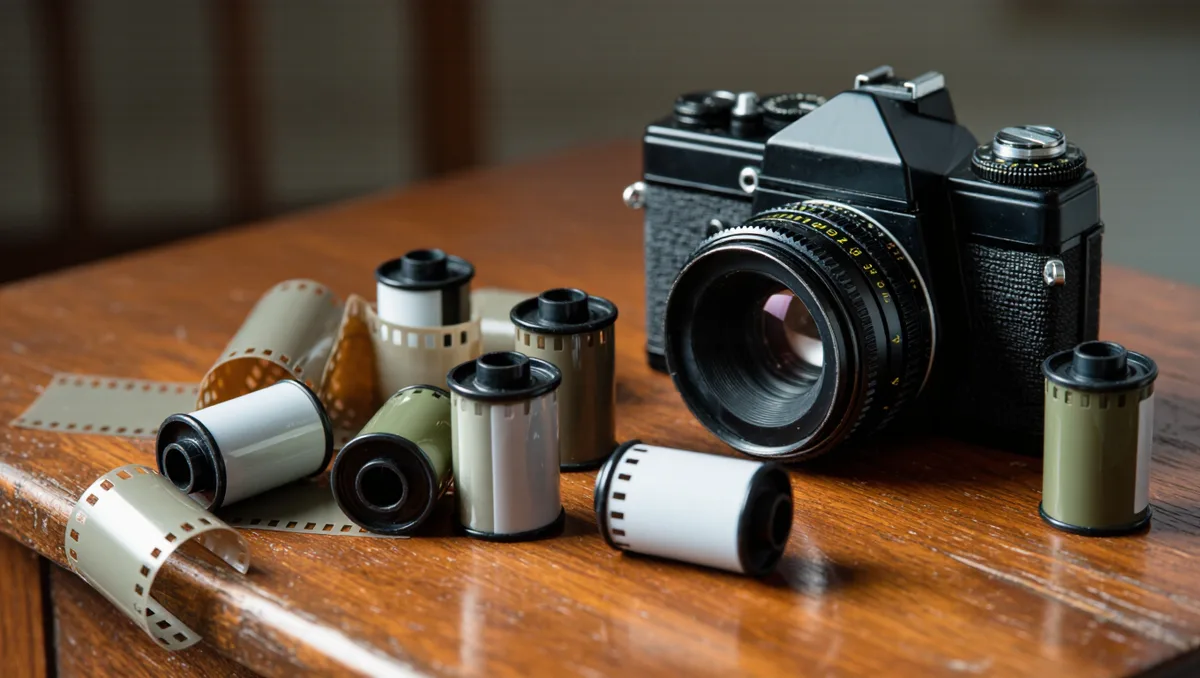
The third reason is the negative itself. A well-exposed medium format negative can be scanned at high resolution and printed or retouched later, which fits a hybrid editorial workflow: film on the capture side, digital on the post side. The cameras doing the capturing are often decades old, which brings its own considerations.
Morning: loading, testing, and the light check
A film editorial day starts before the talent arrives. Rolls come out of the fridge and sit at room temperature so condensation does not form on the emulsion when the foil comes off. The photographer loads backups, checks the light meter's batteries, and runs the camera through a blank roll or a few dry frames to confirm winding, focus, and the film back are behaving. A jammed back discovered mid-look is the classic film-set disaster, so it gets checked first.
Then the lighting. Studio strobes on film work much as they do for digital, with one difference: there is no instant preview. Many film shooters use a digital camera or a Polaroid-style instant back to check the light's shape and ratio, then commit to film once the setup is locked. The meter reading, the test frame, and the photographer's notes on each setup become the record that makes the developed roll make sense later.
The shoot: twelve frames per look
On set, the arithmetic shapes everything. A roll of 120 film on a 6x6 body is twelve frames. A typical editorial look might get one to two rolls, which means the photographer is budgeting expressions the way a digital shooter never does. The rhythm goes: direct, adjust, expose, wind, repeat — with a roll change as a built-in pause that the whole set feels.
Stock choice follows the story. A soft, warm beauty story might call for a color negative stock with wide exposure latitude, the kind of film that survives a slightly generous meter reading; our guide to Portra 400 as the most forgiving color film covers that territory in detail. A harder, graphic editorial might go black and white, where the option to push the stock opens up — see our walkthrough of pushing Tri-X two stops for what that decision costs and buys. Readers following this should also see Portra 400 Is the Most Forgiving Color Film You Can Buy — That's the Whole Pitch.
Polaroid or instant test frames earn their keep here. Fashion is about specific fabric behavior — how silk catches a hard key, how velvet swallows it — and a one-minute test print answers those questions before the film does, days later.
What this means for the schedule
Film builds dead time into the day, and a well-run crew plans around it. Roll changes become styling checkpoints. Between looks, the assistant logs every roll: stock, ISO rating, the frames exposed, and any notes on the lighting. That log is not bureaucracy. When the scans come back, it is the only map of what is on each frame.
The bigger cost is the wait after the shoot. The film goes to a lab, development takes a day or more depending on the process, and scanning adds more. An editorial that a digital team would deliver in 48 hours becomes a week-long pipeline on film. Publications that commission film work know this and schedule for it; the ones that do not learn quickly.
There is a cost conversation too, and it is honest to name it. Film prices have risen notably in recent years, and a medium format editorial can burn through rolls fast. Prices move often, so any figure in this paragraph would age badly — but the structural point holds: on film, every frame has a visible price tag, and that visibility is part of what disciplines the shooting.
Evening: the roll log and the handoff
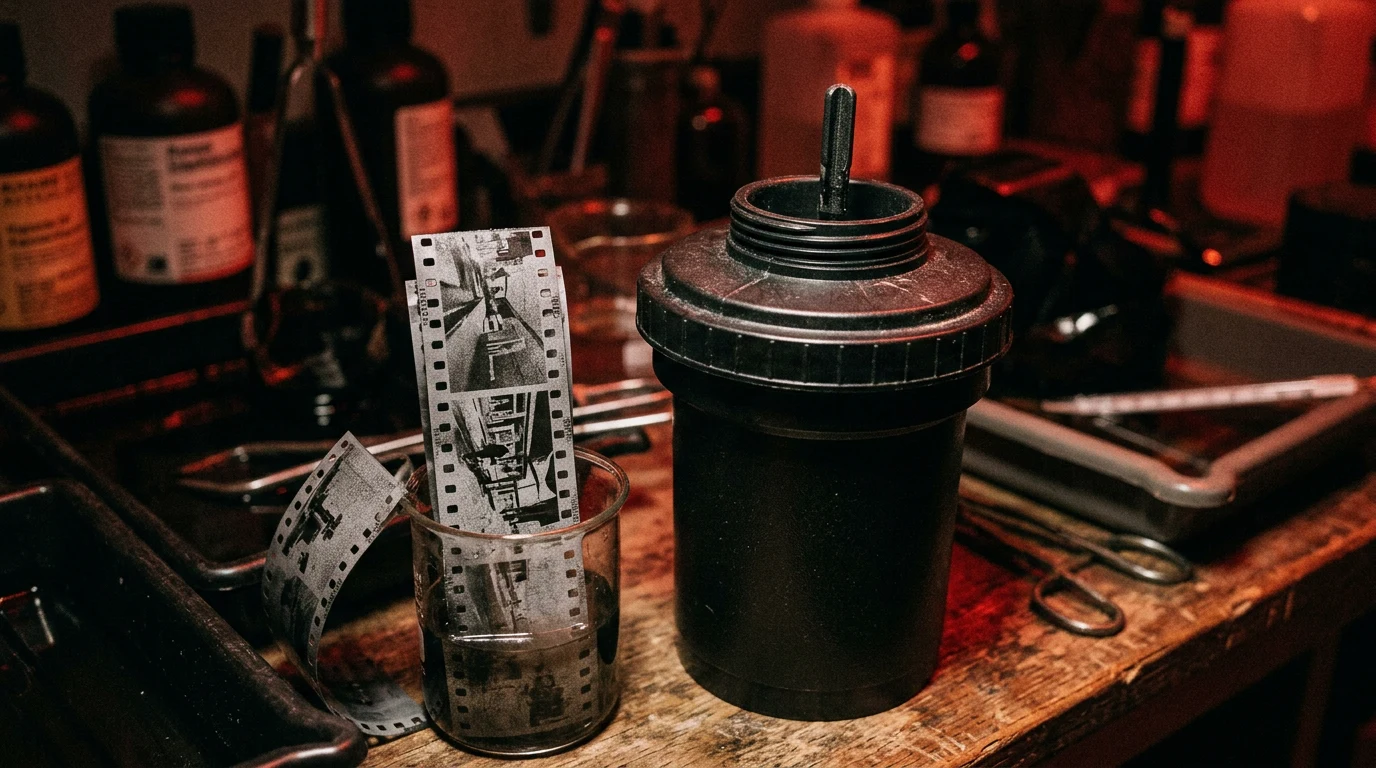
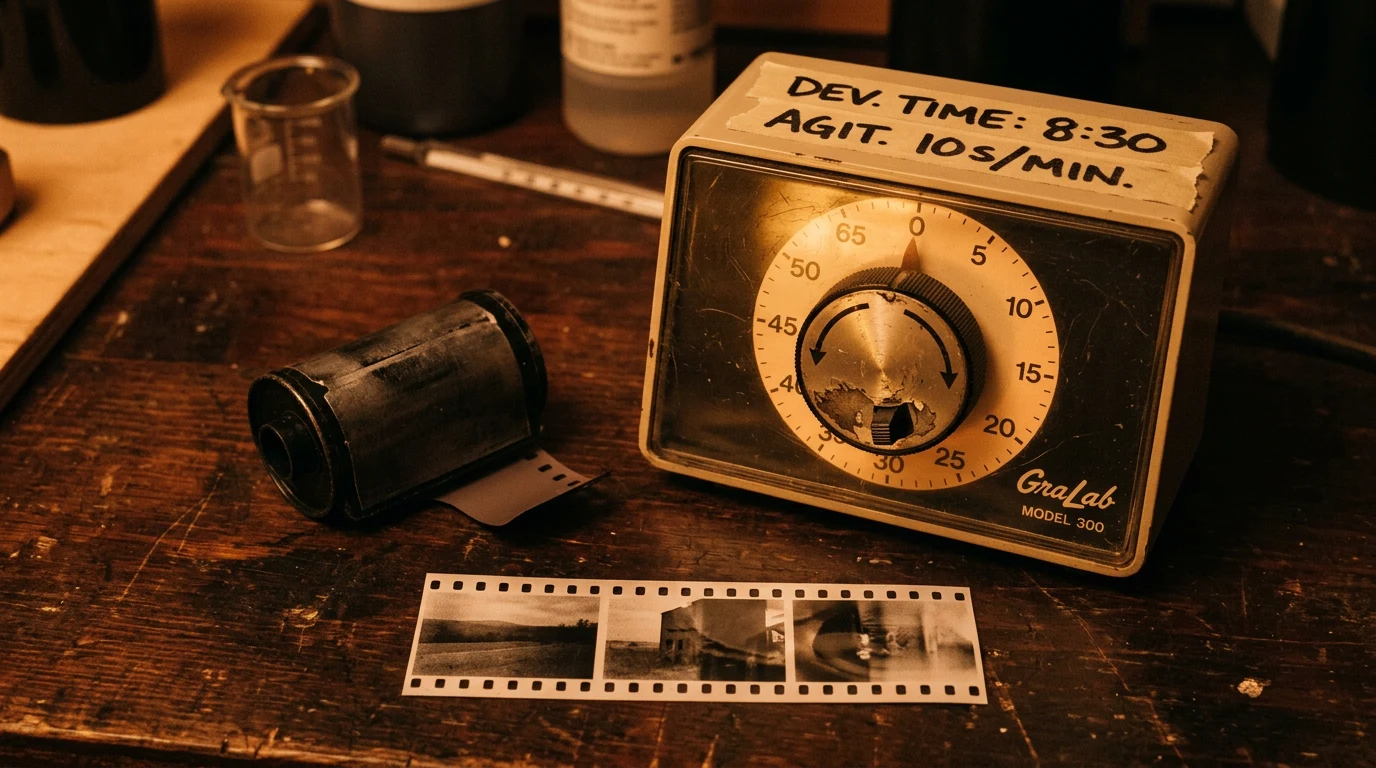
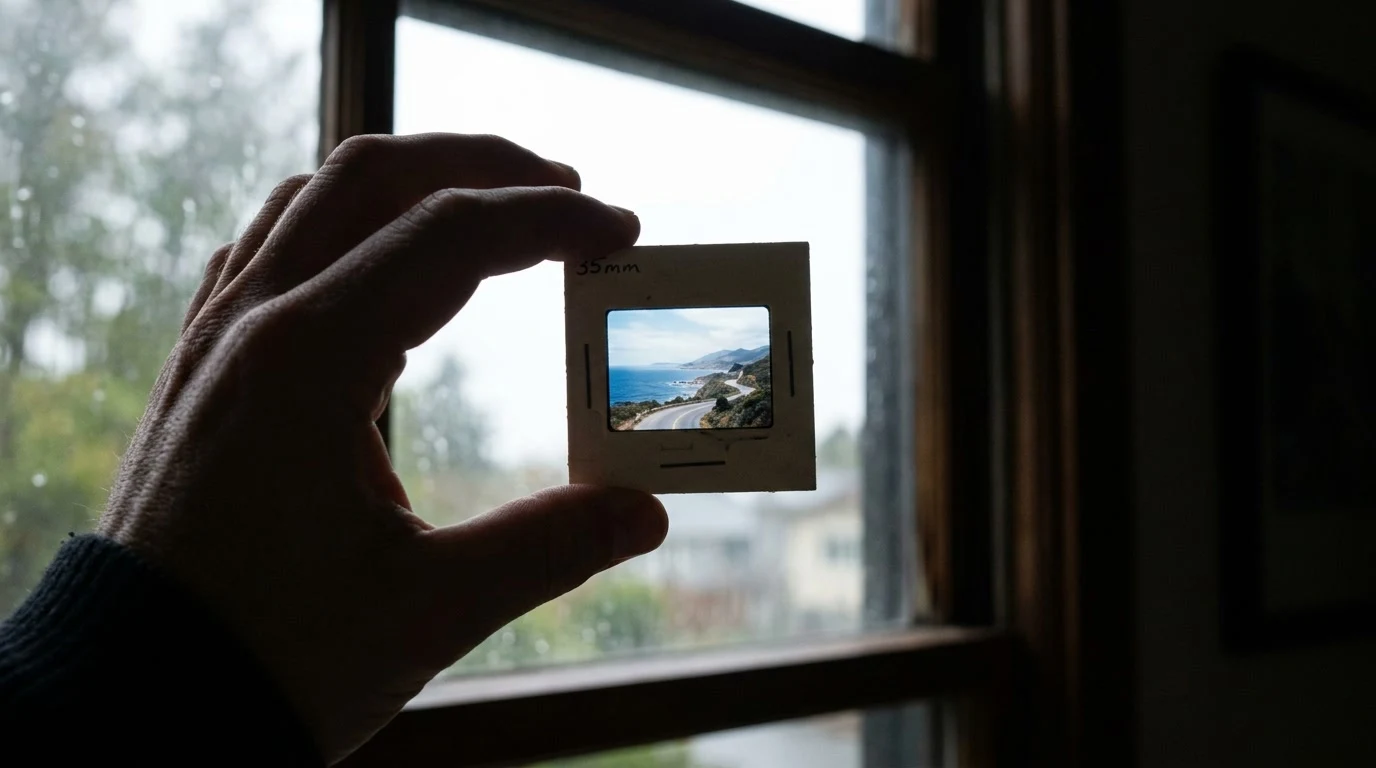
After wrap, the film goes into light-tight sleeves, labeled by roll and look, and heads to the lab with the processing notes. Color negative film is developed in the C-41 process, black and white in the stock's recommended chemistry, and slide film in E-6 — each with its own timing and tolerance. The lab's scan settings matter almost as much as the exposure: a flat scan preserves the negative's latitude for retouching, while a contrasty scan bakes in decisions the retoucher never gets to make.
The contact sheets, or their digital equivalent — the scan grid — arrive last, and they are where the editorial becomes an edit. Twelve frames at a time, the selection process is slower and, many film shooters argue, better. Fewer frames means each one was chosen on purpose.
Our analysis: the constraint is the craft
Strip away the nostalgia and the case for medium format editorial work is a case about constraints. Twelve frames force intention. No instant preview forces trust in the meter and the test frame. The lab delay forces planning. None of this produces a better photograph automatically — a poorly seen frame on film is still a poorly seen frame, just an expensive one. But the constraints remove the habits that let a photographer stop seeing, and that is why the format keeps its place in fashion editorial decades after digital made it optional.
What remains unknown, for any given shoot, is the one thing this format always withholds: whether the rolls came back the way everyone hoped. That answer arrives at the lab, one day at a time, twelve frames at a time.