A photographic print sells from a few hundred dollars at an emerging artist's gallery to $12.4 million — the auction record for a photograph, set when Man Ray's 'Le Violon d'Ingres' sold at Christie's in May 2022. That span is decided less by the image than by three things any buyer can learn: edition, print date and provenance.
The art market rewards knowledge and punishes improvisation, and nothing here substitutes for a gallery's or an advisor's due diligence.
What are you actually buying?
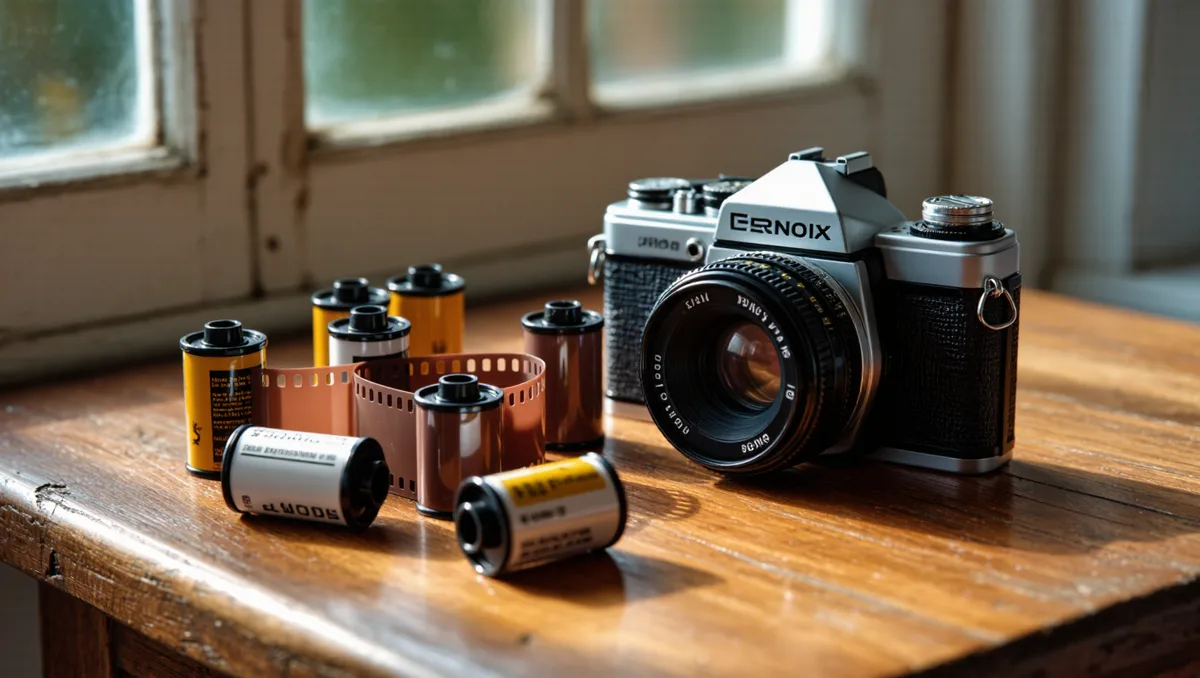
A photograph is not an image — it is an object, and the object's material is the first price signal. Gelatin silver prints dominate the black-and-white canon: fiber paper, developed-out image, capable of extraordinary tonal range and, in good hands, a century of stability. Chromogenic (C-prints and their vintage 'Type-C' ancestors) carry color photography from the 1960s onward. Platinum and palladium prints, prized for their matte depth, sit at the premium end; photogravure and other processes have their own collectors. For buyers from the film world, process is a familiar language: a darkroom print carries the trace of a hand and a negative, and the market prices exactly that trace — which is why process mislabeling is one of its commonest sins.
How do editions work?
Contemporary photographers typically print in numbered editions of 3 to 25, signed and dated; artist's proofs and printer's proofs sit outside but relate to the edition, and honest dealers disclose them. The older the work, the murkier the count: mid-century photographers often printed on demand over decades, so rarity is argued from surviving examples rather than promised numbers. Estate prints — posthumous editions pulled from the negative under the estate's stamp — are legal, often beautiful, and priced well below lifetime prints for a simple reason: the photographer never saw them. The vintage designation is the market's premium tier, meaning a print made close to the negative's date, ideally by the photographer's own hand; vintage prints of major images routinely trade at multiples of later examples of the same negative.
What is provenance and why does it move price?
Provenance is the documented chain of custody, and it is the difference between two identical-looking prints. The evidence stack: the photographer's signature and date; studio, estate or agency stamps on the verso; gallery invoices; exhibition history; and inclusion in a catalog raisonné where one exists. The Library of Congress Prints and Photographs Division maintains reference resources collectors use to check stamps and markings, and serious buyers compare verso marks against documented examples before trusting any signature. Condition completes the file: silver mirroring, fading and previous mounting all discount, and a conservator's report is cheap insurance at five figures. Fake and misattributed prints circulate at every level; provenance is the market's immune system.
What does a print cost?
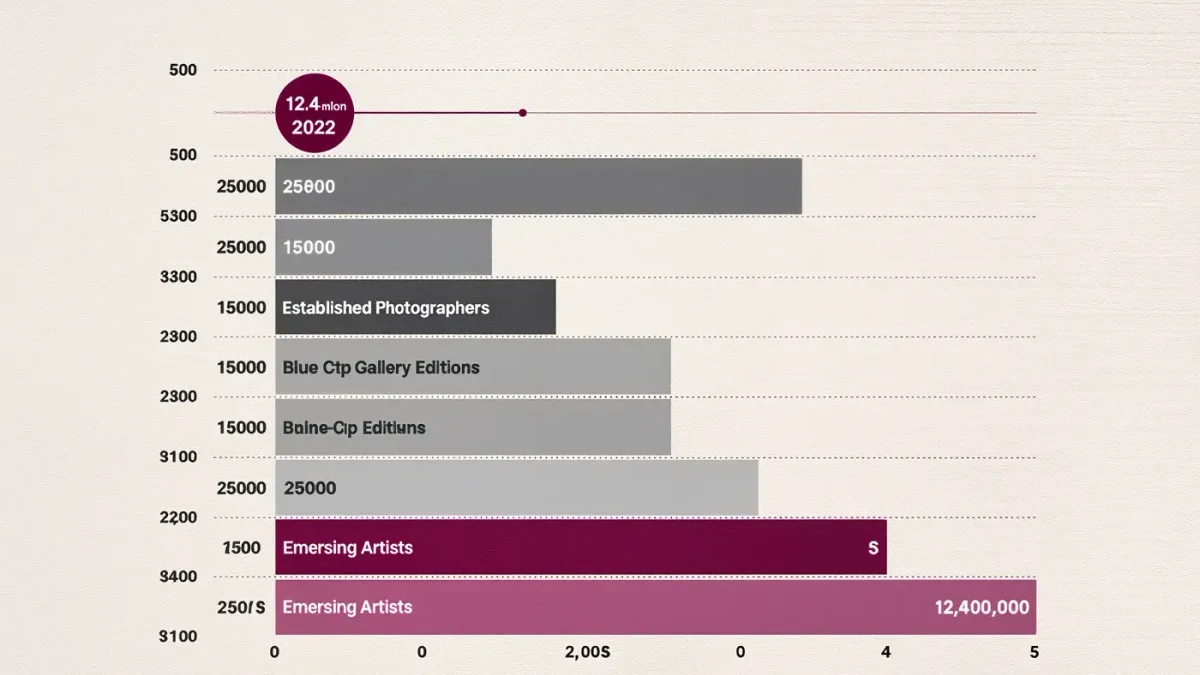
Rounded market tiers as of 2025:
| Tier | Typical range |
|---|---|
| Emerging artists, galleries and art fairs | $500-2,500 |
| Established photographers, primary market | $2,500-15,000 |
| Blue-chip gallery editions | $25,000-250,000+ |
| Museum-grade vintage and auction trophies | $500,000 upward, records at eight figures |
The record book is short and famous: Man Ray's $12.4 million (May 2022) stands atop it, with Andreas Gursky's 'Rhein II' at $4.3 million (November 2011) as the modern milestone. Far more representative is the broad middle, where photographs change hands in four to six figures — and where auction buyers must add the buyer's premium, roughly a quarter at the major houses as of 2025, on top of the hammer.
How do the primary and secondary markets interact?
The two markets price the same objects through different logic, and misunderstanding that causes most beginner disappointment. Primary galleries price deliberately, with the artist's consent, and hold prices steady through slow patches — steadiness is the product. Auctions price instantly and emotionally: two bidders who want the last strong print of a deceased photographer can carry a result far above any gallery's arithmetic, while an ill-timed consignment of the same work can land soft. When auction results run hot, dealers reprice editions upward; when they run cold, galleries quietly negotiate. For the buyer, the practical rule is to never read a headline record as a price for anything else — records are for unique or near-unique objects, and almost everything else trades in the quieter tiers below.
Where do people buy, and can you resell?
Three doors. Primary galleries sell new work with the artist's pricing, the safest entry point and the only one where edition discipline is contractual. Photography fairs — the AIPAD-style specialist events — concentrate dozens of dealers for comparison shopping. Auctions offer depth and price discovery but add premiums, fees and, for consignors, seller's commissions. Resale is the honest weakness of photography as a 'market': liquidity is thin, most contemporary editions resell below retail, and the auction route favors established names. The durable consensus among dealers and collectors: buy the print you want to live with, from a source that documents it, at a price you would not resent if resale proved impossible.
For film photographers themselves, the market's structure is also an invitation. The same qualities collectors price — disciplined editions, honest dating, clean process labels, documented chains of custody — are available to any working darkroom printer from the very first print sold, and photographers who practice them from the start build the provenance their future market will run on. The $500 tier is where canons start.