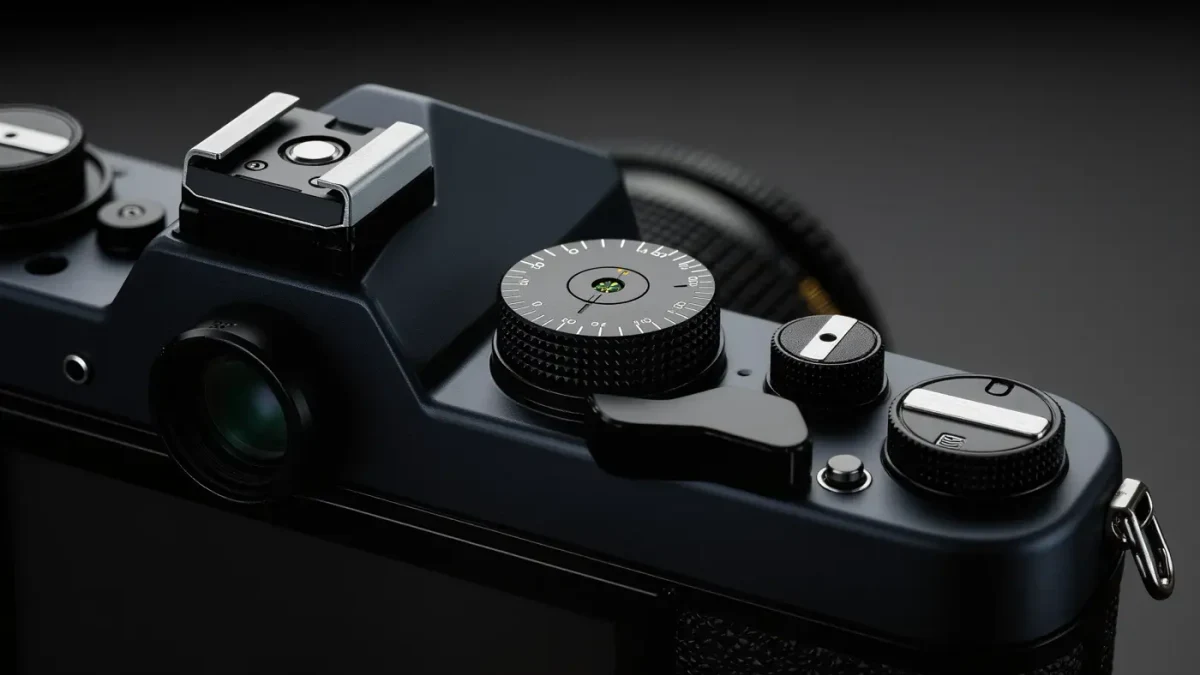
Mostly yes, with one large asterisk attached to age. This Canon AE-1 buying guide argues that a five-million-seller deserves caution as much as affection: glass is cheap, bodies are plentiful, and electronics from 1976 fail without warning. Canon's corporate history records more than five million AE-1 bodies produced between 1976 and 1984.
What is the Canon AE-1, and why did it sell so well?
Launched in 1976, the AE-1 was the first 35mm SLR built around an internal microprocessor, per Canon's own corporate history, and computerized production let Canon price it aggressively for people stepping up from rangefinders and fixed-lens compacts. The camera offers shutter-priority automation: you choose the speed, from 2 to 1/1000 on an electronically governed cloth shutter with 1/60 flash sync per the period specification sheet, and the camera picks the aperture. The FD mount opens a catalog of excellent manual-focus glass made from 1971 into the early 1990s.
That automation carried a trade the specification sheet never mentions: one 6-volt battery governs everything, and with a dead cell the AE-1 is a very good-looking object that cannot fire. The camera was built to a price in 1976, and forty-plus years later the price shows in the margins: simpler finder information, a basic center-weighted meter, and electronics designed before durability engineering matured.
The AE-1 was a camera for the family album and the student darkroom alike, and the sheer scale of that picture-making generation is visible in public archives such as the Prints and Photographs holdings of the Library of Congress. Millions of negatives from cameras like this one are still being scanned and cataloged.
What should you check before buying a used AE-1?
Because the AE-1 is common, there is no reason to accept a rough one. The used market rewards patience, and five specific checks separate the keepers from the shelf-fillers.
| Check | How to test | Why it matters |
|---|---|---|
| Light seals and mirror bumper | Open the back, press the foam strips with a gloved finger | Sticky, crumbling foam means light leaks and mirror slap; a cheap fix, but a discount lever |
| Shutter squeal | Fire the shutter and listen for a squeaky mirror cycle | The famous Canon squeal means dry lubricant in the mirror mechanism; early stage is harmless, late stage stalls the mirror |
| Shutter speeds | Film 1s and 1/1000 with a phone in slow-motion mode | Electronic shutters drift or die with aging capacitors |
| Meter and finder LEDs | Install a battery, half-press in light and dark | Dead or flickering LEDs mean circuit faults that are harder to fix than the shutter |
| Battery and film doors | Open and close both several times | Latch tabs fatigue with age, and loose doors cause film fogging |
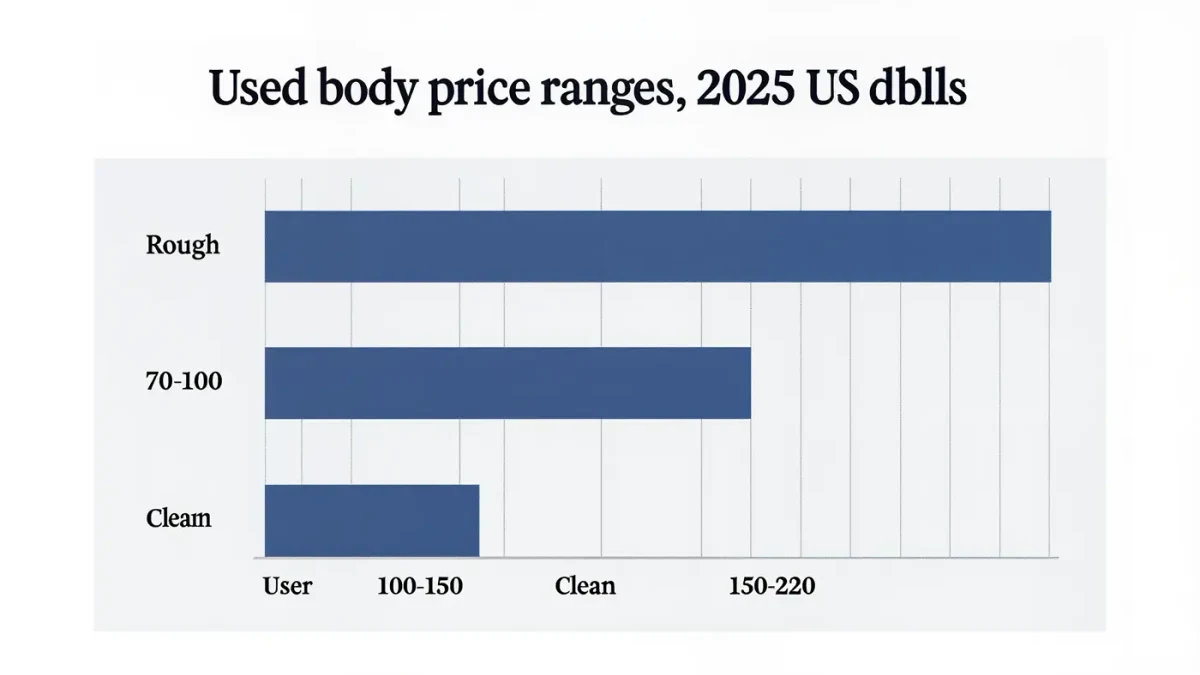
If everything passes, negotiate anyway: assume a $100-200 service in your total budget unless the seller documents a recent clean-lubricate-adjust, which as of 2025 is the going range at independent shops. The squeal in particular responds well to routine service when caught early, which is why it belongs in a checklist rather than on a list of fears.
Where does the AE-1 show its age?
Battery dependence is the big one: there is no mechanical backup speed at all, so carry a spare 4SR44-type cell everywhere the camera goes. Flash sync of 1/60 limits fill-flash work outdoors. The base AE-1 also lacks an exposure-compensation dial, a genuine annoyance for backlit scenes; the workaround is nudging the film-speed dial, which works but is clumsy.
The upside of five million bodies is parts. Donor cameras are everywhere, and technicians who know the AE-1 remain easy to find. Capacitors and flex circuits can be replaced, mirrors re-lubricated, seals renewed. This is a camera the repair ecosystem still understands, which is more than can be said for many of its contemporaries.
Who should buy one, and who should move along?
The AE-1 remains a sensible first film SLR: cheap to buy, cheap to feed with FD lenses, and simple enough to teach aperture and shutter control within a week. The 50mm f/1.8 that typically rides on it is sharp, and the 50mm f/1.4 costs only a little more. Choose it for budgets under $250 all-in and for the pleasure of a light, tidy manual-focus body.
Move along if you need guaranteed reliability on a once-in-a-lifetime trip, if you shoot in serious cold where cells die fast, or if fast flash sync matters. As of 2025, working AE-1 bodies commonly run $100-200 on the used market, with typical 50mm f/1.8 kits between $150 and $250. Serviced examples with warranty paperwork sit at the top of that band and are usually worth it.
One budgeting note that surprises newcomers: the body is the cheap part. A clean AE-1 costs a dinner for two; the lenses you will want next, the 28mm f/2.8, the 135mm f/2.8, a fast 50mm f/1.4, add real money even at used prices, and a service on top shifts the arithmetic again. Buy the body with its 50mm, shoot it for a year, and let the next purchase be informed by evidence rather than enthusiasm.
What is the AE-1 like to shoot day to day?
In use the AE-1 is light, quick to raise, and pleasant on walks: set 1/250 in general daylight, 1/60 indoors, and let the aperture follow. The viewfinder shows the selected shutter speed and a needle for the aperture the camera has chosen, enough information to catch mistakes without drowning you in data, and the 50mm f/1.8 makes the whole package feel balanced rather than front-heavy. Loading is conventional and obvious, which matters if this is your first film body since a school class.
Where the experience ages is in the margins. The shutter release feels soft by mechanical standards, the eye point is tight behind glasses, and the 1970s accessories, motor winders and date backs, are mostly broken or lost by 2025. None of that touches the photographs. Treat the AE-1 as a simple speed-and-aperture machine wearing a thin electronics layer, and it behaves accordingly.
Within Canon's own range, the AE-1 Program from 1981 adds program automation and a marginally better grip, and the A-1 from 1978 packs five exposure modes into a denser body; both share the FD mount and both share the battery dependence and aging capacitors. As of 2025, the three models commonly trade within $50-100 of each other in comparable condition. Choose on condition and finder preference rather than feature lists, because the feature that matters most, working electronics, is invisible in an advertisement.
So, is the Canon AE-1 still worth buying?
As a learning tool and a low-cost entry to FD glass, yes, without hesitation. As a forever camera, no: its electronics were never meant for five decades, and pretending otherwise leads to disappointment. Buy on condition, budget for service, and the AE-1 will do exactly what it did in 1976, which is make good photography inexpensive.