Yes, the Nikon FM2 is still one of the safest used-film purchases you can make. This Nikon FM2 buying guide covers what matters before money changes hands: what the camera is, what to inspect, and where it honestly falls short. The headline figure, per Nikon's original 1982 specification sheet, is a 1/4000s top shutter speed on a mechanical body.
What is the Nikon FM2, and why do people still shoot it?
Released in 1982 by Nippon Kogaku, the FM2 sat at the heart of Nikon's compact mechanical line, one step purer in engineering terms than its electronic sibling the FE2. Every shutter speed, from 1 full second to 1/4000, is governed by gears and springs, so a dead battery costs you the meter and nothing else. At launch that top speed was the fastest shutter available in a production 35mm SLR, per Nikon's specification sheet, achieved with titanium blades arranged in a honeycomb pattern. A 1983 revision sold as the FM2n redesigned the curtains and raised flash sync from 1/200 to 1/250.
Metering is a 60/40 center-weighted reading from two silicon cells, rated for EV 1 to 18 at ISO 100, again per the manufacturer's literature. The finder is bright, the focusing screen is user-interchangeable, and the body weighs about 540 grams without a lens. The AI mount accepts decades of manual Nikkor glass, which is half the practical appeal: lenses remain plentiful, reasonably priced for their quality, and almost all of them can still be serviced.
Mechanical SLRs of this era earned their museum shelf space, and the camera collections at the Smithsonian's National Museum of American History trace that whole engineering tradition. An FM2 belongs in working hands, though, and most bodies are still fully up to the job.
What should you check before buying a used FM2?
Every FM2 on the market is at minimum four decades old, so treat the checklist below as non-negotiable no matter how clean the listing photos look. Foam seals and mirror cushions are consumables, lubricants dry out, and meter cells drift with age. None of these are dealbreakers; they are negotiating points and service-budget items.
| Check | How to test | Walk away if |
|---|---|---|
| Light seals | Shine a torch around the open film door edges and hinge | Seals reduced to sticky residue or bare metal, inviting light leaks |
| Shutter speeds | Fire 1s and 1/1000 by ear, film both with a phone in slow-motion mode | The 1s frame visibly drags, pointing to dried lubricant |
| Meter | Set a known ISO, point at an even wall, compare with a phone meter app | Readings sit more than a stop off or jump erratically |
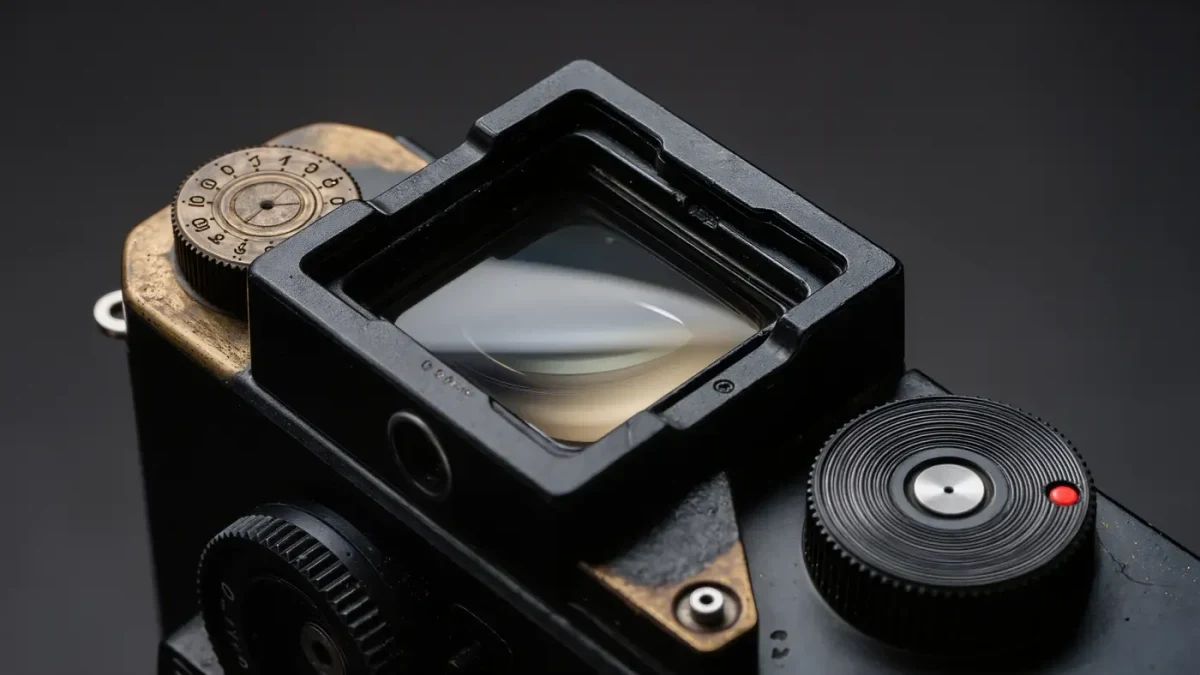
| Finder and focus | Focus a fast lens on a high-contrast target wide open | Haze, fungus filaments, or a dark patch in the viewfinder |
| Advance and rewind | Cycle the lever and rewind knob with no film loaded | Gritty, grinding, or springy movement suggesting worn gears |
| Sync and self-timer | Fire on the flash setting at the marked sync speed; run the self-timer fully | Either fails to complete its cycle |
The quickest version tell is the sync number on the shutter dial: the original FM2 marks 200 in red, the FM2n marks 250. Functionally the n commands a modest premium only because its shutter is the later design. Check the battery chamber for green corrosion from leaked cells, since deep corrosion can travel into the meter circuit. Ask when the camera was last serviced; a body with paperwork from a recent clean-lubricate-adjust job is worth more than a shinier stranger.
Where does the FM2 honestly show its age?
The weak points are the honest ones of any 1980s mechanical body. Foam seals have a service life measured in little more than a decade, so assume they need replacing unless proven otherwise; a seal kit fitted by a technician is a modest job. Dried lubricants attack the slow speeds first, which is why the one-second test matters more than the 1/4000 test. Meter cells drift and can die outright, and although the shutter does not care, your day and the resale value both do.
The design itself imposes limits that no service removes. There is no auto-exposure of any kind, no DX film sensing, and flash work tops out at 1/250. The eyepiece is tight for glasses wearers compared with later finders. Genuine spare parts are scarce, so independent shops frequently harvest donor bodies; that keeps repairs possible, but not always cheap, and waiting lists at good technicians are real.
Who should buy an FM2, and who should not?
Buy one if the goal is to learn photography on a camera that refuses to make decisions for you, or if you shoot far from power: trekking, cold weather, long trips. A mechanical shutter indifferent to batteries is a genuine practical advantage at minus twenty Celsius, as generations of expedition and mountain photographers demonstrated with these bodies. Skip it if you want aperture or program automation; the FE2, the FA, or several later bodies do that work better for similar money.
On pricing: as of 2025, working FM2 bodies commonly run $250-500 on the used market, and clean pairings with a 50mm f/1.8 typically reach $450-700. Expect the FM2n to ask roughly 10-20 percent more. Budget $100-200 for a service if the seller cannot document one, because a checked-over body is the difference between a tool and a shelf ornament.
What lenses make sense on an FM2?
The honest starter kit is a 50mm f/1.8 in AI or AI-S form, cheap, sharp, and light, followed by a 28mm or 35mm for places and the famous 105mm f/2.5 for portraits, a lens whose critical reputation was earned across decades of photojournalism and which costs less on the used market, as of 2025, than many modern prime lenses cost as filters. Because the FM2 meters through the lens with mechanical indexing, any AI or later Nikkor couples properly; pre-AI glass needs conversion work, so beginners should simply stay with the AI generation and everything after it.
Against its own siblings, the FM2 is the purist's pick: the FE2 adds aperture-priority automation on its own fast shutter, and the later FM3a combines mechanical shutter with electronic modes at prices that as of 2025 commonly run two to three times a clean FM2 body. Pay for those refinements knowingly if they matter. If the goal is one dial, one lever, and a shutter indifferent to batteries, the FM2 is the rational purchase and the emotional one at the same time, which is a rare alignment in used gear.
Is the Nikon FM2 still worth the money?
For most buyers who want one mechanical film camera rather than a collection, yes. Condition decides everything, prices have drifted upward but remain rational next to rangefinder equivalents, and the lens library is deep and well documented. Test the four basics on any copy: seals, speeds, meter, focus. If those pass, a good FM2 will outlive the enthusiasm that made you buy it, which is more than can be said for most gear purchases.