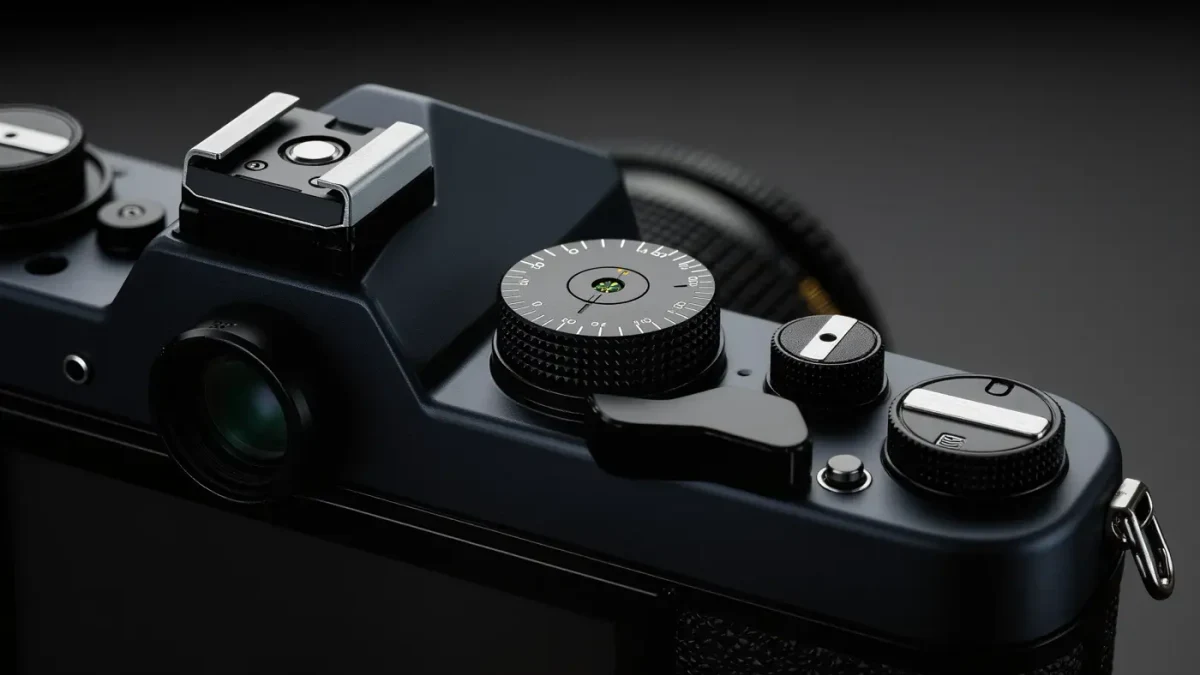
For most first-time film shooters, yes, provided the checks are boring and thorough. This Pentax K1000 buying guide exists because the safest classroom camera ever made is also one of the most abused. Over three million bodies were built between 1976 and 1997, per Asahi Optical's production records, so supply stays generous and prices stay honest.
What is the Pentax K1000, and why did teachers love it?
The K1000 arrived in 1976 as the entry point to the new K-mount and stayed in production for twenty-one years with barely a change. It is a fully manual camera: shutter speeds run 1 to 1/1000 plus B on a mechanical focal-plane shutter with 1/60 flash sync, per the manufacturer's specification sheet, and every one of those speeds works with no battery fitted. The only thing electricity does is the match-needle meter, fed by a single button cell, where a needle swings in the viewfinder and you balance it against a fixed ring by adjusting aperture and speed.
That is precisely why photography teachers adopted it. Nothing is hidden, nothing is automatic, and the exposure triangle sits physically under your fingers. In return the K1000 omits the conveniences its own era offered: no self-timer, no depth-of-field preview, no exposure lock, no motor drive options worth mentioning. It is a tool for learning, and slightly less a tool for working.
The documentary tradition that made manual exposure second nature to a generation of photographers is preserved in public archives; the Farm Security Administration collection at the Library of Congress shows what photographers produced working entirely by needle, instinct, and arithmetic decades before this body existed.
What should you check before buying a used K1000?
K1000s led hard lives in school lockers and backpacks, so judge each copy on evidence, not on the model's reputation. Work through these checks in order, and be ready to walk away, because another example is always a few listings away.
- Meter needle: fit a fresh battery, cap the lens, and point from shadow to bright light. The needle should sweep smoothly. A stuck, jumpy, or dead needle is the single most common fault.
- Battery contacts: green or white corrosion in the chamber kills the meter even when the circuit is healthy. Light corrosion cleans up; heavy corrosion travels.
- Shutter speeds: fire 1s and 1/1000 by ear and film them with a phone in slow-motion mode. Mechanical shutters drift when lubricants dry, slow speeds first.
- Foam seals and mirror bumper: open the back and inspect. Forty-year-old foam that has turned to tar is normal, negotiable, and cheap to replace.
- The 50mm lens: the common SMC 50mm f/2 suffers oily aperture blades. Snap the aperture lever and watch the blades; sluggish closing means the lens needs service or replacement.
- Focus and finder: turn the helical through its full range, checking for grit, and look for haze or fungus filaments in the viewfinder and both lens ends.
A dead meter is not the end of the world, since the shutter keeps working and a phone meter costs nothing, but it should be reflected in the price. Treat every untested as-is body as a meterless body and price it accordingly before you bid or buy.
Where does the K1000 show its age?
Honestly, in its simplicity. The viewfinder is small and dim by later standards, the advance lever needs a firm stroke, and the camera weighs about 620 grams, which is heavy for what it does. The meter has no on-off switch; the classic battery-saving trick was to cap the lens, so expect short cell life if you forget.
On the plus side, the K-mount outlived the camera by decades, and manual-focus SMC Pentax glass is abundant and inexpensive. Repairs are straightforward for any competent technician, and donor bodies are cheap. The K1000 is arguably the last 35mm SLR you should worry about being unfixable.
Accessories tell the same story of focus. There is no databack, no automatic anything, and the add-on grips and winding knobs of the period survive mostly as curiosities. What the system does have is every K-mount lens ever made, meaning a used-market drawer can outfit a learner completely for the price of one modern autofocus prime. The camera's poverty of features is, in the end, its richest resource.
Who still makes sense buying a K1000?
Anyone whose goal is to learn manual exposure on a body that cannot silently correct them, and anyone who wants a no-battery-dependence camera for a small outlay. It also makes a fine loaner: cheap enough to lend, simple enough that nothing confuses the borrower.
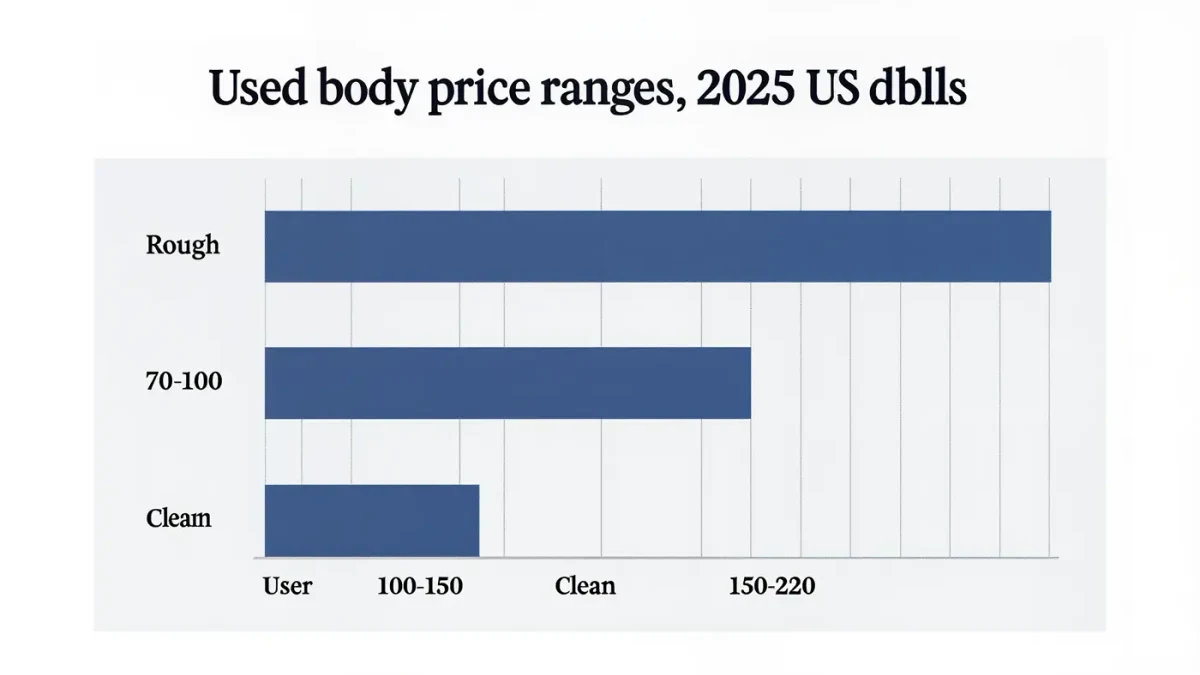
As of 2025, working K1000 bodies commonly run $70-150 on the used market, and typical kits with the 50mm f/2 sit between $100 and $180. The similarly mechanical and cheaper Ricoh KR-5 or the Minolta SRT series make legitimate alternatives if a clean example eludes you, but nothing else matches the K1000's combination of ubiquity, price, and repair support.
Are there better alternatives for the same money?
The honest rivals cluster nearby. Minolta's SRT series offers a similar match-needle experience with a brighter finder; the Ricoh KR-5 and its siblings undercut the K1000 on price with the same mechanical simplicity; and Pentax's own KM and KX, the K1000's less famous siblings from 1976, occasionally sell for less because the classroom legend inflates only the one name. As of 2025, all of these trade in roughly the same $70-180 band with their normal 50mm lenses attached, and condition separates them far more than the brand badge does.
What none of the alternatives replicate is the K1000's repair ecosystem and the density of its lens catalog. Nearly every technician has opened one; every used counter has a drawer of K-mount glass. For a first camera that a learner might drop, lend, or leave in a hot car, that ubiquity is a feature no specification sheet lists. Buy the best-condition body among the honest rivals and the negatives will not know the difference.
A reasonable progression: spend the first month on the 50mm alone, learning what the needle teaches about light, then add a 28mm for interiors and a 135mm for distance work once habits settle. By the time you feel the camera's limits, you will know exactly which feature in a second body matters to you, which is the least expensive photography education available anywhere.
Is the Pentax K1000 still the beginner camera it claims to be?
Yes, with the caveat that beginner no longer means default. Cameras with working meters and fresh seals cost the same as beat examples with famous names, and the K1000's value proposition depends entirely on condition. Find one that passes the needle, speeds, and foam checks, fit a new battery and a fresh 50mm, and you have the closest thing to a permanent education in photography that money can still buy cheaply.