E-6 home development is a sequence problem: six solutions in a set order, with one step that decides everything. Kodak's published E-6 process runs the first developer for 6 minutes at 37.8 °C, and the full cycle totals about thirty minutes (Kodak processing data, as of 2024). As of 2025, a compact three-bath kit runs roughly $40-60.
What are the steps of the E-6 process?
Nine steps in the full process, six of them chemistry. The first developer makes a negative image in each layer; the reversal bath chemically exposes what is left; the color developer builds the positive dye image; bleach and fix strip the silver; the final wash and stabilizer finish. Total running time is close to thirty-three minutes.
| Step | Time |
|---|---|
| First developer | 6:00 |
| Wash | 2:00 |
| Reversal bath | 2:00 |
| Color developer | 6:00 |
| Pre-bleach | 2:00 |
| Bleach | 6:00 |
| Fix | 4:00 |
| Final wash | 4:00 |
| Stabilizer | 1:00 |
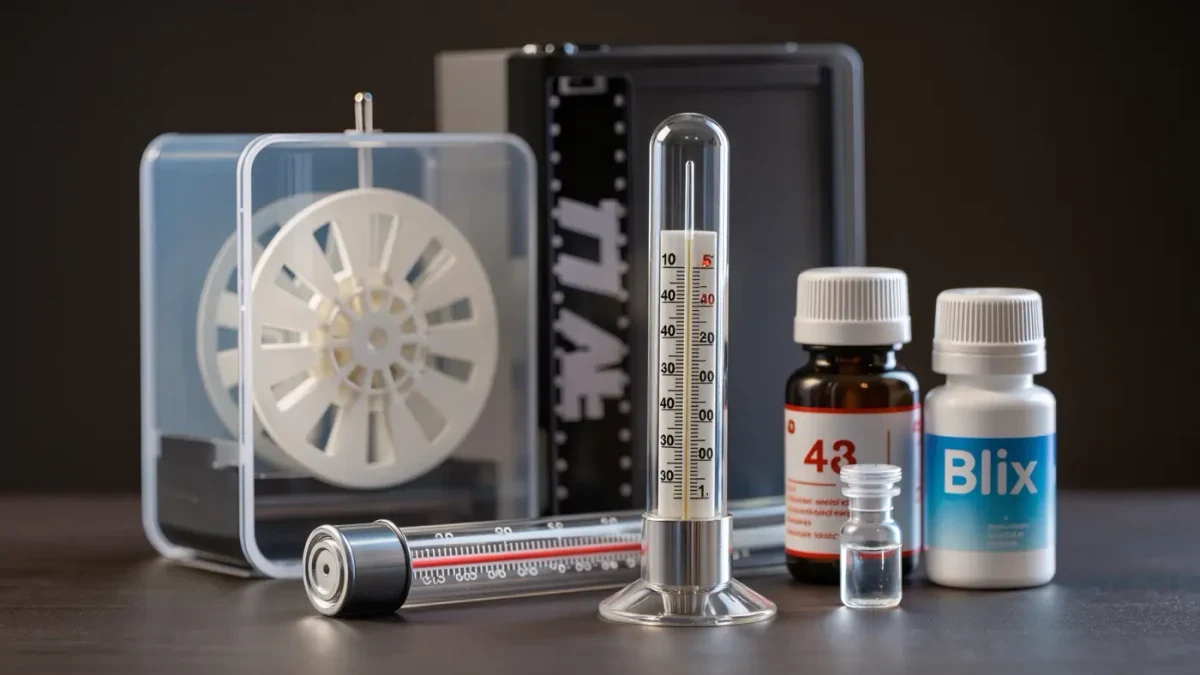
Times follow Kodak's E-6 processing publication (as of 2024), with the whole sequence held at 38 °C; the later baths are far more tolerant of drift than the first. Three-bath home kits merge the reversal chemistry into the color developer and combine bleach and fix into a single blix, cutting the bottle count in half.
Wash times between baths can flex when the tank is running late — water is the one step that forgives. Chemistry steps cannot: keep a written sequence at the sink, and set timers for each bath before the first pour rather than mid-process.
How does the reversal step work?
It flips the image from negative to positive. The first developer develops only the exposed halides — a negative. The reversal bath chemically fogs every remaining undeveloped crystal so the color developer can turn that remainder into dye, producing the positive. Historically, the same fogging was done by pulling the film out and re-exposing it to bright light.
- Drain the first developer and wash for the full two minutes; timing starts once the tank is filled.
- Pour in the reversal bath, agitate for the first thirty seconds, then let it stand for the remaining time.
- Drain — no wash after reversal — and move straight to the color developer.
- Keep the lid on through reversal; the bath works fully enclosed, which is exactly why kits prefer it to light re-exposure.
The old light method still works when reversal chemistry is unavailable: after the first wash, unfurl the film in a clean tray of water under a bright lamp for about a minute, re-rolling it so both emulsion faces see the light, then continue. It is messier than the chemical bath and easy to underdo — the film must be evenly fogged or the positives come out patchy.
How critical is the first developer?
It is the step that decides speed and contrast, the one place where seconds and half-degrees matter. Every other bath either completes a chemical conversion or washes something out. Pushing and pulling slide film is therefore a first-developer adjustment alone; the rest of the sequence never changes.
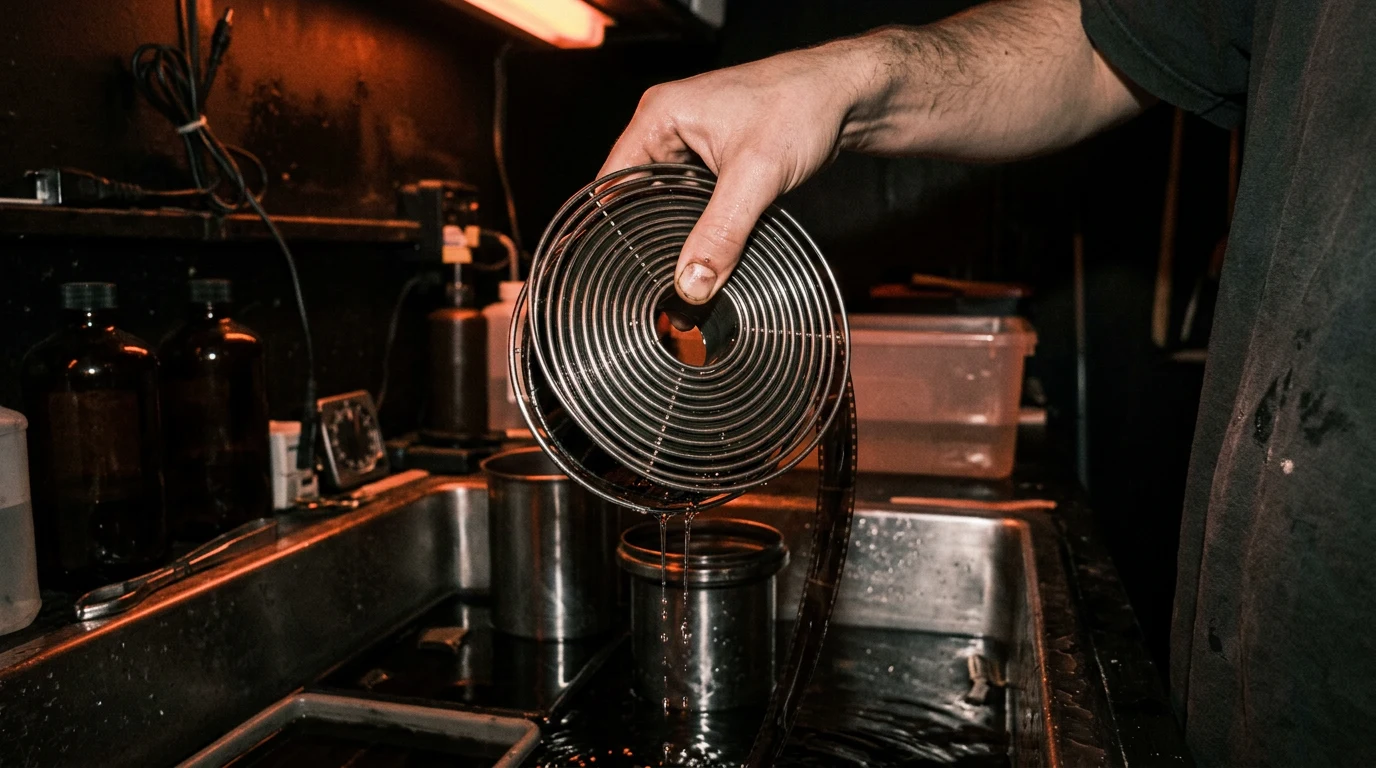
Hold the first developer within about half a degree of target, using the same water-bath approach color-negative film demands. For pushes, follow the kit's table — a one-stop push lengthens the first developer noticeably while everything downstream stays fixed. That single dial is the whole push-pull system.
Temperature discipline is worth a sentence of physics: developer activity roughly doubles with each 10 °C rise, which is why half a degree at 38 °C moves density like several degrees at room temperature. The bath, the bottles, and the tank wall all need to agree on temperature before the timer starts.
What happens if a step runs long?
Each step fails differently. Extra first-developer time makes slides denser and contrastier; extra color-developer time matters far less; a short bleach leaves metallic silver that mutes blacks into milk; a short fix threatens keeping. The sequence rewards knowing which bath you may stretch and which you must not.
The most confusing symptom for newcomers is the milky slide — bright blacks, flat overall density. That is retained silver from an underdone bleach or fix, and it is recoverable: re-bleach, re-fix, wash, and dry. Nothing about the dye image is damaged while silver remains.
Over-development in the first bath, by contrast, cannot be repaired — density added there is permanent, and slides come out dark and contrasty with blocked highlights. When in doubt, err short on the first developer and correct on the next roll.
Which films can you process in E-6 at home?
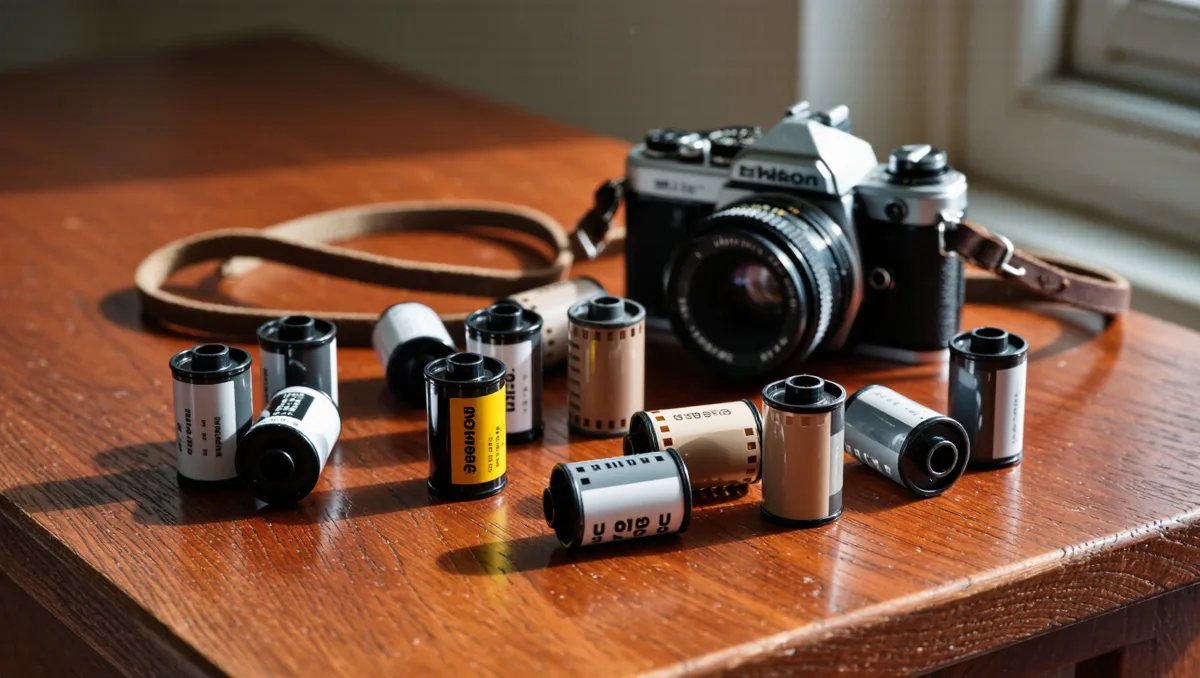
The current slide lineup, which as of 2025 means Kodak's Ektachrome family, Fujifilm's Velvia and Provia, and a trickle of specialities. All run the standard E-6 sequence regardless of brand or speed; only the first developer's push table differs. Roll film in 35 mm and 120 both process in the same daylight tanks.
As of 2025, a 36-exposure roll of Ektachrome E100 runs roughly $15-20, with Velvia and Provia in similar territory; slide stock costs noticeably more per frame than color negative. Home chemistry prices the processing side at a few dollars a roll, which is where the savings concentrate.
Expired slide film deserves honesty: unlike C-41, where latitude hides decay, slide film shows age directly as shift and fog. Process fresh stock while learning the sequence, then graduate to the thrift-store finds once the routine is muscle memory.
What are the most common E-6 mistakes?
Contamination, temperature drift, and dead chemistry, in roughly that order. A single dropped milliliter of bleach in the first developer bottle can ruin every subsequent run until the bottle is replaced. E-6 punishes casual bottle handling harder than any black-and-white process, which is why labels and dedicated graduates matter here.
- Sharing funnels or graduates between baths. Dedicate one to each chemistry type and label it.
- A drifting first-developer temperature. Half a degree is the budget; check the bath, not the air.
- Mixed chemistry kept too long. E-6 working solutions exhaust faster than B&W; note mix dates and retire on schedule.
- Skipping the pre-bleach where the process calls for one. It conditions the emulsion for even bleaching.
- Agitating the bleach weakly. Bleach needs circulation to finish; lazy inversions leave uneven density.
A notebook converts experience into settings. Record mix dates, roll counts per bath, temperatures, and any deviation; the difference between a frustrating E-6 season and a smooth one is usually a page of notes.
Safety notes worth repeating: E-6 bleach is the most aggressive chemistry most home darkrooms ever touch, and every bottle arrives with a safety data sheet. Reading labels and keeping the room ventilated is the whole routine — OSHA's hazard communication guidance explains what the pictograms and sheets mean.
The payoff arrives at the end of the line: strips of finished transparencies on the light box, already viewable, already finished. No printing step stands between the tank and the image, which is exactly why slide shooters tolerate six bottles.