A professional darkroom lab is a small factory with a strange relationship to light. Film goes in one end, prints and negatives come out the other, and almost nothing in between is meant to be seen. The whole building is arranged around one fact: light writes the image, and light can also erase it.
What surprises most first-time visitors is how unglamorous it is. The rooms are small, the sinks are deep, and the walls are painted a flat black or a pale safelight amber. The romance people expect is there, but it lives in the results, not the décor.
What actually happens to a roll of film at a lab?
A roll of film arrives, usually in a paper or plastic sleeve, and the first job is simply to keep track of it. Reputable labs are obsessive about labeling, because a customer's once-in-a-lifetime negatives cannot be replaced. Every roll gets an ID that follows it through the building.
Then the film is loaded onto reels or hangers and run through a processor. Color film goes through a C-41 line; slide film through E-6; black-and-white through hand-timed tanks or a small machine. The chemistry stages sound like a chant when staff recite them: developer, stop, fix, wash. Each bath does one job, and each has a working life before it exhausts itself, which is why labs track the capacity of their chemistry the way a cook tracks stock in a pot.
The darkroom hub here covers each of those stages in depth, and the C-41 Home Development Guide shows what the lab's color line is doing, step by step, at home scale.
Why is the darkroom divided into rooms?
Because different jobs need different darkness. The film-loading area must be totally light-tight; a single leak ruins an unexposed roll. The printing room needs only enough darkness to handle paper, which is far less sensitive, so a safelight is allowed and the printer can actually see.
Wet benches run along one wall, deep and stainless, with temperature-controlled water. Dry benches sit on the other side of the room, where negatives are cut, sleeved, and sorted. The division matters: dust and chemistry are enemies. A wet fingerprint on a dry negative means a retouching session nobody wanted.
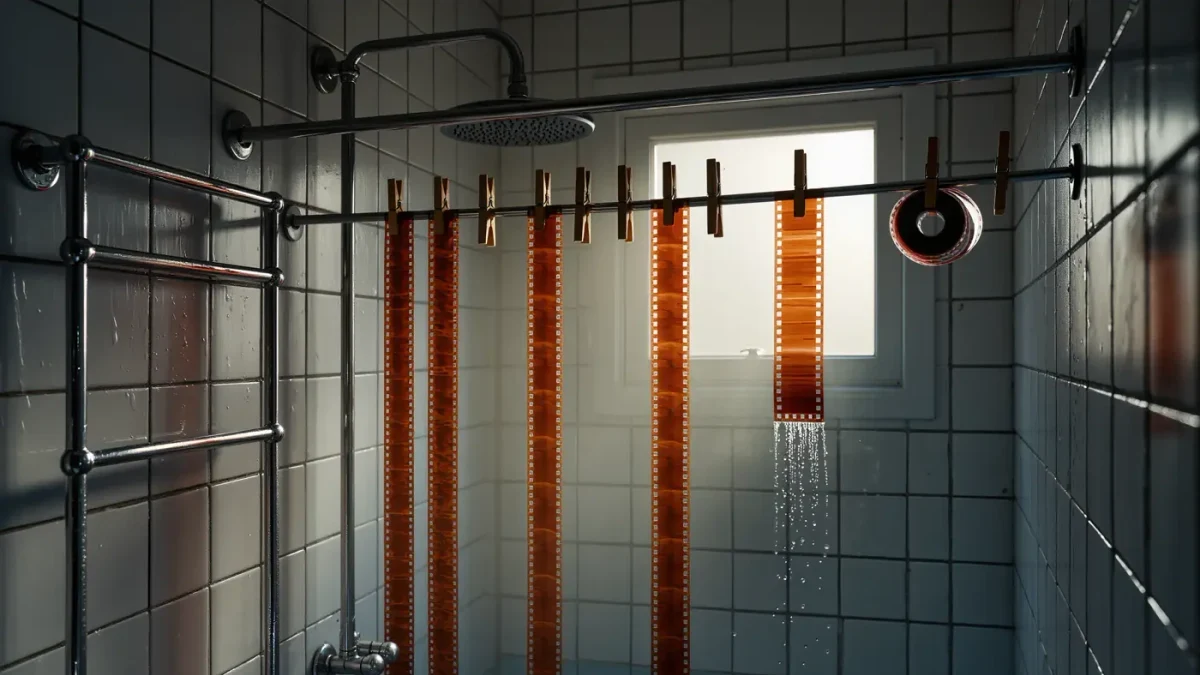
Home shooters recreating this layout in a closet or bathroom will recognize the logic immediately; the Bathroom Darkroom Setup Guide applies the same dry-side, wet-side discipline at a domestic scale.
What is the enlarger, really?
The enlarger is the heart of the printing room, and it is essentially a projector pointed downward. A negative sits in a carrier, a lamp shines through it, and a lens focuses the image onto a sheet of paper below. The operator chooses the exposure time, the lens aperture, and where to hold light back or add it.
That last part is the craft. Dodging and burning, the practice of shading and extending exposure in selected areas, is what separates a straight print from a considered one. The basics live in our Dodging and Burning Basics, and every good lab printer does it without appearing to think, hands moving over the paper like a conductor's.
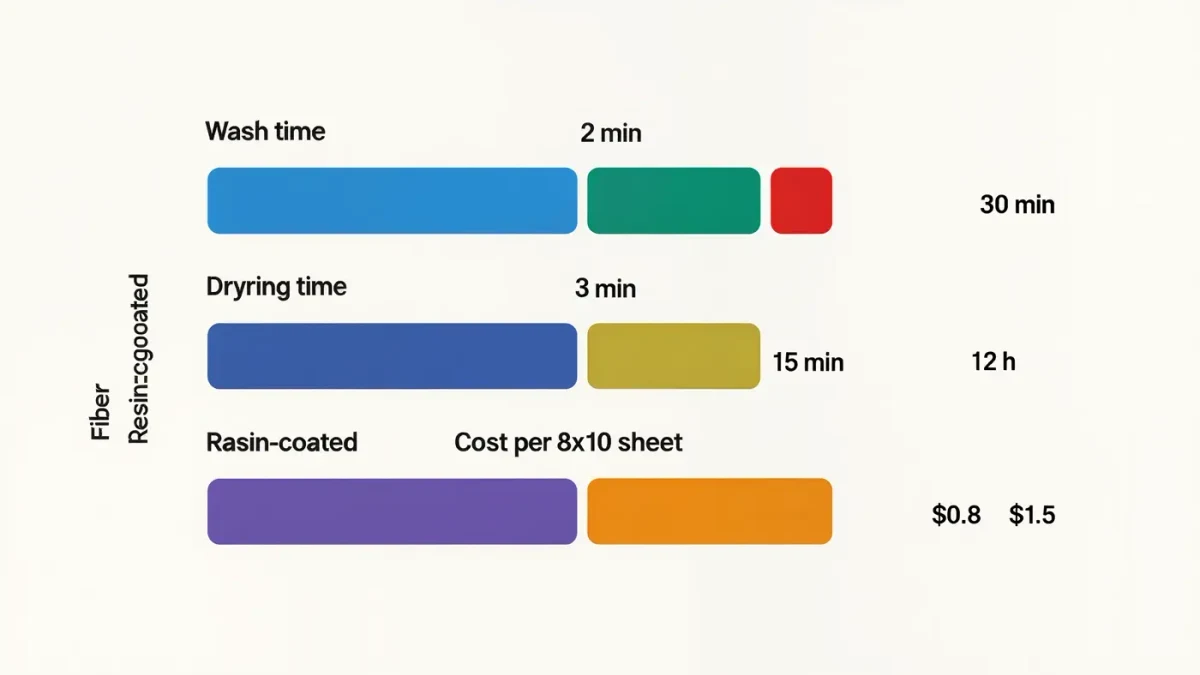
Paper choice matters as much as exposure. Labs keep both resin-coated and fiber-based papers on hand, and the difference is not cosmetic; it changes drying, toning, washing, and archival life. Our Fiber vs Resin Printing Paper guide unpacks that trade.
Who works in a professional darkroom lab?
The people are the part no equipment list captures. A working lab typically has a processor operator, whose skill is rhythm and consistency, and a printer, who is closer to a craftsperson than a technician. Printers talk about "reading" a negative: judging density and contrast at a glance and deciding, before the first test strip, what the print is trying to become.
There is also the quieter skill of customer care. Labs field questions all day from shooters who overexposed, underexposed, or shot a roll through an old camera with unknown history. A good lab treats those rolls as puzzles, not problems.
Not everyone lives near such a place, which is why mail-in developing has become its own art of comparison. Our Best Photo Labs for Mail-In Developing, Compared piece is built around exactly the questions a behind-the-scenes tour raises: who touches your film, and how carefully.
Why does any of this still matter?
The honest answer is that the darkroom survives because it produces something the scanner cannot: an object. A silver gelatin print has weight, surface, and a tonal range that comes from paper and chemistry rather than a profile. Collectors know this. Photographers know it in their hands.
The art world keeps confirming the point in odd ways. In Inside, the 2023 psychological thriller directed by Vasilis Katsoupis, an art thief played by Willem Dafoe is trapped in a collector's penthouse and insists that "art is for keeps" — a line that could stand as the darkroom's motto, since a well-made print is precisely the kind of object people refuse to let go of.
There is also the matter of craft continuity. Every lab printer working today learned from someone else's hands, and every home developer reading a datasheet is joining a chain that runs back over a century. The equipment ages. The knowledge does not, as long as someone keeps the sink wet.
What this means for your own shooting
Our analysis of how labs work comes down to this: the professional darkroom is not magic, it is discipline. Temperature checked, chemistry tracked, film labeled, dust fought daily. Every one of those habits can be borrowed at home, and each one raises the odds that your negatives survive to be printed well.
Start with the stages that punish carelessness most. Fixer exhausted mid-roll destroys images silently, which is why the Fixer Leader Test, Explained belongs in every home kit. Washing done lazily shortens a negative's life, so follow the How Long Should You Wash Film Negatives After Fixing? guidance. And once the negatives are clean and dry, DSLR Scanning for Film Negatives bridges the darkroom to the digital desk.
The lab's lesson is not that home processing is inferior. It is that the results you admire from a professional darkroom lab come from patience applied to ordinary steps, repeated until they are second nature.