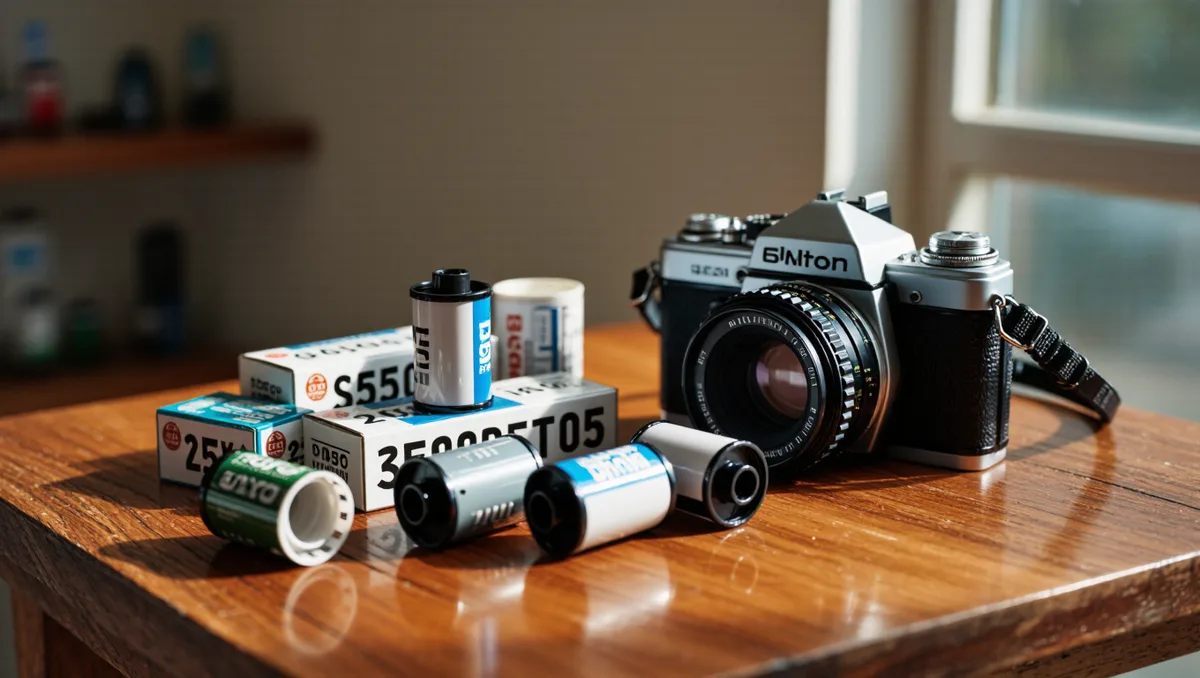
A film lab worth trusting is usually closer than the search results suggest, and the fastest test is the machine on the counter. Most drugstores and camera shops run a minilab, an on-site processor that returns color film in as little as 20 minutes, per Wikipedia's minilab entry. Chemistry, handling, and scans decide the rest.
Film developing is a chemistry job before it is a retail one. A good counter keeps that chemistry honest and treats negatives like the only copy they are. Here is how to tell the careful rooms from the conveyor belts, before a single roll is at stake. This connects to our earlier piece, How Long Should You Wash Film Negatives After Fixing?.
Start With the Machine Behind the Counter
Wikipedia's minilab entry describes small developing systems that let retail stores finish film on site, and it records a shift: large central labs that handled 30,000 to 40,000 films a day have closed, while more retailers installed minilabs. In Kodak and Agfa machines the film runs C-41b chemistry and the paper runs RA-4, with rolls ready in as little as 20 minutes when the operator is on pace.
The process behind most color rolls has a name. C-41 is a chromogenic developing process Kodak introduced in 1972, and Wikipedia calls it the most popular film process in use, with most photofinishing labs devoting at least one machine to it. If a counter develops color at all, this is the machine humming in back. Tracking is a small tell too: minilabs match each roll to its envelope with paired twin-check stickers, per Wikipedia, so a lab that logs rolls one by one is following the documented routine.
Black and White Is a Different Test
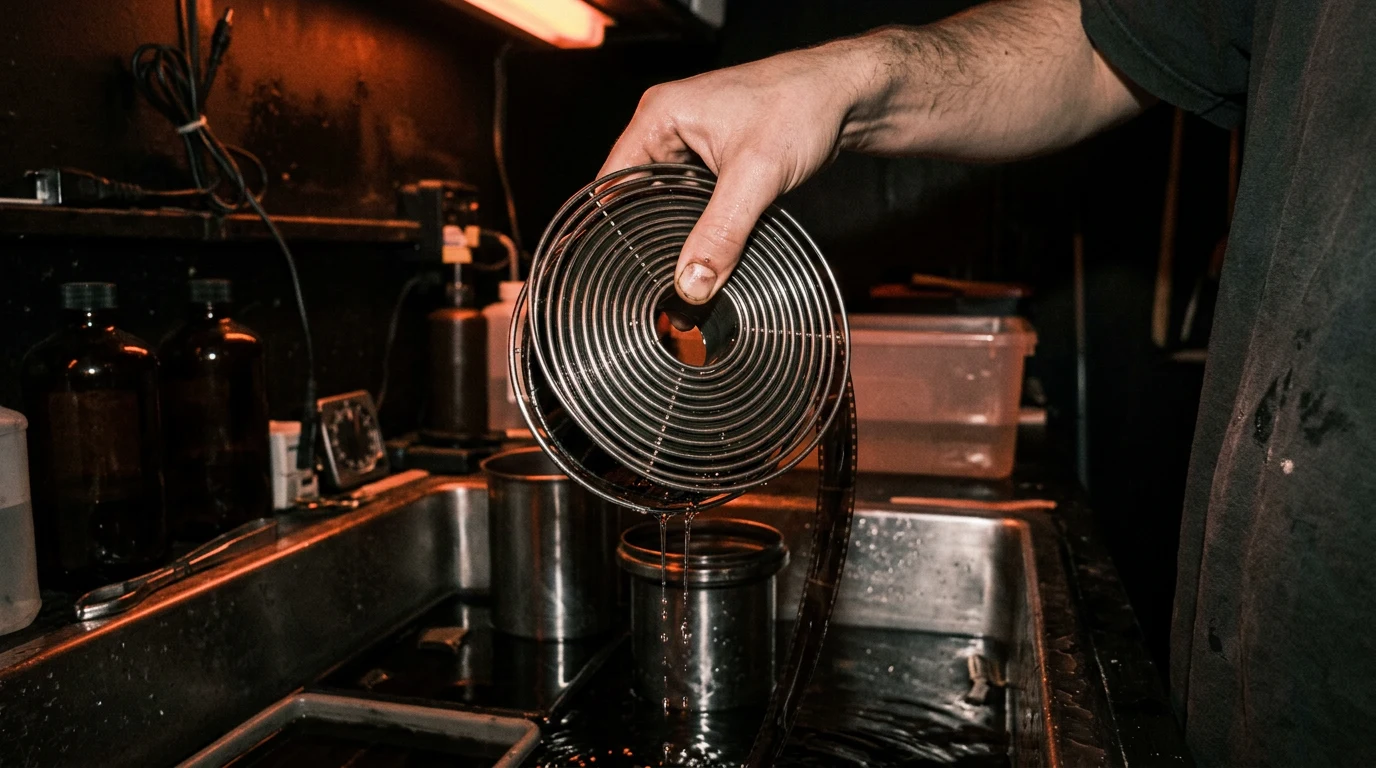
Color machines are common. Careful black and white work is the mark of a serious room, because it runs by hand. Wikipedia's processing entry is blunt about the demands: development stages need very close control of temperature, agitation, and time. The bath order matters as well, developer first, then a stop bath, then fixer that makes the image permanent, then a real wash. For related coverage, see Stop Bath vs Water: What Each Rinse Actually Does.
That wash is where labs cut corners. Residual fixer corrodes the silver image and leads to discoloration, staining, and fading, per Wikipedia's processing entry. The entry also allows a hypo clearing agent after the fixer, which strips the leftover chemistry faster. A lab that dries film in a dust-free space and sleeves the strips is protecting pictures for decades, not just for pickup day.
Ask Before the Roll Leaves the Hand
A short script covers the vetting. Ask, in this order:
- 1. Which processes run in house, and which roll types get shipped out?
- 2. Who handles black and white, and how is temperature kept close?
- 3. Are negatives returned cut, sleeved, and clean?
- 4. What resolution are the scans, and can a bad frame be redone?
The answers sort labs fast. Vague ones mean film is a side duty there; specific ones mean someone in back cares.
Judge the Scans, Not the Lobby
Most counters now scan as well as develop. Wikipedia notes the finished negative may be scanned for digital printing or web viewing after adjustment, and minilab machines read each frame automatically during the run. Read the files like a contact sheet: dust specks and flat contrast point to a rushed hand, not a bad negative. Color shifts across a whole roll suggest tired chemistry, while clean frames with edges intact mean the same care ran through the entire line, tanks to scanner.
Conclusion: A Good Lab Is a Chemistry Check
Finding a place to develop film is rarely the problem anymore. Vetting one takes ten minutes: look for a real machine, ask who runs the black and white, and judge the scans like they are the only copy. Labs that pass those checks treat film as a craft and negatives as the originals they are.