Developing C-41 at home is a temperature problem, not a technique problem. Kodak's published Process C-41 cycle runs the developer for 3 minutes 15 seconds at 37.8 °C, with bleach, wash, fix, and stabilizer following at more forgiving temperatures (Kodak processing data, as of 2024). As of 2025, a one-liter home kit runs roughly $30-50 and rates about eight rolls.
What chemistry does a home C-41 kit contain?
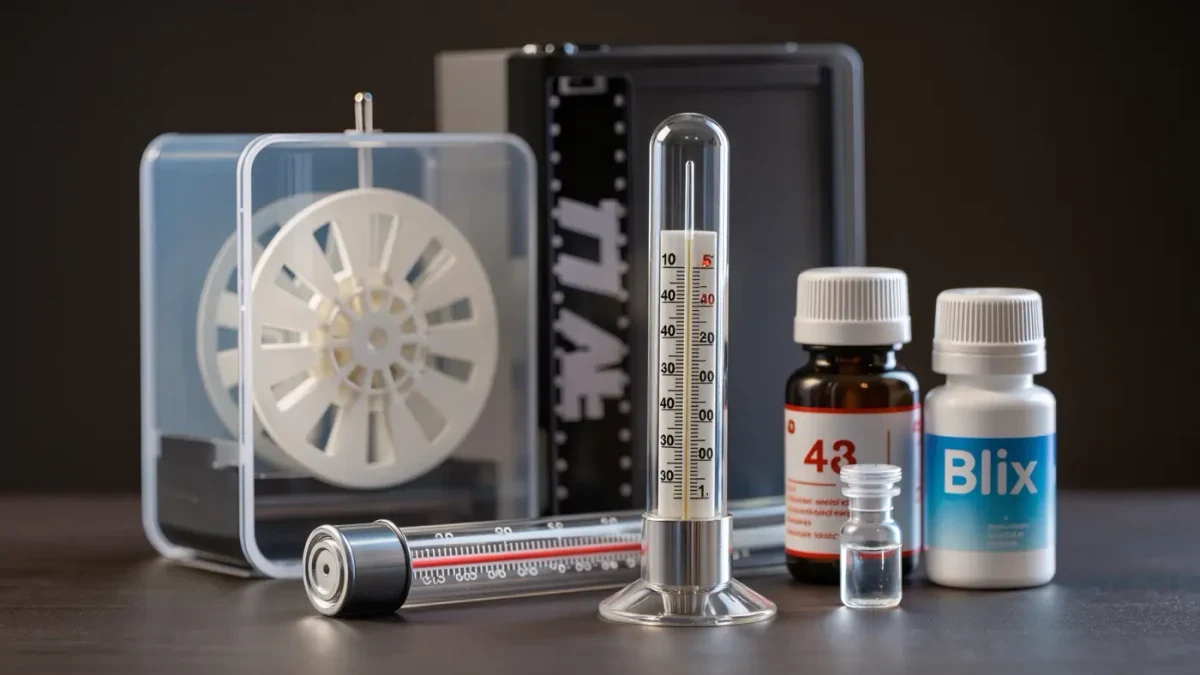
Three solutions in most kits: developer, blix, and stabilizer. The developer forms the dyes and demands precision; blix — bleach and fixer combined — removes developed silver and unexposed halides and forgives a lot; the stabilizer final rinse protects dye stability and controls drying. Full-size labs split bleach from fix, which keeps each step longer-lived.
Popular one-liter kits from Cinestill and Adox follow this compressed pattern. Separated bleach and fix gives better capacity and shelf life per liter; a combined blix gives fewer bottles to warm and rinse. For a first color session, the three-bottle route is the gentler introduction. darkroom coverage.
Kits also differ in shelf life: concentrated developer keeps roughly six weeks to a few months after mixing depending on storage, while blix holds longer and stabilizer nearly indefinitely. Buying the smallest kit that matches shooting volume wastes less than buying capacity that expires.
How do you hold the temperature at 38 °C?
With a water bath, not precision heaters. A deep tray or bucket held a degree or two above target keeps bottles and tank where they need to be through the whole run; a kettle tops it up. The developer needs ±1 °C; everything after it tolerates several degrees.
- Stand the chemistry bottles in a 40-41 °C water bath fifteen to twenty minutes before starting, and check each bottle with a thermometer.
- Fill the loaded tank with warm water and dump it just before the developer, so cold plastic cannot steal a degree on contact.
- Start when the developer reads its target — 38 °C for the standard process, 39 °C for many kit sheets.
- Return each bottle to the bath between steps, and top the bath up with kettle water as it cools.
- Start the timer as the pour begins, and keep pours under fifteen seconds so timing stays honest.
What are the C-41 processing times?
Shorter than a black-and-white session. The standard process adds up to roughly twenty wet minutes end to end, with the developer the only step timed to the second. Kit instructions trim the count to three or four steps, and every kit is slightly different — the sheet in the box overrides any chart.
| Step | Standard process (Kodak) | Typical home kit |
|---|---|---|
| Developer | 3:15 at 37.8 °C | 3:30 at 39 °C |
| Bleach | 6:30 | combined into blix |
| Fix | 4:20 | combined into blix |
| Blix | — | 4:30 at 39 °C |
| Wash | 3:15 plus final wash | 4:00 |
| Stabilizer | 1:30 | 1:00 |
Standard-process times follow Kodak's Process C-41 publication (as of 2024); the kit column summarizes Cinestill and Adox instruction sheets (as of 2024). Agitate as the sheet directs — usually continuous for the first fifteen seconds, then a few gentle inversions every half minute.
Timing starts when the pour starts, which is why pours are counted as part of the step. A tank that takes twenty seconds to fill has effectively shortened the developer's working time by that much; start the stopwatch as the chemistry first hits the spiral and finish fills inside fifteen seconds.
What happens if the temperature drifts?
Density and color crossover. A cold developer leaves thin, bluish negatives and weak contrast; a hot one pushes density and saturation past what the scanner expects. One degree is roughly the working tolerance for the developer step; bleach and fix mostly care about completion, not seconds.
The tell-tale symptom is a negative that scans with a stubborn cast that no white balance fully removes. That is crossover — the dye layers formed at mismatched rates. Color negatives tolerate surprisingly rough handling at every step except the developer, which is why the water bath earns its place in the workflow.
Drift has a direction that helps diagnosis: if every roll from a session scans thin and blue, the bath was cold; if density is high and colors oversaturated, it ran hot. A cheap thermometer clipped inside the tempering bath — not the air of the room — is the instrument that answers the question before it is asked.
How many rolls will one kit process?
Typically eight to twelve 36-exposure rolls per liter at full strength, per the capacity tables in current kit instructions. Capacity depends on how much solution each tank carries and how long the developer sits between runs — activity fades in the bottle, not just in the tank. Log every roll and retire the developer on schedule.
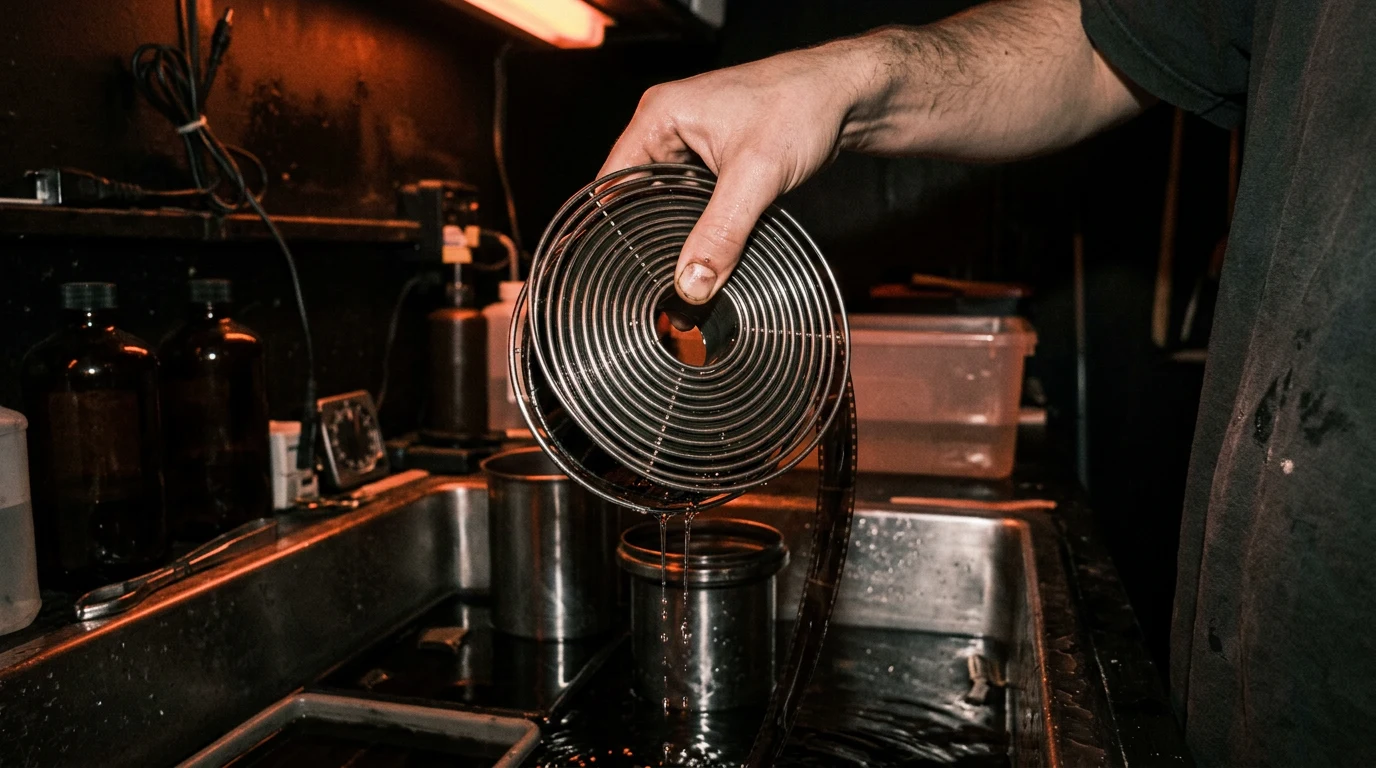
Two habits stretch capacity honestly. First, use the smallest tank that fits the roll — 290 ml processes one 35 mm spiral in a Paterson Super System 4, versus nearly 500 ml sloshing in a two-reel tank run half-empty. Second, store partially used developer in full, tightly capped bottles with the air squeezed out, and mark the mix date.
Pushing past the rated count shows up first as thin negatives with shifted color, then as outright failure. Since a fresh kit costs a few dollars per roll, exhausted chemistry is the most expensive economy in color processing.
What are the most common C-41 mistakes?
Three failures dominate: weak temperature control, exhausted or contaminated blix, and skipped stabilizer. The first shows as flat, off-color negatives; the second as milky, dense film that never scans cleanly; the third as dyes that fade years early. All are avoidable with a thermometer and a notebook.
- Trusting an uncalibrated thermometer. Check it in ice water and adjust; a two-degree error is invisible until the negatives come out.
- Pouring developer into a cold tank. The pre-rinse in step two exists for a reason.
- Under-agitating the developer. Gentle, consistent inversions prevent streaks and shifts between dye layers.
- Running chemistry past capacity. Kits list a roll count per liter; log every roll and retire solutions on schedule.
- Sharing graduates between steps. A few drops of blix in developer concentrate will quietly kill the bottle.
One habit prevents most of this list: mix, mark, and pour in the same order every session. Color processing rewards ritual because the failure modes are silent — nothing announces an exhausted bath until the negatives hang dry and wrong.
Once dry, color negatives deserve cool, dry, dark storage — heat and humidity are what actually kill dyes over decades. The storage basics are covered by the Library of Congress's preservation guidance.
C-41 home development stops feeling fragile after the third roll. The tank is the same, the reel is the same, and the discipline is one thermometer and one kettle — a small toll for developing color film the same night it is shot.