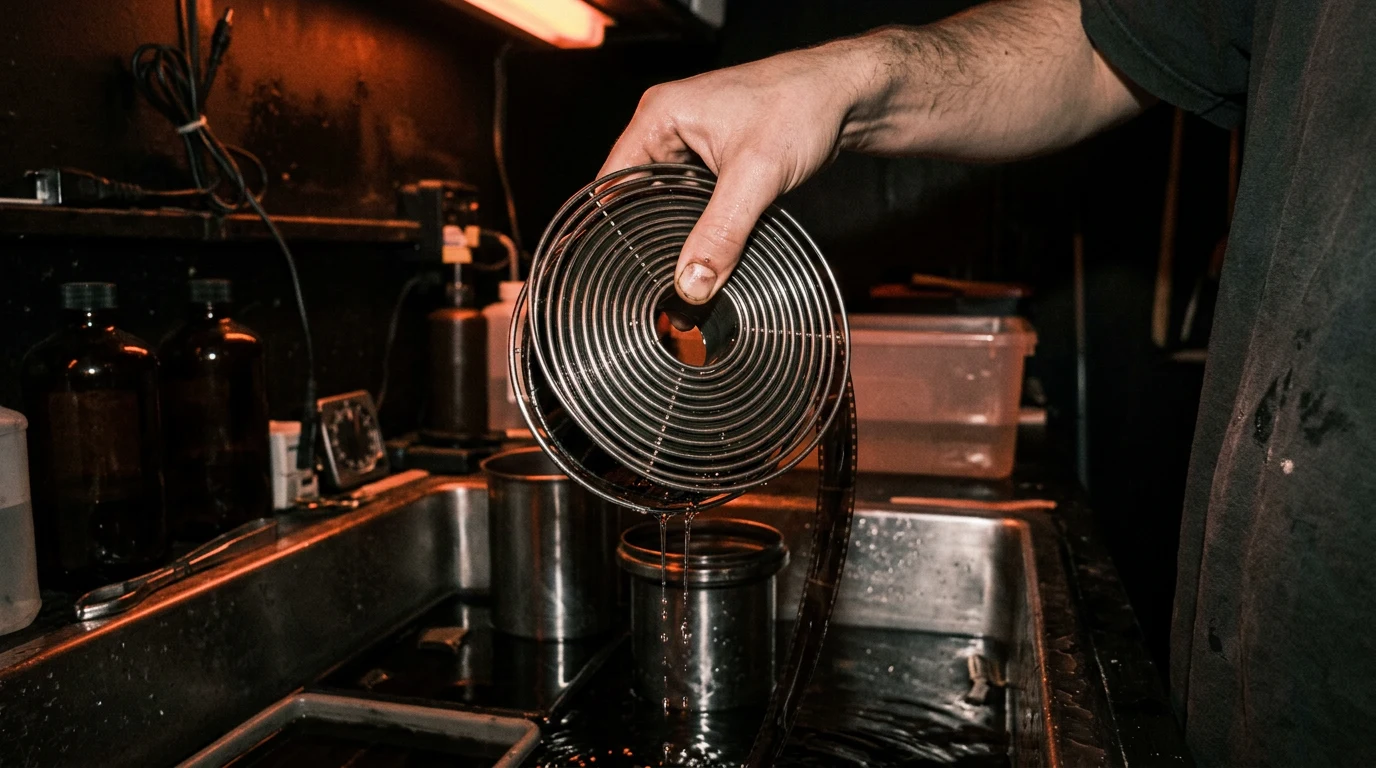
The fixer leader test takes ten seconds and tells you whether a working solution can do its job. Drop a clip of undeveloped film into fixer, time how long it takes to clear from milky to transparent, and fix real rolls for twice that. Ilford technical data puts fresh rapid fixer clearing at roughly 30-60 seconds (as of 2024).
How do you run the leader test?
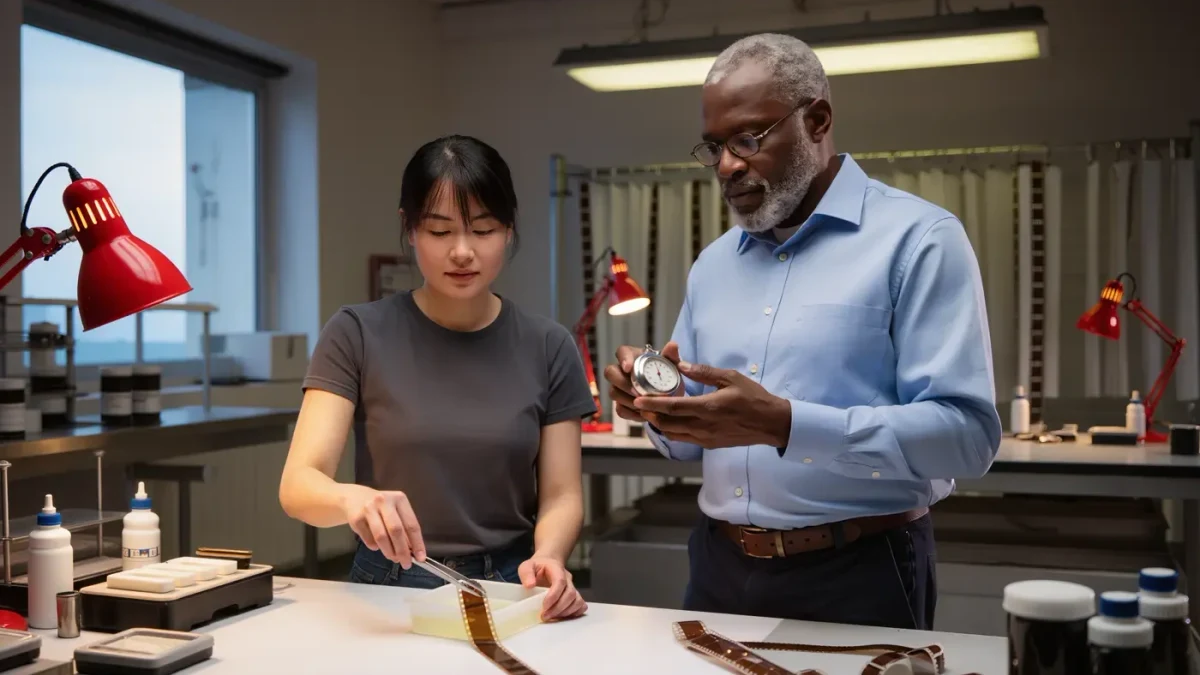
Cut a short strip of undeveloped film, drop it into a sample of the working fixer, and time how long it takes to become fully transparent against a dark background. That interval is the clearing time. Fix film for twice the clearing time and the emulsion is done — the rule survives every brand of fixer.
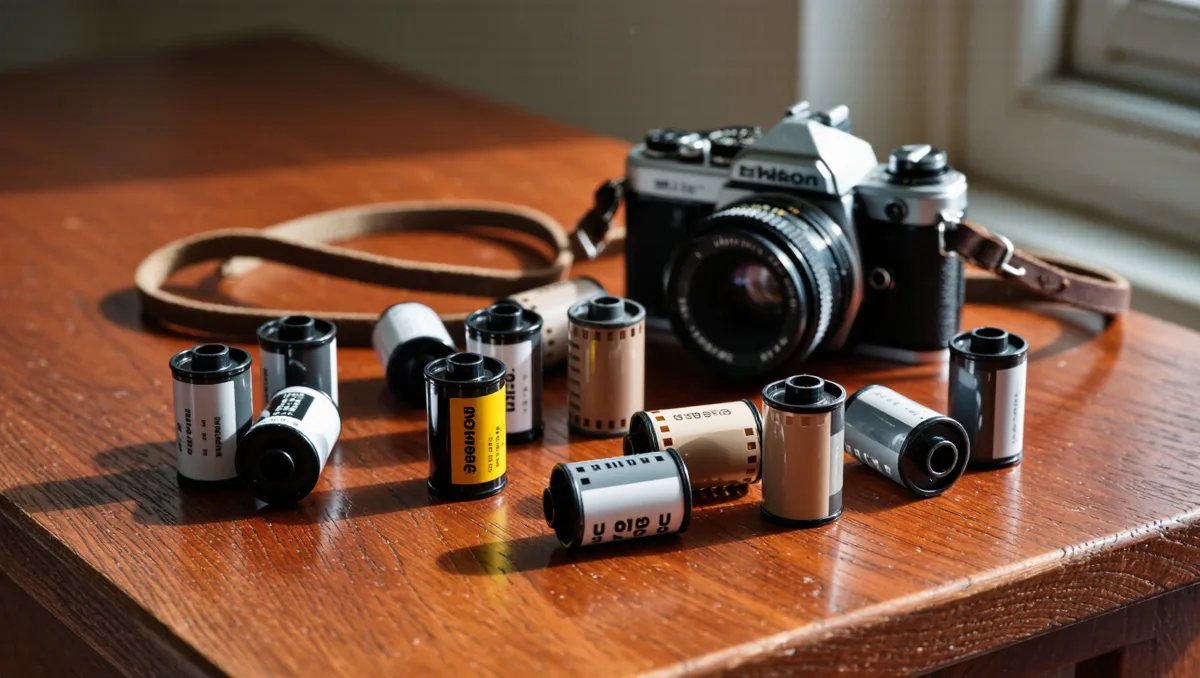
- Keep a stash of undeveloped offcuts — the trimmed tongue of a 35 mm roll works, or sacrifice the first frames of an expired roll.
- Pour a little of the working fixer into a clear glass or shallow tray at room temperature, around 20 °C.
- Drop the strip in, start a timer, and swirl gently so liquid moves across the emulsion.
- Lift the strip every ten seconds and read it against printed text or a dark surface, not a white sink.
- Record the clearing time on the bottle with a marker — a running log turns individual readings into a trend.
How do you know when fixer is exhausted?
Clearing time is the gauge. When a strip takes roughly twice as long to clear as it did when the solution was fresh, the fixer is spent — a discard rule found in both Ilford's and Kodak's fixing guidance. Commercial hypo-test solutions show the same thing as a cloudy precipitate, but a scrap of film costs nothing.
Capacity varies with dilution, agitation, and how much developer each roll drags in, so roll-counting alone is guesswork. A working solution that cleared a leader in 40 seconds last month and takes 80 today is finished, whatever the ledger says. The test also catches fixer that has aged in the bottle — mixed solutions slowly weaken even without film passing through.
Silver carry-over is what actually kills baths in practice: every drained roll or print delivers a little developer into the fixer and a little fixer back into the wash. A ten-second drain over the tray before the next step extends bath life noticeably, and costs exactly ten seconds.
What happens if you fix too long?
Less than under-fixing. A few extra minutes in normal-strength fixer does no measurable harm to film, which is why the twice-clearing rule errs long. Real damage needs extended soaks — think tens of minutes — where the gelatin can soften and faint image silver can begin to shift. Aim for twice clearing and stop worrying.
Under-fixing is the catastrophic direction. Unremoved silver halide stays light-sensitive and slowly reacts with air and residual chemistry, turning emulsions yellow-brown and staining images months or years later. That failure mode is invisible on the day it happens, which is precisely why the test exists.
The economics complete the argument: a liter of working rapid fixer costs roughly $2-4 in concentrate as of 2025, against the irrecoverable value of a year's best negatives. No other stage of photography protects so much for so little.
Does the leader test work for paper fixer?
Yes, and it is the standard practice. A film strip dunked in the paper-fixing tray measures that bath exactly the same way, because the chemistry clearing the halide is identical. Paper darkrooms add the two-bath method: two trays in sequence, each used for half the fixing time, which keeps the second bath nearly fresh.
- Run the leader test on the first tray exactly as for film and note the clearing time.
- Fix prints for the standard paper time in tray one, draining well before moving.
- Finish with an equal time in tray two, which sees almost no silver and stays strong.
- When tray one slows, promote tray two to first bath and mix a fresh second — archival practice for decades.
The two-bath habit also upgrades the leader test's role: test the second bath occasionally, and as long as it clears a strip nearly as fast as fresh solution, the pair is working. When the second bath slows, both bottles are finished together — no ambiguity, no gambles.
How should you store fixer between sessions?
Concentrate and working solution live by different clocks. Concentrate in a sealed, full bottle keeps for months to a year depending on type; mixed working solution weakens steadily as air and dissolved silver attack it. Store both cool, dark, and full — a half-empty bottle of air does more damage than age.
Label every bottle with what it is, when it was mixed, and its fresh clearing time from the first leader test. That last number turns future tests into honest comparisons instead of memory contests. When the label says the bath cleared at 40 seconds on mixing day, today's reading answers itself.
Hardening fixers deserve their own shelf discipline: they contain aluminum salts that precipitate when chilled or contaminated, and a bottle that has been through a cold garage may test fine and still leave scum on film. Room temperature storage prevents the drama before it starts.
What are the most common leader-test mistakes?
Nearly every bad result comes from the film itself or the temperature. Developed film will not clear the same way; cold fixer reads slow; warm fixer flatters a dying bath. And a strip that dries before you check it can look clearer than it was — read it wet.
- Testing with processed film. The strip must be undeveloped and unfixed, or the timing means nothing.
- Testing cold. Fixer straight from a 15 °C garage clears noticeably slower than the same bath at 20 °C.
- Reading against white. Transparency shows against dark print; a white sink hides the last milkiness.
- Testing once a year. Clearing time drifts as silver accumulates — check before every serious session.
- Trusting the label over the test. Dilution errors and carry-over change real capacity; the film does not lie.
One quiet trap deserves its own line: testing with film that has been through a camera but never developed is fine — exposure does not matter. Fixed or developed film is the failure. If a strip came from the darkroom floor, it may already be half-processed, and the reading will flatter a dying bath.
Fixing is the quiet half of archivality, and institutions that think in decades treat it accordingly — the Smithsonian's conservation staff publish the same emphasis from the Museum Conservation Institute. A test that costs a film scrap and ten seconds is the cheapest insurance in the darkroom.
Run the test, double the time, label the bottle. That small routine is the difference between negatives that stay clean for decades and negatives that quietly turn brown in a shoebox.