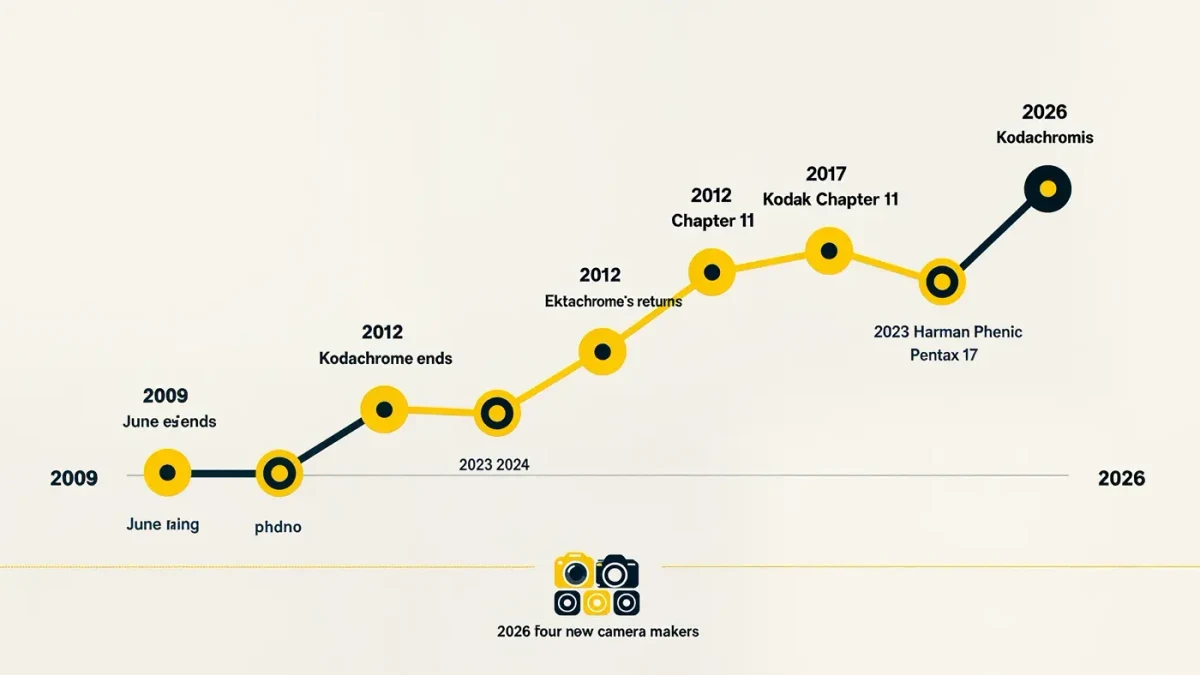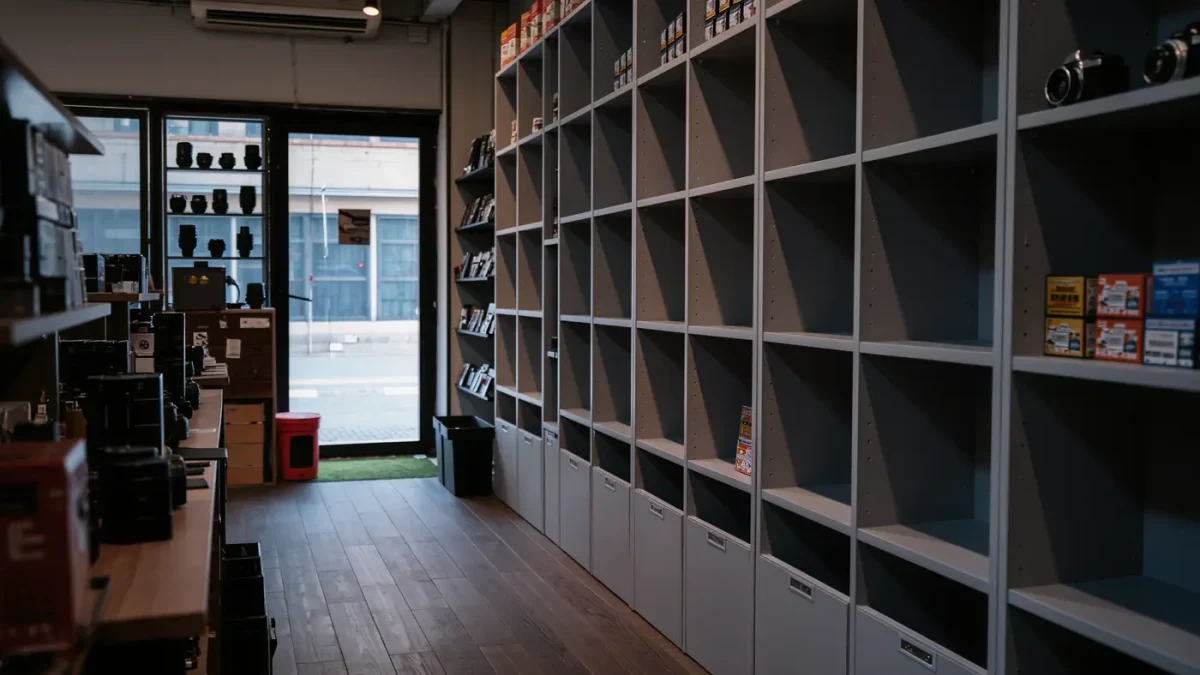
Film sells out because it is made in batches, not on tap. When Harman launched its first color film, Phoenix 200, on December 1, 2023, first batches sold out within days, per trade coverage. Three months earlier, Fujifilm Japan suspended domestic color film orders in March 2023, apologizing for material shortfalls. Both events show the pipeline: surge, empty shelf, wait.
How is film actually made, in batches?
Emulsion is coated in campaigns. A plant mixes a large quantity of an emulsion, coats it onto giant master rolls, and then those rolls are slit and converted into 35mm, 120, sheet and other formats over the following weeks. Between the mixing, coating, quality control, converting and distribution, months pass before a single coated batch reaches shops.
The consequence is that supply arrives in steps. Demand, by contrast, arrives in waves — a viral stock, a new camera, a holiday season. When the wave is bigger than the step, the shelf empties and no amount of retailer goodwill can refill it until the next coating run is cut, tested and shipped. The Producer Price Index tracked by the Bureau of Labor Statistics shows the same stepping in prices: batch industries reprice per campaign, not per week.
Why does a shortage happen if demand is up?
Because makers remember the bust. Through the 2000s and 2010s, film demand collapsed so far that most coating capacity closed, and the survivors plan conservatively rather than coat speculatively. A sell-out does not automatically schedule another run; line time is shared across many emulsions, and a maker will not displace a steady seller to chase a spike it cannot trust. Professional color stocks spent much of 2021-2022 in and out of stock at major retailers for exactly this reason: the revival arrived faster than coating schedules could absorb it.
What is an allocation?
When demand outruns a batch, distributors do not auction it — they allocate. Each retailer gets a pro-rata share of what is available, often with quantity limits per customer. Allocation is why the same emulsion can be in stock at one shop, capped at two rolls per order, while another shop shows months of backorder. It is also why new limited editions, such as Lomography's numbered LomoChrome runs, vanish in hours: limited batch plus global allocation equals an instant sell-out.
Restock timing follows the batch calendar, not retail optimism. A typical cycle runs emulsion mixing, test coatings, the full coating, quality control on sample rolls, converting master rolls into retail formats, packaging, then shipping — each step measured in weeks, the whole comfortably in months. Restock dates slip at least once in most waves, not because anyone is careless but because quality control on kilometers of thin, coated plastic cannot be rushed. One master roll feeds thousands of retail rolls, which is why a single completed batch ends a shortage abruptly. When a maker posts a delay, it is usually this pipeline reporting honestly — the helpful signal is a date, however far away, rather than silence.
Where do resellers and scalpers fit?
They price the gap. A reseller who bought allocated stock at list and lists it at double on a marketplace is not adding supply; they are converting a shortage into a markup. The tell is consistent: honest retailers keep the maker's price and show a restock date, while flip-priced listings have no restock date because they are not part of the pipeline. During the sharpest waves — Harman Phoenix at launch, CineStill's tungsten stock in its drought years, surprise restocks of slide film — marketplace prices ran multiples above list for exactly as long as the shortage lasted, then collapsed back.
How do you buy through a shortage?
- Backorder at list price from a real retailer rather than paying a flipper; restocks arrive on the next coating run, usually weeks, not never.
- Keep a small buffer of your staple stocks, bought at normal prices — one brick of your default emulsion, stored cool, beats three panic purchases at double.
- Know your substitutes before you need them: if your 400-speed color is gone, the shelf usually still holds a workable cousin at a different speed or brand.
- Ignore discontinuation rumors. A product page saying out of stock means out of stock — discontinuations are announced, in writing, by the maker.
Is any of this going away?
Partly, and slowly. Harman invested in its Mobberley plant capacity in July 2024, and Eastman Kodak's return to direct distribution from late 2025 shortened one link in the chain. But the physics of batch coating remain: film supply will keep arriving in steps, and the shooters who feel it least are the ones who treat buying as routine rather than rescue. The empty shelf is rarely the end of the stock; it is usually just the space between batches, priced impatiently by whoever owns the last boxes.