Match the camera to how you shoot, not to forum folklore. This guide to a first medium format camera compares the realistic entry routes. A 6x7 negative holds roughly 4.5 times the area of a 35mm frame, per Mamiya's published format specifications, and that ratio explains most of the format's cost and weight.
Why move up to medium format at all?
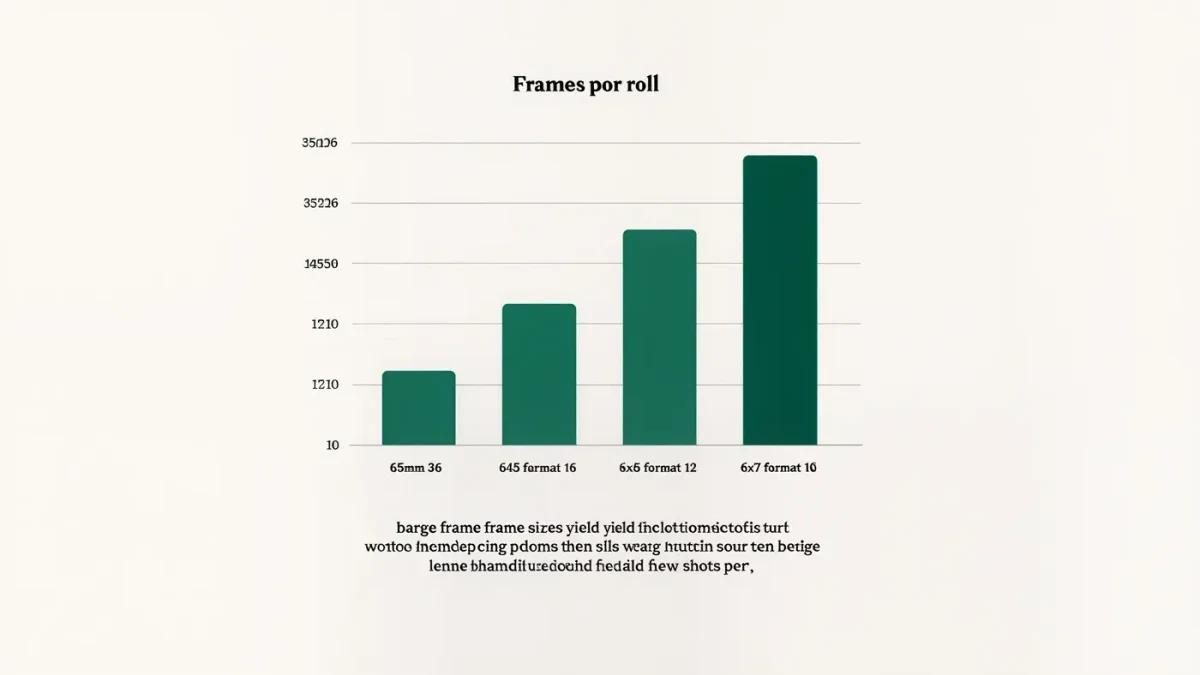
The honest answer is negative area. Bigger frames mean finer grain at any print size, smoother tonal transitions, and a look photographers keep chasing after digital because it survives enlargement. Medium format also imposes a rhythm: a 120 roll delivers 16 frames in 645 format, 12 in 6x6, 10 in 6x7, and 8 in 6x9, versus 36 on 35mm. You slow down, because every frame costs real money.
The arithmetic deserves respect. As of 2025, a 120 roll plus developing and scanning commonly lands around $20-30 all-in, so a 10-frame 6x7 roll works out near two to three dollars per press of the shutter. That figure is not a warning, it is the format's teaching function: medium format makes you compose before you commit. The tradition has pedigree as well; Apollo missions carried 70mm film cameras, and scans in NASA's public image library show what larger frames deliver even in brutal conditions.
What are the realistic entry routes?
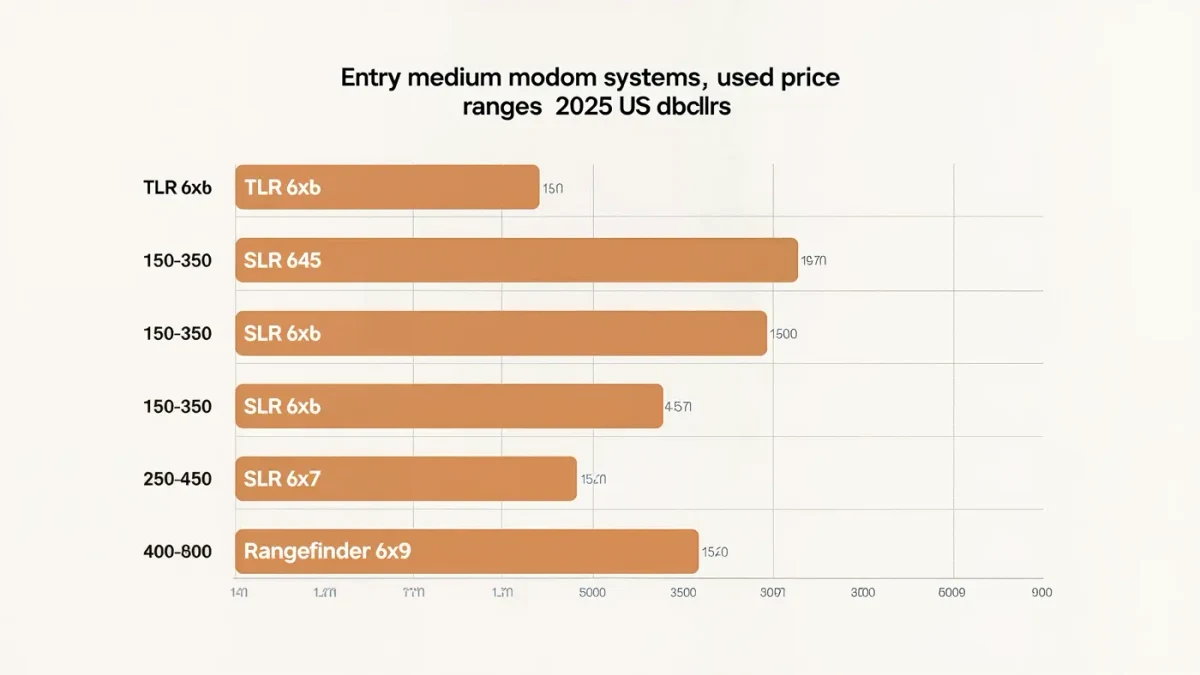
Five systems cover almost every sensible first purchase. Prices below are rounded used-market ranges as of 2025.
| System example | Format | Frames per 120 roll | Weight class | Used price, 2025 | Honest fit |
|---|---|---|---|---|---|
| Yashica Mat 124G | 6x6 TLR | 12 | About 1.2 kg | $150-350 | Square portraits, simplest handling, quiet |
| Mamiya M645 (1000s or Super) | 645 SLR | 16 | 1.5 kg with prism | $150-300 | SLR habits, most frames per roll, cheapest system glass |
| Bronica SQ-A | 6x6 SLR | 12 | 1.5-1.8 kg | $250-450 | System SLR with interchangeable backs and finders |
| Mamiya RZ67 | 6x7 SLR | 10 | Over 2 kg | $400-800 | Maximum detail, tripod life, studio manners |
| Fujifilm GW690 | 6x9 rangefinder | 8 | About 1.4 kg | $300-600 | Biggest entry negative, fixed lens, outdoor pace |
Read the table as a decision about yourself. The TLR suits patient portraitists and anyone who wants the cheapest credible square. The 645 route suits photographers who already think in SLR terms and want the most shots per roll. The SQ-A buys true system flexibility in 6x6. The RZ67 buys negative size and nothing that helps your shoulders. The GW690 buys frame area and go-anywhere simplicity at the cost of a fixed lens and the fewest frames per roll of the group.
Two routes deserve the longest look. The Mamiya M645 line, in 1000s or Super trim, handles like the 35mm SLR you already understand: prism finder, crank advance, through-the-lens focusing, and sixteen frames per roll to learn on, with system lenses that run cheap as of 2025 because the professionals who bought them moved on. The 80mm f/2.8 attached to most bodies is unremarkable in the best way. The Yashica route teaches a different lesson entirely: the waist-level finder, the square, and twelve deliberate exposures make most photographers slow down by default, which many teachers consider medium format's actual benefit.
The other three routes are for self-knowledge. The Bronica SQ-A suits photographers who already know they want interchangeable backs, finders, and motor options in 6x6, which is a system commitment rather than a first step. The RZ67 suits anyone anchored to a tripod and chasing maximum frame area. The GW690 suits walkers who want the largest entry negative attached to a fixed lens and no decisions. Buying any of them first is not wrong; it is simply paying for specificity before your own habits have been tested.
What should every buyer check on a used medium format camera?
Whatever the system, the same four inspections decide the purchase. First, light-tightness: foam seals on film backs and door edges crumble with age, so inspect every channel and assume renewal. Second, shutter speeds: fire the range by ear and film slow speeds with a phone, because decades-dry lubricants drag long exposures first. Third, film spacing: overlapping frames are the classic medium-format transport fault, so ask any seller for a recent exposed roll or run a cheap test roll before final payment. Fourth, focus: rack or knob focusing must run smooth across the whole range, and the finder must be clean enough to judge focus honestly.
Also plan for metering, because most of these cameras have none. A phone meter application works, and a used handheld incident meter works better; budget a small amount and learn one of the two before the camera arrives.
One habit worth importing from large-format practice: keep a small notebook for the first ten rolls, recording light, aperture, and what you expected from each frame. The format's slow pace is exactly what makes that feedback loop improve your seeing rather than merely your record-keeping, and ten annotated rolls teach more than a hundred casual ones.
What are the honest costs after purchase?
Beyond the per-frame arithmetic, medium format asks for support gear. A 120-capable flatbed scanner or a good lab relationship, a tripod that holds the weight without ceremony, and possibly a bright finder upgrade on TLRs. Development is still widely available through mail-order labs, and 120 film itself remains in healthy production from multiple makers, two supply facts that make this a better moment to enter the format than the doom years implied.
Scanning is the quiet decision in that chain. Labs scan 120 film well but charge per frame, so volume shooters feel it monthly; a 120-capable flatbed at home trades some sharpness for freedom and, at as-of-2025 prices, typically pays for itself within a year of steady shooting. Prints, the format's native output, cost more than 35mm enlargements and visibly reward the extra negative from 11x14 inches upward. Plan the whole chain, camera to print, not just the body.
Which one should you actually buy first?
For most first-timers, the Yashica Mat 124G or a Mamiya M645 is the happiest entry: minimal money, quick resale, and a clear sense of whether the format's pace suits you before deeper investment. Choose the RZ67 only with a tripod and a specific reason, the SQ-A when system backs and finders matter, and the GW690 when negative size outranks every other wish. All five hold value gently, which means your first decision is reversible, and that is the real beginner's advantage in medium format.
A last calibration exercise: look honestly at your last few hundred photographs. If they are portraits and slow scenes, the TLR or the SQ-A fits; if they are walks and travel, the GW690 or the 645; if they are deliberate setups with lights, the RZ67 has already won. The format rewards matching and punishes aspirational buying gently but repeatedly, once per frame, at two to three dollars a press.