Home development of black-and-white film cost roughly $2-4 per roll in chemistry as of 2025, against $12-18 for a typical US lab develop-and-scan — and about $100-150 of starter gear repays itself within 10-15 rolls. The honest math favors home for black-and-white volume, narrows for color negative, and turns on temperament more than money for slide film.
Every version of this comparison is really three comparisons: cash cost per roll, break-even speed on equipment, and the value of your own time. The numbers below are rounded from US retailer and lab menu prices as of 2025; local prices move, but the structure of the math holds everywhere.
What does home black-and-white actually cost per roll?
Chemistry is remarkably cheap. A one-liter packet of D-76 or ID-11 developer, around $13-18, processes 8-16 rolls depending on dilution and reuse — call it $1-2 per roll. Rodinal-style concentrates run absurdly lean: diluted 1:100 for stand development, a bottle yields per-roll chemistry in the $0.20-0.50 range. Stop bath is pennies per session. Fixer, roughly $10-15 per liter working strength with reuse, adds $0.50-1. Water is free. Add it up and a monochrome roll costs $2-4 in consumables, sometimes less.
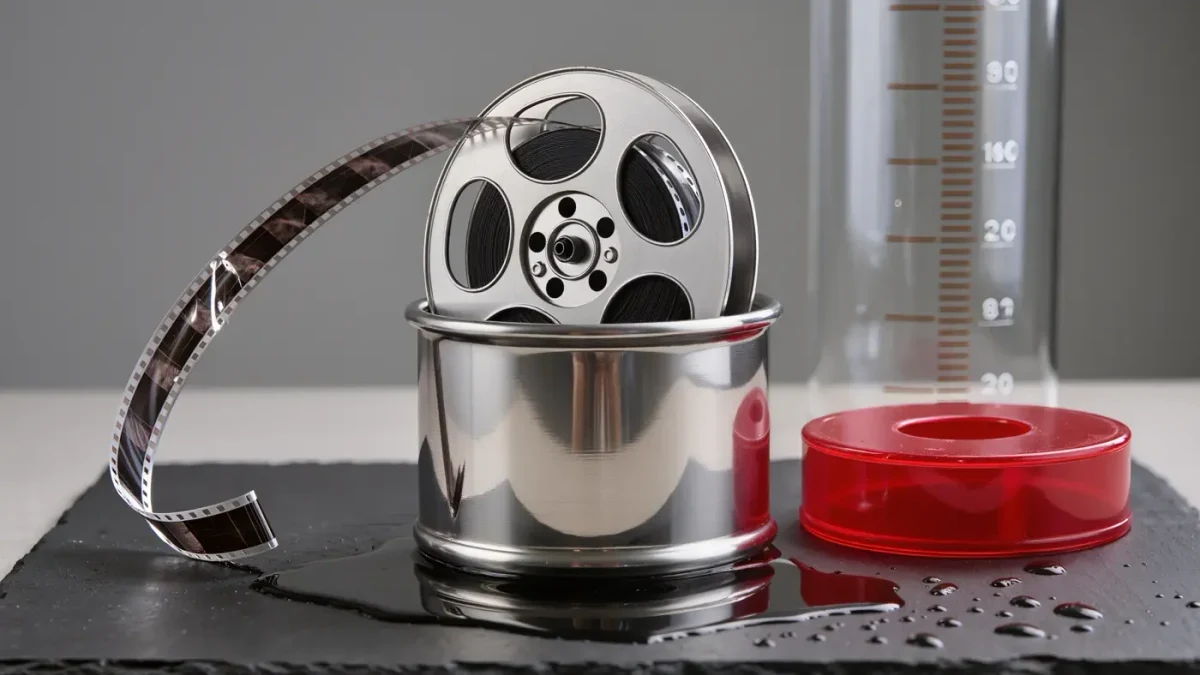
The gear is a one-time stack: a two-reel stainless or plastic tank at $40-70, a changing bag at $25-40 (a dark closet works for the disciplined), a good thermometer at $10-15, bottles and graduates at $20-30, plus film clips. Against a lab's develop-only price of $6-10, the kit pays for itself in about 10-15 rolls; against develop-and-scan pricing, faster still. The catch is time: 30-60 minutes of active attention per session plus wash and drying, and none of that is billable back.
What about color negative at home?
C-41 home processing works and is widely practiced, but the margin thins. Kits priced $35-60 yield roughly 8-20 rolls depending on format and care — $2-6 per roll — while demanding 38°C temperature stability, disciplined timing and thorough aeration management. The failure mode is expensive: one chemistry-tired batch that ruins four rolls of $12 color stock erases the savings from the whole kit. Shooters who standardize on one kit, one temperature method and a written timeline do fine; improvisers pay tuition in fogged negatives. E-6 slide processing at home is cheaper than almost any lab's $15-25 menu — three-bath kits run $40-70 for 6-12 rolls — but it is the least forgiving process of the three and rewards only the committed.
What does the lab charge, exactly?
Rounded US menu prices as of 2025, across local and mail-order labs:
| Service | Typical 2025 range |
|---|---|
| Develop only (C-41 or B&W) | $6-10 |
| Develop + standard scans | $12-18 |
| Pro lab develop + premium scans | $18-30 |
| E-6 slide process | $15-25 |
| Push or pull per stop | $2-5 |
| Mail-order round-trip shipping | $8-12 unless bundled |
What the lab sells is not chemistry but certainty and time: a controlled process line, a scanner, and someone else's afternoon. For shooters exposing a few rolls a month, that is a fair trade. For shooters exposing a few rolls a week, the same menu becomes the hobby's second-largest line item after film itself.
What hidden costs does the math forget?
The per-roll arithmetic above is honest but incomplete. Sleeves and archival storage for negatives add a dollar or so per roll; discarded chemistry has disposal rules in some municipalities; failed rolls — and every home developer has a first one — carry the full price of the film plus the shoot. Push and pull at home cost nothing but a timer, while labs charge $2-5 per stop, which quietly favors home processing for anyone who shoots nighttime black-and-white at box-speed-plus-two. And the gear never truly stops at the tank: a second tank for color separation, a tempering bath, better reels — the hobby acquires accessories the way cameras acquire lenses. None of this breaks the case for home development; it just means the true break-even lands a few rolls later than the box prices suggest.
When do you break even?
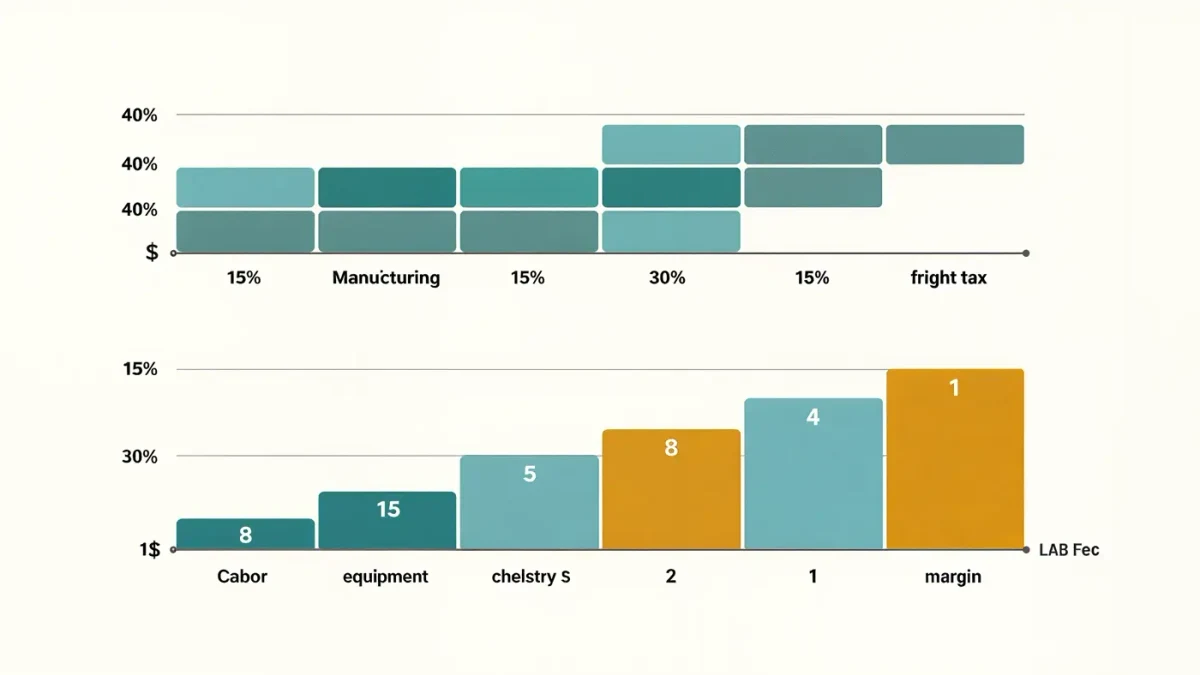
The arithmetic is straightforward. Black-and-white: gear around $100-150, chemistry savings near $8-12 per roll versus develop-and-scan — break-even in roughly 10-15 rolls, and everything after is margin, minus your time. Color negative: a temperature-controlled setup adds cost, kits cost more per roll, and the realistic break-even sits near 15-25 rolls for a careful practitioner. Slide film: break-even is fast on paper but the risk-adjusted math depends entirely on how many ruined rolls your learning curve costs. A useful discipline: commit to the home path only for the process you shoot most — the economics reward depth, not breadth.
What about scanning?
Scanning is where the honest math gets bent. A capable flatbed runs $300-600; a DSLR or mirrorless copy setup costs $50-150 in stands, holders and diffusion if a suitable camera and macro lens already exist. Compare with lab scan pricing of $5-15 per roll and the flatbed breaks even in 20-60 rolls — but scanning is also the slowest, most fiddly stage of the home pipeline, at 20-40 minutes per roll for careful work. Many home developers settle into a hybrid: develop at home where the savings are certain, pay the lab for scans where the time savings are real. That hybrid captures most of the economics and little of the drudgery.
The verdict, as of 2025 prices: home development is not a hobby myth — for black-and-white shooters past a roll a week it is genuinely cheaper, and the control over process is worth something no menu lists. For color shooters at low volume, the lab remains one of the better deals in photography. The worst position is the middle: owning the gear, dreading the sessions, and still paying for scans. Run the numbers for your own volume before buying the tank.