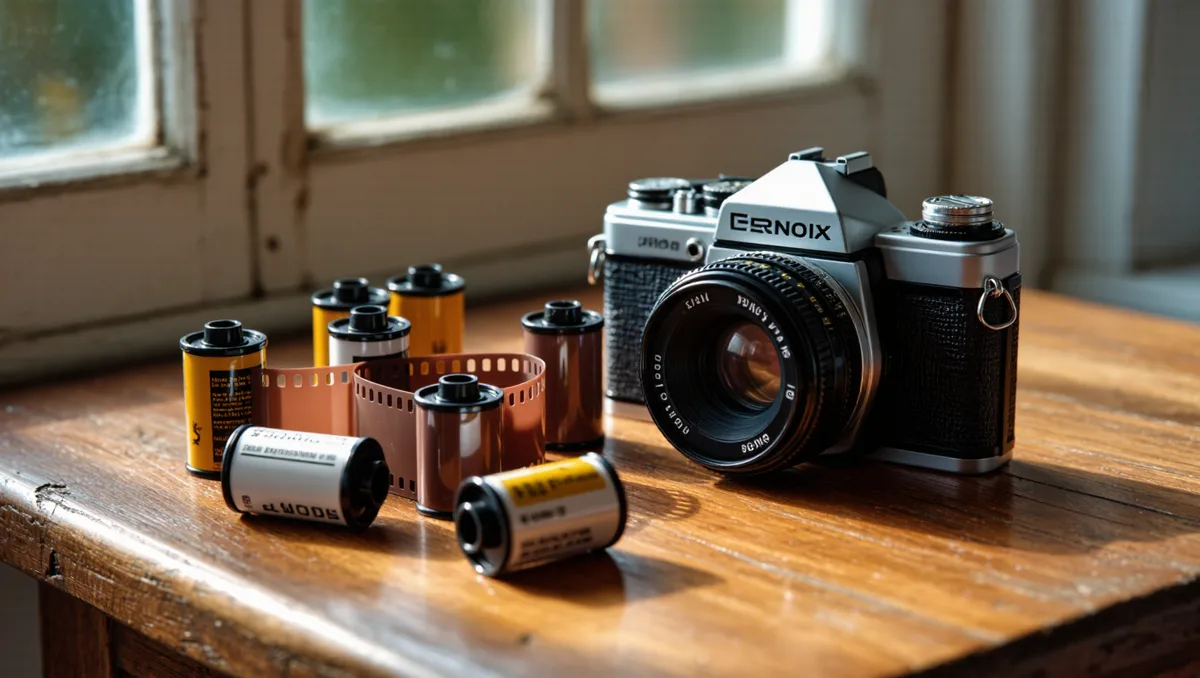
As of 2025, essentially all still-photography film is coated at roughly six sites worldwide: Eastman Kodak in Rochester, Harman Technology in Mobberley, Fujifilm in Japan, InovisCoat and FILMOTEC in Germany, and Ferrania's partially rebuilt line in Italy. Capacity, not customer appetite, is the binding constraint of the film revival.
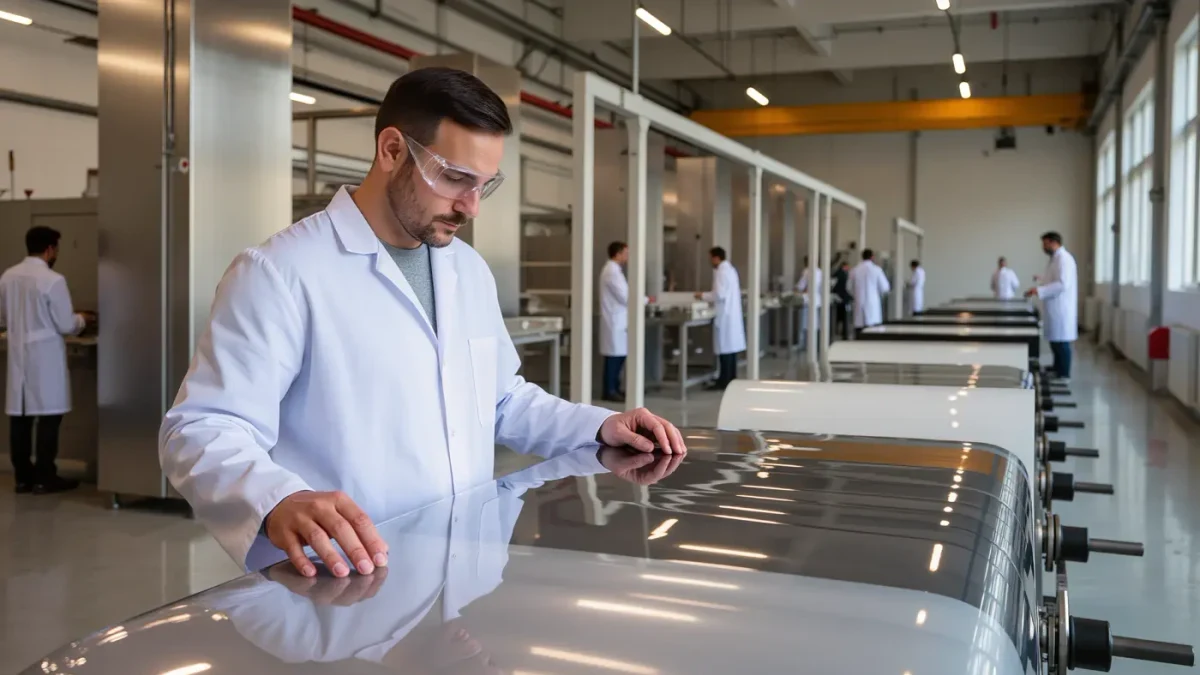
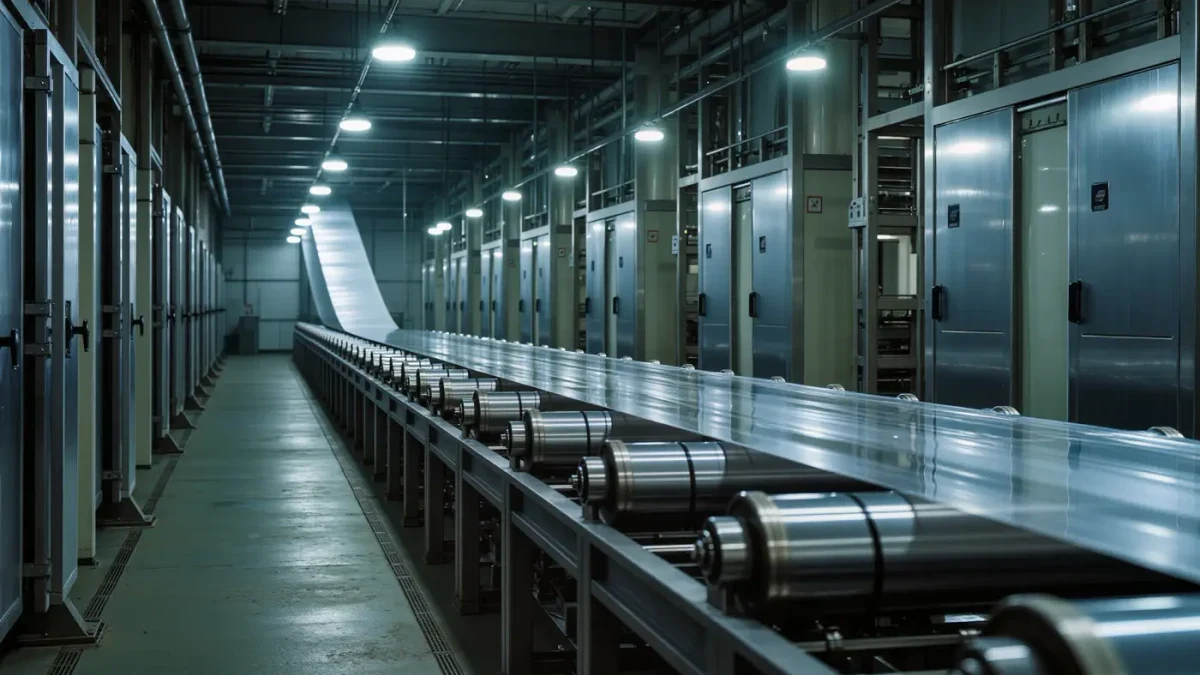
Coating photographic film is precision chemical engineering on a machine the size of a paper mill. Emulsions are precipitated from silver nitrate and salts in gelatin, ripened into light-sensitive crystals, sensitized with dyes for their assigned color, then spread as more than a dozen ultra-thin layers onto a base web more than a meter wide. The web dries in tall towers and winds onto master rolls measured in kilometers. A single master can feed tens of thousands of 35mm rolls after slitting — which is both the magic and the problem.
Who actually coats film, and where?
The map is short enough to memorize. Eastman Kodak's Rochester operation is the largest survivor, coating motion picture stock and still films — Portra, Gold, Tri-X, Ektachrome — on shared infrastructure. Harman Technology in Mobberley is the anchor of black-and-white: HP5, Delta, FP4, the Kentmere line and photographic papers, and the site of publicly announced capacity expansion through 2022-2024. Fujifilm coats its color negative and slide films in Japan, having consolidated production as its overseas lines wound down; Velvia and Provia ride the same scarce calendar. InovisCoat in Monheim am Rhein runs coating for partner and private-label brands — the quiet contract manufacturer behind several boutique emulsions. FILMOTEC, custodian of the ORWO line descended from the former East German film works, coats black-and-white cinema and still stocks. And Ferrania, on the site of the old 3M plant in Liguria, has spent years rebuilding a slice of its coating building, shipping its P30 reversal film in batches since the late 2010s and adding the faster P33 in 2023.
Conspicuously absent from the list: CineStill, which coats nothing. Its films begin life as Kodak motion picture stock, finished and repackaged after the remjet backing layer is removed. The distinction matters — value-added finishing is a real business, but it is one step downstream of the true chokepoint.
How much film can one plant make?
Throughput at a modern coating site is simultaneously enormous and inflexible. Enormous, because a stable run produces master rolls measured in kilometers — enough that a scheduled campaign of a popular 35mm stock covers world demand for months in a matter of days. Inflexible, because the same machine must then stop, clean, re-qualify and start the next emulsion, paying the changeover toll each time. Black-and-white runs are the simplest campaigns — fewer layers, less drying complexity — while color negative and especially slide films demand the tightest process windows and longest qualification. The arithmetic pushes every plant toward fewer, longer runs of proven sellers, which is exactly the shape of the modern catalog: healthy stocks get healthy run lengths, and marginal stocks live year to year on the calendar's leftovers.
What happens during a coating run?
Each run is a planned campaign, scheduled months ahead. The emulsion must be made and quarantined, tested on a pilot coating, then released. The production machine starts slowly and unstably: until coating stabilizes, the web is off-spec and scrapped, so every product change pays a toll in wasted kilometers. Once the run is stable, throughput is a marching parade of master rolls into quality control — sensitometry on every batch, measurements of layer thickness, color response and fog — then into refrigerated storage to age until release. Only then does conversion begin: slitting, perforating, spooling, packaging. From melt to shelf, a roll's passage takes many months.
Why are niche formats the bottleneck?
Finish, not coating, killed most dead formats. A master roll could in principle be slit many ways, but each way needs its own downstream line: perforators for 35mm, spooling and backing-paper lines for 120, cutters and interleafers for sheet, and long-gone tooling for 127 and 220 — both discontinued by their makers. When a maker says a stock is 'on allocation' or pauses an emulsion, it usually means the run calendar and finishing equipment couldn't justify the slot that year, not that the formula vanished. Short runs also carry the full changeover toll over fewer sellable units, which is why niche formats price disproportionately and reappear in unpredictable annual windows.
Why can't capacity simply be added?
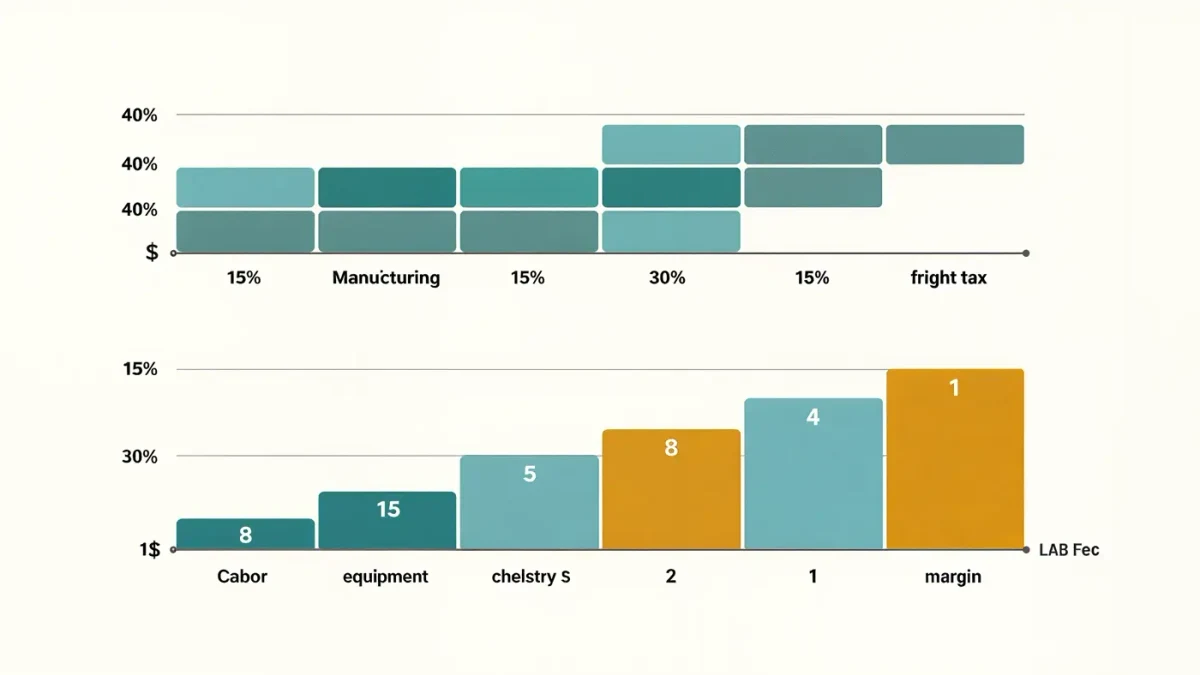
Because the fixed-cost stack is enormous and the market, while recovered, remains a fraction of its late-1990s peak. Industry estimates for a new photographic coating line run to hundreds of millions of dollars, and the knowledge base — the process engineers who understand dispersion, coating rheology and sensitometry — retired or moved on when the industry shrank. Existing players therefore expand incrementally: Harman's debottlenecking investment, Ferrania's building-by-building rebuild, Kodak's rehiring and line time reclaimed from idle capacity. That is rational, and it is also why supply responses arrive in seasons, not weeks.
What does this mean for supply?
Three practical consequences. First, motion picture and still film share lines, so a strong cinema year — as 2021-2022 demonstrated — crowds still-film slots and produces backorders and allocations that look, from the outside, like shortages of raw material. Second, low-volume stocks live and die by scheduling: a beloved emulsion can vanish for a year simply because a longer-running product claimed the machine. Third, the used-goods assumption that supply will scale to demand does not apply: the revival's demand curve is steep, but the capacity curve has six hard kinks in it, each named above.
For shooters, the takeaway is patience with the calendar, sympathy for the short list of plants still doing this work, and an appreciation that every roll on a shelf represents a scheduled, tested, changeover-taxed campaign — one of only a handful of places on Earth still running the full alchemy.