A 36-frame roll of film carries on the order of a gram of silver, and that silver crossed $50 an ounce in October 2025 — its first time above that mark since January 1980, per Reuters. Silver is the ingredient everyone names when film prices rise, yet it is rarely the largest cost in a finished roll.
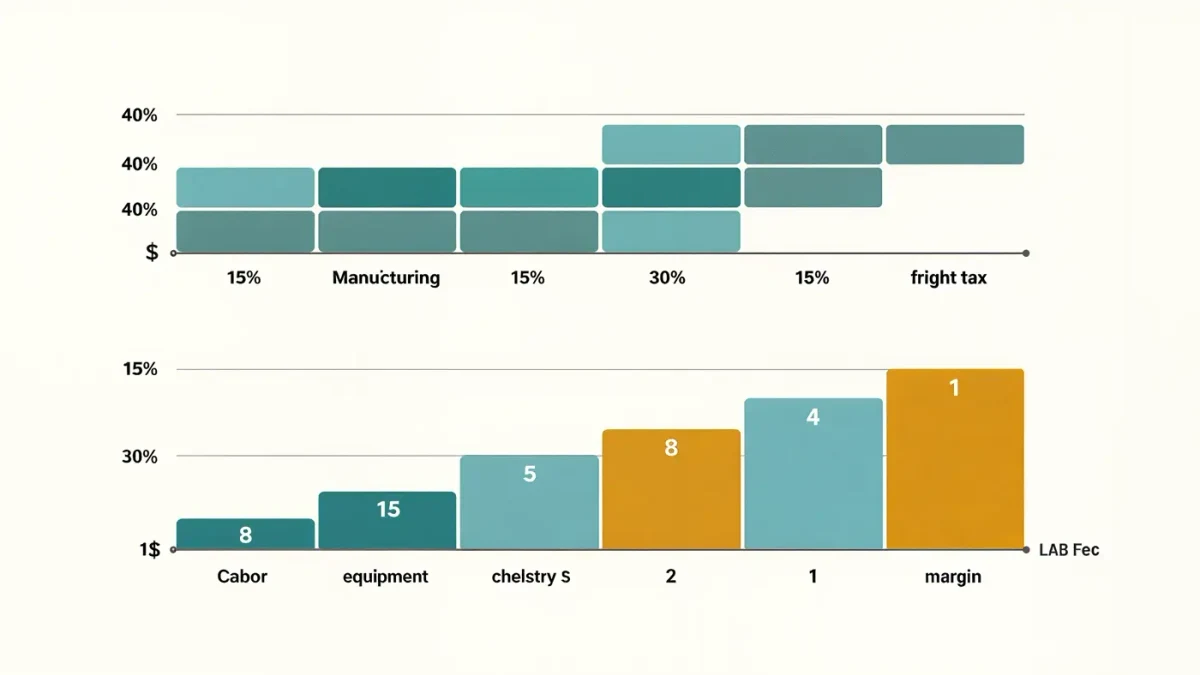
The anatomy of manufacturing cost runs deeper: a plastic-and-paper base, photo-grade gelatin, the enormous fixed toll of a coating line, conversion into cassettes and backing paper, packaging, cold storage and time. Understanding that stack explains why film behaves the way it does — why niche formats cost disproportionately, why runs appear and disappear, and why volume itself is the healthiest cost lever a maker has.
What does silver actually cost per roll?
Film's light-sensitive crystals are silver halide: silver nitrate precipitated with bromide and iodide salts inside molten gelatin. Industry estimates put the silver content of a 36-frame roll on the order of a gram, varying with emulsion and speed — faster films carry more silver. The arithmetic is sobering rather than fatal. At roughly $29 an ounce, where silver opened 2025, that gram cost a maker about ninety cents; above $50, about $1.60. A visible swing, but one measured in dimes on a product whose shelf price is measured in tens of dollars.
Manufacturers buy silver under contracts and hedge where they can, so spot spikes reach factory costs with a lag of months. The pass-through does arrive: Kodak Alaris named rising silver and component costs in its price increases effective January 1, 2025, and the metal spent late 2025 above levels film accounting had never absorbed. Silver is the most volatile input, not the dominant one.
What is the film base and who makes it?
Under the emulsion sits the base: cellulose triacetate for most still films, a clear, tough plastic that must be optically flawless and dimensionally stable across decades. A few special-purpose films use polyester instead. The base is extruded, treated with subbing layers so emulsion adheres, and wound onto massive rolls before it ever sees a coating machine.
Base is a petrochemical product with a narrow supply circle. The largest film makers produce their own; smaller coaters buy from a short list of suppliers. Its cost tracks resin markets and energy prices more than metals — one reason European coaters felt the post-2022 energy squeeze directly in their input bill. Photo-grade gelatin, derived from cattle hides and bones and refined to extraordinary purity, comes from a handful of specialist producers worldwide and is similarly easy to overlook and hard to replace.
Why is the coating line the biggest cost?
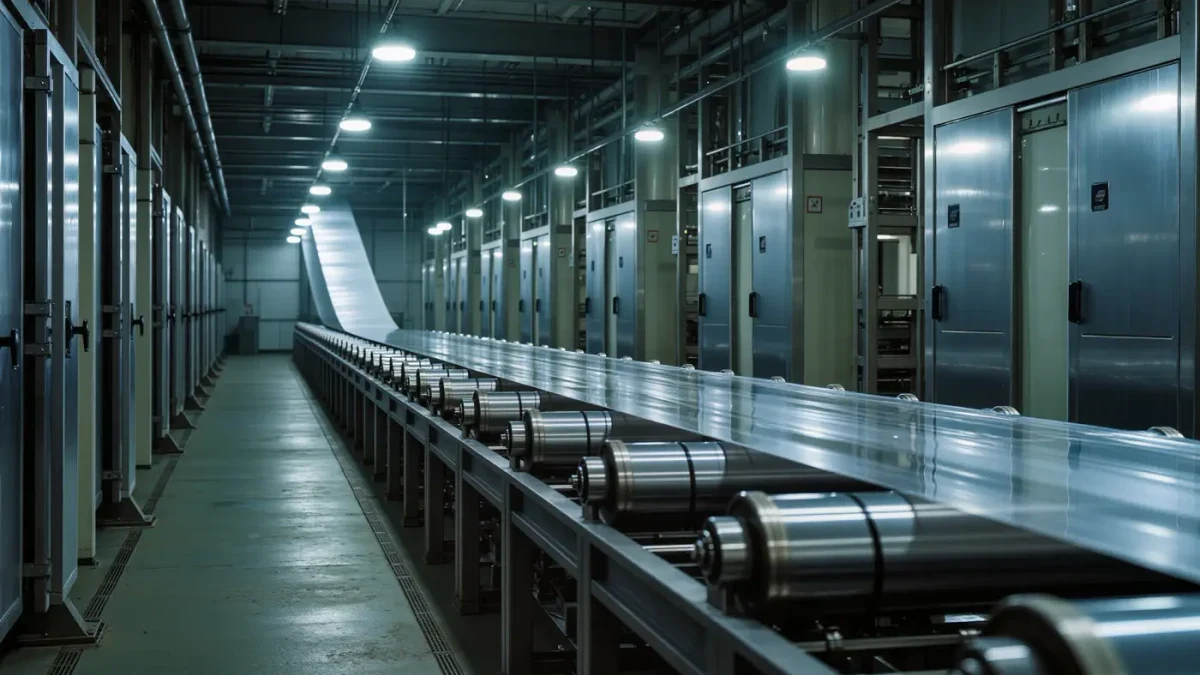
Everything above — silver, gelatin, base — feeds the true cost center: the coating operation itself. A color negative film carries more than a dozen layers, coated in one continuous pass onto base more than a meter wide, dried in tall towers, and wound into master rolls measured in kilometers. A single master roll can yield tens of thousands of 35mm rolls after slitting.
The economics are those of any precision continuous process. The machine, its cleanrooms, its airflow and its specialists cost the same whether the line runs or waits. Every change of product begins with off-spec film: until coating stabilizes, the web is scrapped, so each run pays a fixed toll in kilometers. Runs are planned months ahead, and per-roll cost depends almost entirely on how many sellable rolls share that toll. A long run of a popular 35mm stock spreads it thin; a short run of a niche emulsion does not.
What goes into packaging and finishing?
After coating and quarantine-quality-control sensitometry on every batch — the master roll moves to conversion. Slitting machines cut the web into 35mm ribbons; perforators punch the sprocket holes that transport the film; other lines cut and spool 120, sheet or 127 formats. The 35mm cassette alone is a small assembly project: a drawn steel shell, a plastic spool, and felt light traps that must be clean enough not to scratch emulsion for decades.
Then comes packaging — canister, cartridge or backing paper, carton, leaflet, date coding — and cold storage, because film is dated goods, typically carrying an expiry two to four years out. Inventory risk is real cost: a roll sold in 2025 was coated, converted, warehoused and shipped across a long pipeline that someone financed. At small volumes, conversion and packaging together can rival the raw-material bill.
How do run lengths change the math?
The clearest way to see the stack is to compare the same emulsion across formats. The table below is illustrative — rounded from industry-typical practice as of 2025, not audited figures — but it reflects the structure every maker works with.
| Format | Typical run scale | Cost pressure |
|---|---|---|
| 35mm consumer stock | Tens of thousands of rolls per run | Set-up toll spread widest; materials dominate |
| 120 roll film | Thousands of rolls per run | Shorter runs, more changeovers, backing-paper finishing |
| Sheet film | Cut batches from master rolls | Cutting, interleaving and packaging add heavily per unit |
| Niche and cinema-adjacent stocks | Scheduled around other runs | Calendar risk; waits for a slot |
Why can't a new plant just start coating?
Because the fixed-cost stack is the moat. Industry estimates for a new photographic coating line run to hundreds of millions of dollars, staffed by specialists whose knowledge lives in few places — Rochester, Mobberley, a handful of German and Japanese sites. With still-film demand a fraction of its late-1990s peak, no rational investor rebuilds that capacity from scratch; existing makers debottleneck and extend instead. That is why supply answers demand with a calendar, not a spigot.
For the shooter, the takeaway is simple. The price of a roll is mostly amortized plant, skilled labor and time, with commodities like silver threading through as the loudest but not the heaviest input. When volume grows, fixed costs spread wider and niche stocks become schedulable again — the quiet reason a healthy revival is cheaper for everyone than a fragile one.