CineStill 800T is a film chosen for its look before its exposure: an ISO 800 tungsten-balanced negative built from Kodak's Vision3 cinema emulsion, sold for standard C-41 processing, and famous for the red halation blooming around every neon source. Per CineStill's spec sheet it is rated ISO 800 under 3200K light, at roughly $13-15 a roll as of 2025.
What is CineStill 800T, exactly?
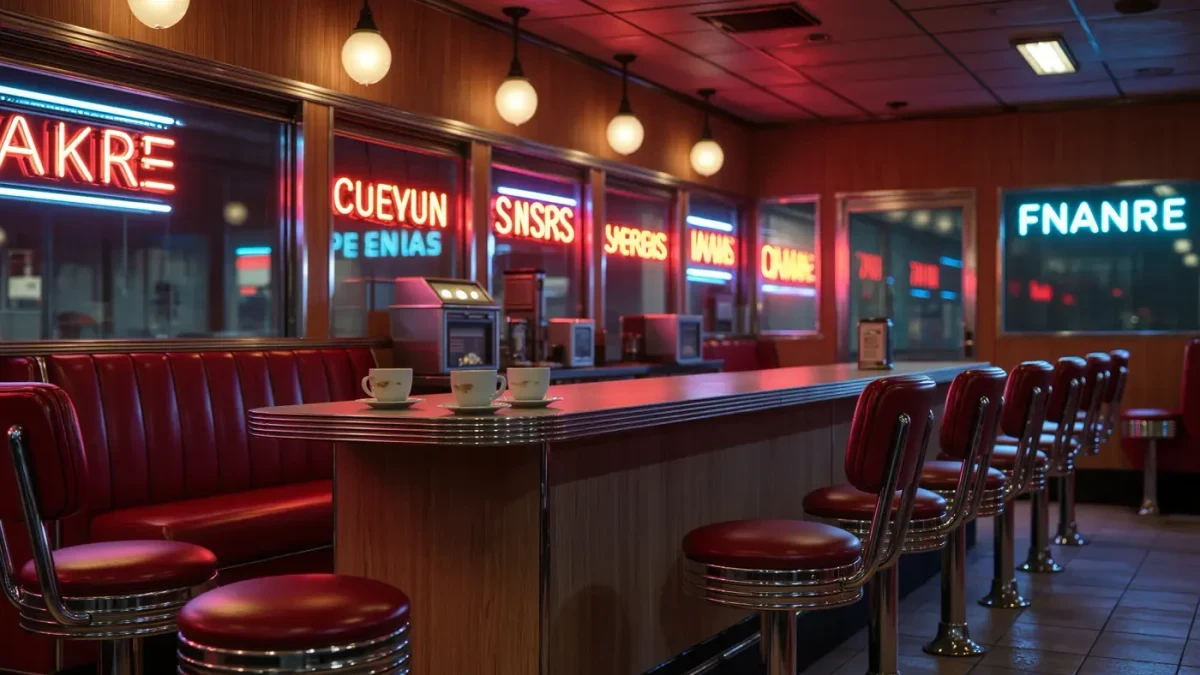
Genealogy first. CineStill's own published description is candid about the origin: the film is Kodak Vision3 500T motion picture stock with the rem-jet anti-halation backing stripped off in a custom finishing step so it can survive ordinary C-41 chemistry. Remove the rem-jet and you remove the anti-halation layer — which is why bright point sources in a dark frame bleed that distinctive crimson glow around streetlights, signs, and headlights.
That glow is the entire product. Plenty of films shoot clean at night; only this one ships with a signature artifact baked into the emulsion's construction, documented and marketed by the maker itself. The tungsten balance is the second half of the identity: light sources render neutral white instead of the orange cast daylight films produce after sundown.
| Spec | Value |
|---|---|
| Speed | ISO 800 (CineStill spec sheet) |
| Color balance | Tungsten, 3200K |
| Process | C-41 standard; ECN-2 possible |
| Origin | Kodak Vision3 500T without rem-jet |
| Rough price | $13-15 per 36 exposures, as of 2025 |
How does it handle daylight and mixed light?
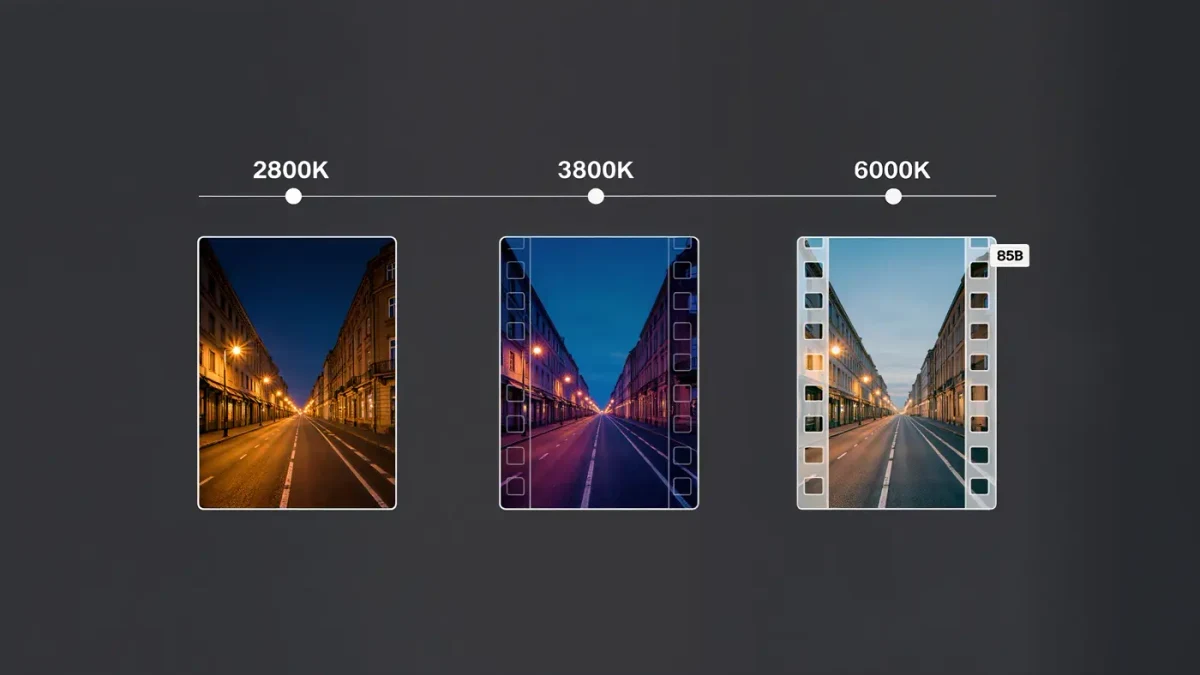
Under daylight, tungsten balance goes cold — scenes shift blue, sometimes beautifully so in overcast or dusk contexts, sometimes just chilly. The classic correction is an 85B warming filter, which Kodak's published conversion-filter data puts at about two-thirds of a stop of light lost. Plenty of shooters skip the filter and grade the blue back in scanning; both approaches are legitimate, and the unfiltered look has its own following.
Mixed light is where the balance pays off. Sodium streets, shop windows, LED signs, and interiors shot from sidewalks all render with believable neutrality in the sources, while the halation turns every lamp into a compositional event. Meter for the midtones and let the highlights do what they are going to do — clip into glow — because that is the deal this film offers.
Dusk deserves special mention: the half hour when sky and streetlights balance is the film's natural habitat, when tungsten sources read warm-neutral against deep blue air. Arrive early, stay past the end of civil twilight, and shoot steadily — the palette is doing most of the composing.Can you push it when the night gets serious?
Yes, and the manufacturer says so. CineStill's development guidance includes push times for EI 1600 and 3200, and the Vision3 heritage — cinema stock engineered for underexposed sets — takes pushes with more grace than most stills films. Grain grows, naturally, and the halation gets brassier, but the palette survives in a way consumer 800s usually don't.
One practical caution: because the anti-halation layer is gone, labs occasionally grumble about the film curling or loading oddly, and home developers need to treat the first rinse gently. Nothing about it is difficult; it is simply not the blank-eyed, process-anything roll that Gold 200 is.
A note on ratings: plenty of published shooters prefer EI 640 for everyday night work — a slight overexposure that cleans shadows and tames the glow — reserving 800 and pushes for genuinely black rooms. The film has enough latitude that both philosophies produce printable negatives; pick one and standardize so your metering habit and your development agree.
What do people say about the results?
The published consensus has been stable since the film launched in 2012: it renders cities at night the way people remember them rather than the way they were. Reviews consistently praise neutral tungsten rendering and the halation signature, and consistently note the same weaknesses — softness when underexposed, blue-cold daylight without filtration, and a price well above commodity color films.
It is also, quietly, a training film for seeing light. Because every source in the frame becomes a visible event, 800T teaches previsualization: you start walking streets scanning for lamps, signs, and windows the way a location scout does.
Is it only for city streets?
Neon districts are the stereotype, but the film's real subject is any lamp after dark. Candlelit dinners, carnival rides, theater marquees, tunnels, night trains, aquariums — anywhere point sources float in large darkness, the halation and neutral tungsten balance do useful work. Interiors lit by warm practicals photograph beautifully without flash, which matters for events where a flash would change the room.
What it is not: a subtle documentary tool. The glow announces itself in every frame, and subjects who do not want their venue romanticized will find the treatment heavy-handed. For quiet, factual low-light work, a conventional 800-speed daylight film with correction produces cleaner, less editorialized files.
What workflow details actually matter?
Tell the lab what it is. CineStill 800T processes in ordinary C-41, but because the rem-jet is pre-removed, the film can arrive slightly curlier than stock stills films, and a heads-up prevents grumbling at the counter. Development is otherwise routine — no special instructions needed unless you rate above box speed.
Scanning is where the look survives or dies. The red halation lives in the negative, so any competent scan carries it; but aggressive color cleanup or heavy dust removal can flatten the glow into haze. Ask for neutral scanning, keep corrections light, and let the artifact speak.
Storage and handling are ordinary: no special refrigeration beyond what any film deserves, no exotic camera requirements beyond a meter you trust in the dark. The film's drama happens in the emulsion, not in the logistics.
Who should shoot it?
- Street shooters after dark: the definitive tool for neon, wet asphalt, and sodium glow.
- Travel photographers: nothing else renders a night market or a lit cathedral district with this character.
- Experimenters: halation, push processing, and cross-development all reward play.
- Skip it if you want clean highlights, neutral daylight color, or daytime versatility — a daylight-balanced stock serves those jobs without a filter tax.
The verdict: CineStill 800T is a specialized instrument that happens to be easy to buy and easy to process. Load it deliberately, aim it at light, meter the shadows, and let the red glow do the rest. As of 2025 it runs roughly $13-15 a roll — a premium over commodity film, and a bargain for the only look in the cabinet you cannot imitate in post with any honesty. Shoot one roll after dark and the vocabulary becomes permanent — this film teaches its own aesthetic faster than any tutorial ever could, and the lesson sticks.