Flying with film raises one question every time: will the scanners eat the rolls. For most stocks the honest answer is no. The fog risk starts at speeds higher than 800 ISO, per Wikipedia's entry on photographic film. Kodak Tri-X 400, usually rated at ISO 400 in standard developers per the film's own entry, sits well below it.
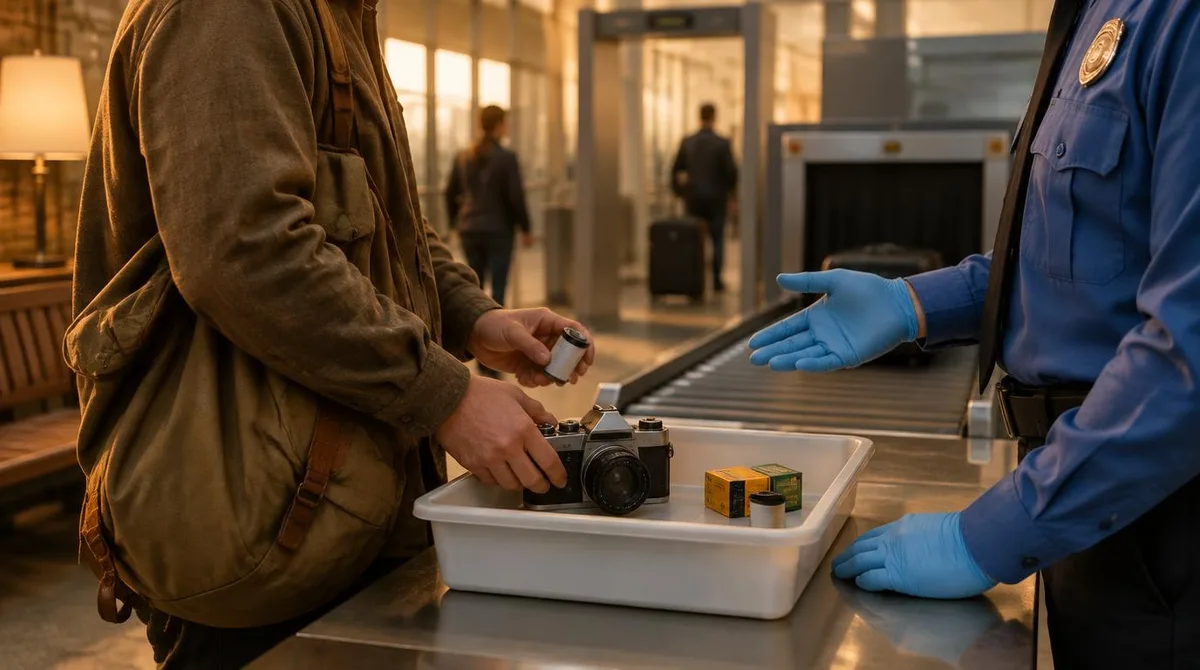
The TSA agrees with the cautious reading. Its guidance tells travelers to put undeveloped film, and cameras loaded with undeveloped film, in carry-on bags, or to carry the rolls up and ask for a hand inspection. That advice has sat on the agency's page since May 4, 2017, and the officer at the lane keeps the final call.
What X-rays actually do to a roll of film
Film does not care where extra light comes from. Wikipedia's entry on photographic film lists X-rays beside ultraviolet light and gamma rays among the exposures silver halide responds to. It also draws the practical line in one plain sentence: baggage scanners can wipe a roll's contents once its speed climbs past 800 ISO.
That is a line, not a wall. Slow, box-speed stocks stay under it for a whole trip. Fast rolls and pushed rolls sit on it or past it, and that is where the hand inspection earns its keep.
- Box-speed 100 and 400 films stay under the 800 ISO mark, where the documented damage line begins.
- Pushed film crosses the line on purpose, so those rolls deserve a hand check at every stop.
- A loaded camera counts as undeveloped film under the TSA’s guidance, so the body rides in the cabin too.
The myths worth dropping before the next flight
Three bad ideas keep making the rounds at gates, and each one fails against the record.
- Every scanner ruins every roll. The documented line sits at 800 ISO, per Wikipedia’s film entry, not at zero, so a slow roll has room.
- The checked suitcase is safer. The TSA’s guidance page says the opposite: undeveloped film belongs in carry-on bags, near the traveler who can ask for a hand check.
- Loaded cameras are exempt from the rules. The agency’s own wording covers cameras containing undeveloped film, so a loaded body gets the same cabin treatment as loose rolls.
Where the real risks sit
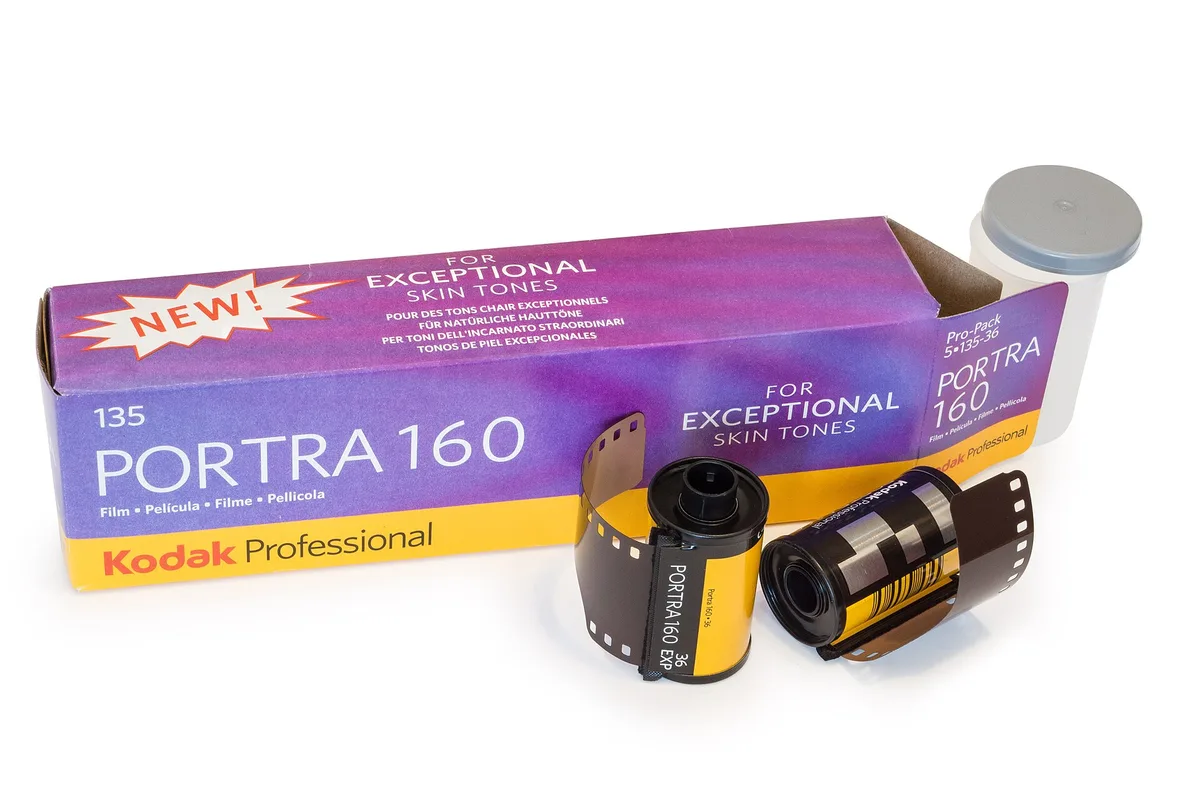
Read the two sources together and the risk map gets simple. The damage story is about speed: past 800 ISO, a baggage scanner can wipe a roll’s contents, per the encyclopedia’s description. The habit story is about control: the TSA wants film where the traveler stays with it, up in the cabin, so a hand inspection stays possible. Readers following this should also see Kodak Portra 800 in Low Light.
Speed, then, is the whole game. A carry full of box-speed stock is a carry full of rolls that sit under the line. A carry with pushed film, or anything rated above the line, changes the plan: those rolls go to an officer, not onto the belt. We covered a connected angle in Portra 400 Is the Most Forgiving Color Film You Can Buy — That's the Whole Pitch.
A calm routine at the checkpoint
The routine itself takes about a minute of planning and no special gear.
- 1. Keep every roll and every loaded camera in the carry-on, grouped in one clear pouch.
- 2. Reach the lane and tell the officer the pouch holds undeveloped film.
- 3. Ask for a hand inspection on anything at or above 800 ISO, and on anything pushed, then wait while it is checked.
- 4. If a slow roll does ride the belt, let it pass once and relax; it stays under the documented line.
- 5. Repeat the same steps on the way home, because every airport runs its own machines.
None of this needs a lead-lined bag or a special case. It needs one clear pouch, one polite sentence at the lane, and the sense to speak up before the roll disappears into the machine.
Conclusion: pack the film, then enjoy the flight
The verdict is short. Airport scanners threaten film above 800 ISO, per Wikipedia’s entry, and the TSA asks that undeveloped film ride in the cabin with hand inspection on request. A shooter carrying nothing faster than Kodak Tri-X 400 flies with small, documented risk, and push shooters fly fine too once the fast rolls reach an officer’s hands.
So pack the pouch, keep the rolls where you can show them, and spend the layover thinking about light instead of luggage. The film will land just fine, and so will the pictures.