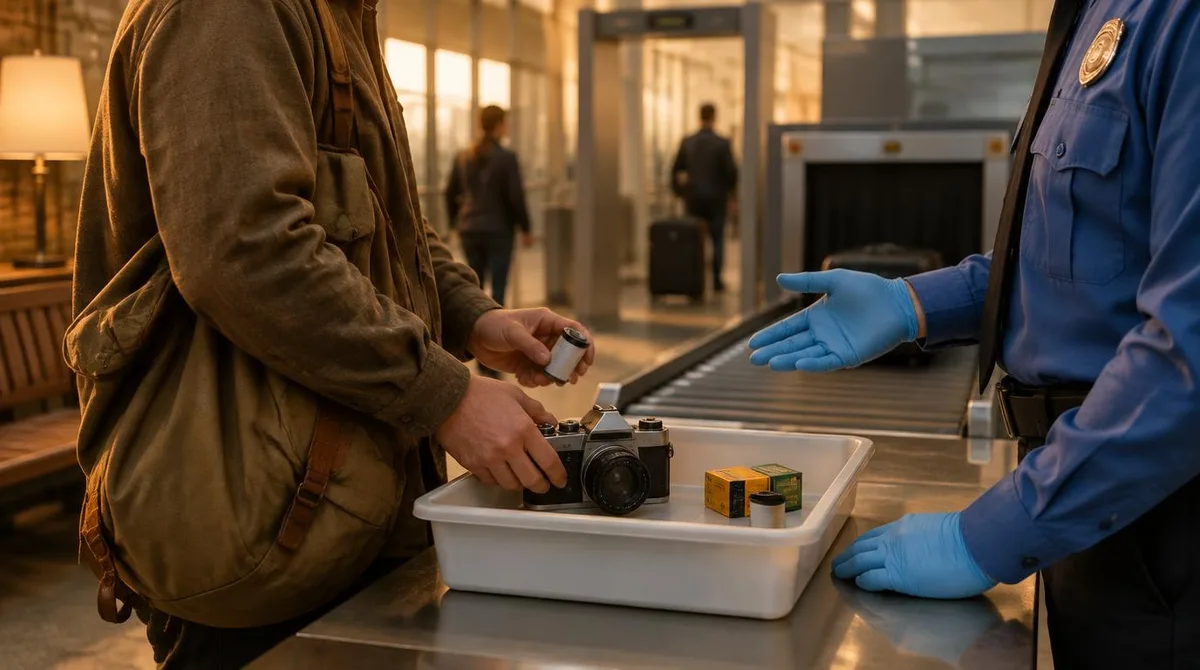
Grain is not what wrecks night film photography; exposure math is. Reciprocity failure becomes significant once an exposure runs past about 1 second, per Wikipedia’s reciprocity entry, so night work means long, planned exposures. Shooters have proved the point for a century, starting with Kodak Tri-X in 1954.
The grain excuse says fast film looks too rough after dark. The record of the genre disagrees, and it disagrees with receipts: moonlit streets, flashbulbs, and exposures measured in minutes that photographers documented as far back as the nineteenth century. We covered a connected angle in Winter Film Photography: A Seasonal Guide to Shooting Film in Harsh Winter Light.
The Grain Excuse, Answered
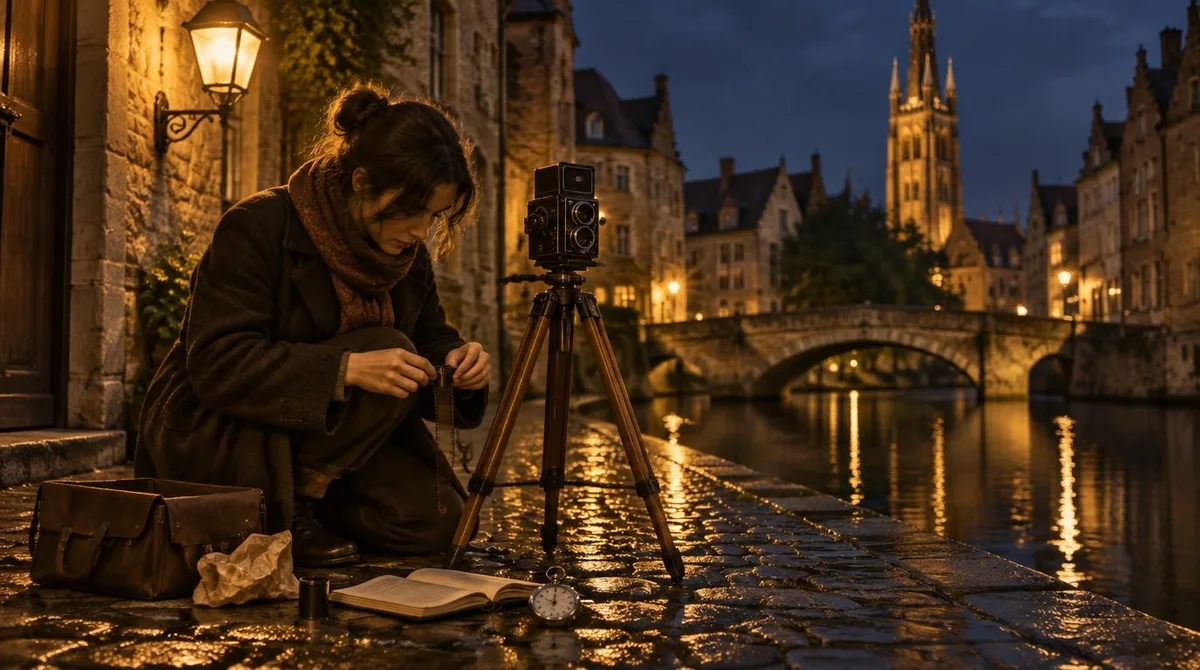
Night photography has been a recognized genre for more than a century, per Wikipedia’s night photography entry, and film built that record. Museums back the claim. The entry names Night Vision at the Metropolitan Museum of Art and Night Light, a survey organized by the Nelson-Atkins Museum of Art in 1989 that toured the country. The same entry credits faster emulsions, notably Kodak Tri-X in 1954 roll-film formats, with enabling handheld work in low light. Before that, the masters simply slowed down. Brassaï photographed Paris de nuit in 1932 with a tripod and slow film, and the book made night photography a serious artistic genre. Neither the tripod nor the slow emulsion was a defeat; both were part of the deal.
What Long Exposures Do to Film
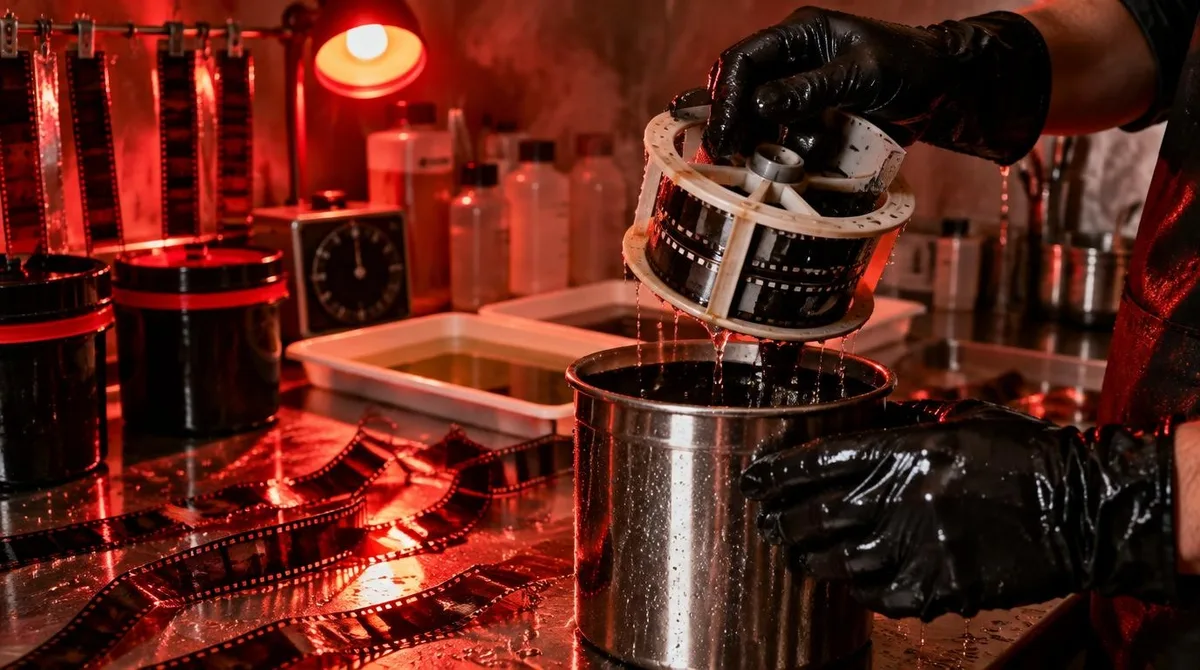
Here is the real technical wall, and it is honest work to climb. Under normal light, film follows a reciprocal trade: half the light, twice the time. Past the normal range the trade breaks down, and the time needed grows faster than the formula says. Wikipedia’s reciprocity entry puts the line plainly: the failure generally becomes significant at exposures longer than about 1 second on film, and above 30 seconds on photo paper. At half the light a shot needs, the duration must be more than doubled for the same result. Films differ, too. Some lose sensitivity fast under low light; some slow films hold their response better, per the same entry.
Lessons From the Night Shooters
The archive is full of working answers. John William Draper made the first documented successful lunar photograph on 23 March 1840, with an exposure of about 20 minutes from a New York University rooftop, per Wikipedia’s night photography entry. Bill Brandt shot his A Night in London project under wartime blackout, lit by moonlight, ambient sources, and newly developed flashbulbs. O. Winston Link staged elaborate multi-flash setups for his steam railroad pictures, work that produced Hotshot Eastbound in 1956. Weegee, by contrast, walked New York’s nocturnal underworld with fast sheet films and powerful flashbulbs, per the same account. The roots go deeper still. Paul Martin’s London by Gaslight series of 1896 worked controlled illumination on gas-lit streets and went on to influence Alfred Stieglitz’s nocturnes, per the entry.
None of them fought grain. They fought time, and they brought tools for it.
A Working Night Kit
History points to a short list, and every item earns its place.
- 1. A tripod. Brassaï’s documented method for Paris de nuit, and still the cheapest quality gain in night work.
- 2. A fast stock. Kodak Tri-X arrived in roll-film formats in 1954 and made handheld night frames possible, per Wikipedia’s night photography entry.
- 3. A flash. Brandt leaned on new flashbulbs, and Link built entire scenes from staged multi-flash arrays.
- 4. Extra time. Once an exposure passes about 1 second, add reciprocity correction rather than trusting the meter’s guess.
Conclusion: Plan the Light, Not the Grain
Night photography on film asks for patience, a steady support, and a working note of the 1-second line where reciprocity failure begins. Grain was never the obstacle; the exposures were, and they can run from several seconds to days, per Wikipedia’s night photography entry. The genre’s own record, from Draper’s 20-minute moon to Link’s staged flash, shows the same answer every time. Plan the light, respect the math, and the grain will read as atmosphere. For related coverage, see Kodak Portra 800 in Low Light.