Kentmere 400 is the cheapest serious black and white film in current production: an ISO 400/27° emulsion made in England by Harman, Ilford's parent company, at roughly $7-9 a roll as of 2025. Per Harman's datasheet it is a traditional-grain panchromatic stock, and the question it answers is what budget film has to give up. Less than you think.
What is Kentmere, and where did it come from?
The brand traces to Kentmere Photographic, a Cumbrian firm absorbed into Harman in the late 2000s; the film line was rebuilt as Harman's budget tier beneath Ilford's HP5 Plus and Delta family. The family relationship matters. Same factory, same quality control, same chemistry ecosystem — Kentmere 400 is not gray-market stock or expired mystery rolls, it is a deliberately simplified emulsion positioned to leave a price gap below the flagship.
What simplification means: a conventional cubic-grain structure rather than Ilford's more sophisticated tabular designs, and a more straightforward curve. The consequence is grain that runs coarser and contrast that comes on stronger — differences of degree, not kind, from the films costing a few dollars more.
| Spec | Value |
|---|---|
| Speed | ISO 400/27° (Harman datasheet) |
| Process | Standard black and white chemistry |
| Grain type | Conventional cubic, panchromatic |
| Maker | Harman, England |
| Rough price | $7-9 per 36 exposures, as of 2025 |
How does it handle in the field?
Like HP5's impatient sibling. Meter straight at 400 and the film behaves: honest midtones, shadows that arrive a step earlier than Ilford's, and a snappy tonal curve that gives small scenes graphic punch. Street work suits it — contrast and grain are assets in reportage contexts, and the price means a blown frame costs less than a coffee.
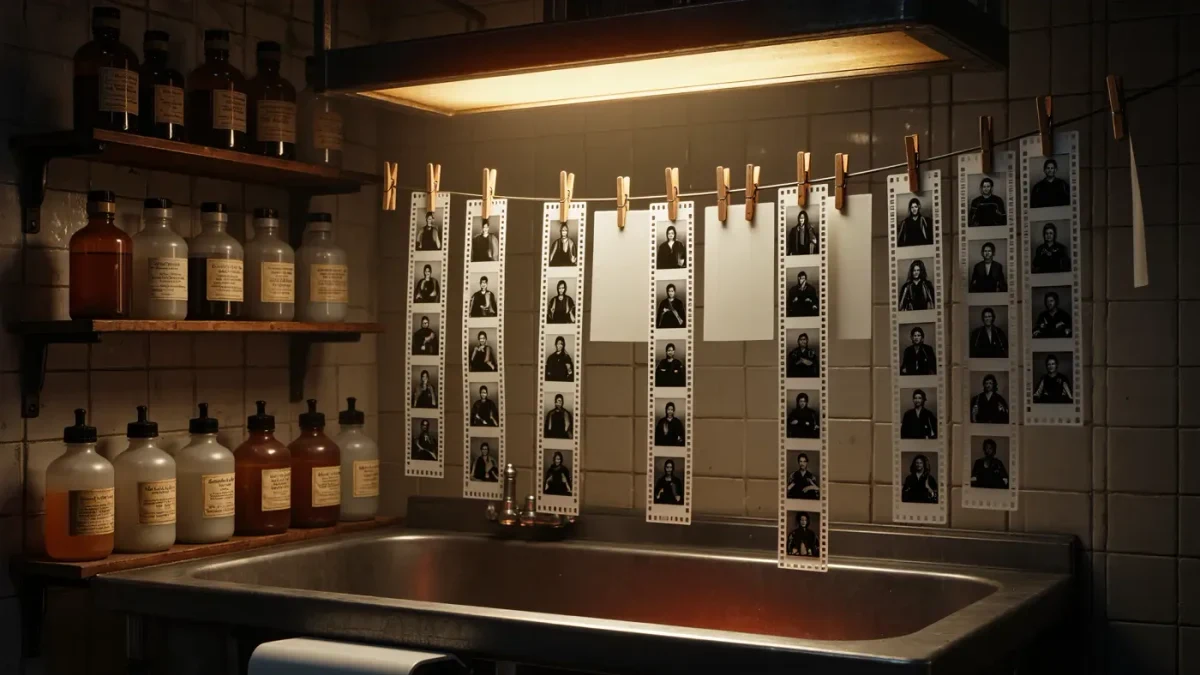
Portraits deserve a fair trial too. The film's harder contrast flatters character rather than beauty — weathered faces, workers, streets — and prints with genuine graphic presence. It is not the delicate window-light film; it is the honest reportage film, and framing it that way produces work rather than disappointment.
Lighting discipline repays effort. Open shade and overcast flatter it; harsh sun amplifies the contrast into blocked shadows and chalky highlights. And because the price invites volume, it earns a place as the film you burn learning a new camera, a new meter habit, or a new developer — the role expired supermarket stock used to play before it vanished.
How does it push?
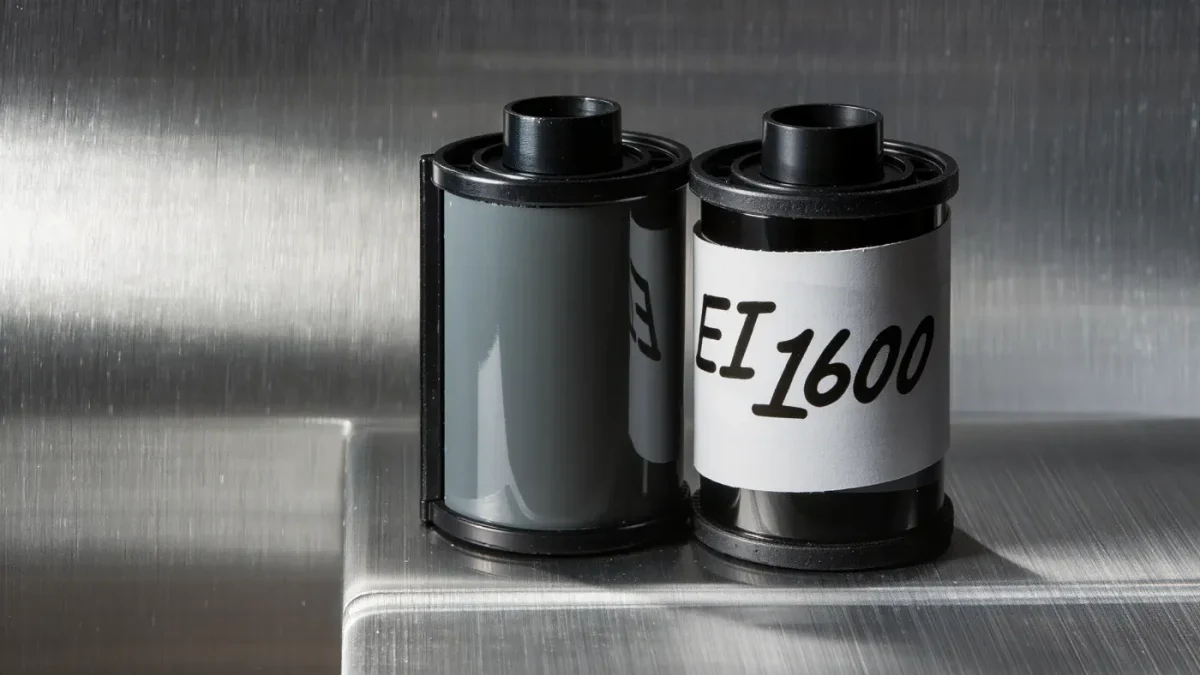
Sensibly. Harman's published development data covers pushes at least to EI 1600, and home developers report the film takes a one-stop push with ordinary dignity — grainier, contrastier, still printable. Beyond that it gets loud, but the entry cost makes experimentation cheap in every sense. Slot it into standard dilutions, follow published times, and the results are predictable enough to plan around.
Bulk practice applies here too: because the film is cheap, pushing it badly costs little, and pushing it well teaches the habit for films that matter more. A generation of home developers has learned push discipline on exactly this stock for exactly that reason.
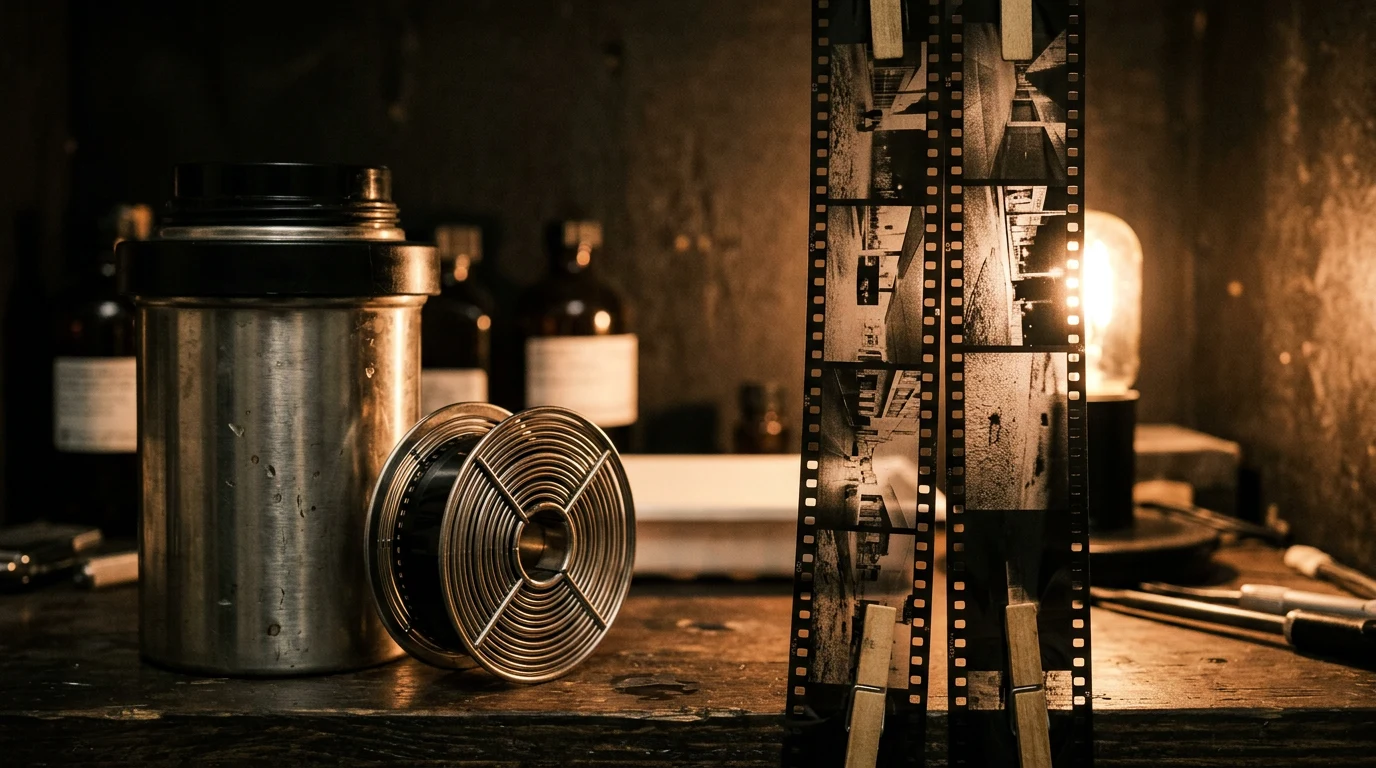
Development itself is forgiving in the way traditional emulsions are: modest agitation sensitivity, reasonable tolerance of temperature drift, dense enough negatives to scan easily. For anyone building a home darkroom habit, those properties matter more than a few lines of resolving power.
What do shooters say about it?
The published consensus since the current formulation appeared has been remarkably consistent: Kentmere 400 is real film — capable, consistent, honest — with the rough edges showing at enlargement and in delicate highlight separation compared against HP5 Plus. Reviews frame it as the training-film bargain of the current era, and the recurring compliment is precisely that it stops feeling cheap once prints exist.
Its deeper value is economic. Every serious film photographer learned on some inexpensive stock, and mass-market cheap film has spent a decade disappearing. Documenting everyday surroundings has always been photography's democratic tradition — the National Archives' catalog, including the Documerica project's documentary record of 1970s American life, shows what volume plus modest means can accumulate into.
Kentmere 400 versus HP5 Plus: the honest comparison
The comparison everyone asks for, from the same factory. HP5 Plus costs a few dollars more per roll and buys refinement: finer grain structure, longer tonal legs in the highlights, better push behavior, and the margin of sophistication a professional negative earns its keep on. Kentmere 400 gives the same speed, honest tonality, and results that distinguish themselves mainly at enlargement and in the last stops of highlight detail.
Whether that gap matters depends on output. Scanned at ordinary resolutions and shared at screen size, the two films are closer than the price suggests; printed at 11x14, HP5's advantages become plain. The rational split many shooters land on: Kentmere for volume and practice, HP5 for work that will be printed large or shown seriously.
What Kentmere genuinely is not: a different film pretending. It is the same chemistry tradition, the same care in coating, the same reliability — a deliberate step down in complexity, priced as such. Shooting it does not feel like economizing; it feels like shooting film.
How do you build a cheap practice system around it?
Bulk rolling multiplies the value. Hundred-foot rolls of Kentmere exist where the per-roll math drops dramatically, and a one-time bulk-loader purchase repays itself within the first canister for anyone shooting steadily. Cassettes, a changing bag, and ten minutes of patience turn a weekend into a month of shooting stock.
Developer discipline beats developer shopping. Pick one standard developer, one published time from Harman's chart, and shoot a dozen rolls before changing anything — the consistency teaches your eye far more than chemistry tourism does. The money saved belongs in volume, which is where learning actually happens.
Who should shoot it?
- Students and beginners: maximum learning per dollar while stock lasts.
- Street and reportage shooters: contrast and grain read as style, not defect.
- Home developers: predictable, forgiving, and cheap enough to standardize on.
- Skip it if you need fine grain, delicate highlight control, or exhibition-grade tonality — HP5 Plus and the Delta family deliver those for a few dollars more.
The verdict: Kentmere 400 is not a compromise; it is a choice to spend on volume instead of polish. At roughly $7-9 a roll as of 2025 it is the cheapest way to shoot current-production black and white from a major manufacturer — and the gap between it and the flagship films is measured in refinement, not capability. In a hobby whose costs keep climbing, that gap — a few dollars, a few lines of grain — is the cheapest tuition left. Shoot it until the film's habits become your habits, then decide whether the flagship prices still matter.