Kodak Gold 200 is the best argument in film against expensive film: a warm, forgiving daylight negative that flatters golden-hour skin for roughly $9-11 a roll as of 2025 at major US retailers. Rated ISO 200/24° per Kodak's datasheet, it has quietly carried family photography for decades.
What does Gold 200 actually look like on a scan?
Warm. Not subtly warm — aggressively, unmistakably warm, with amber highlights and reds that lean toward orange. Kodak's own product description leads with «warm, vibrant colors,» and the scans back the claim: yellows saturate hard, greens drift olive-gold in afternoon sun, and blue skies take on a slightly teal cast in shade. Skin tones read healthy and tan even when nobody in the frame is.
Contrast sits in the middle of the consumer-film range. Highlights roll off gently rather than clipping, which is why backyard portraits survive mixed sun and shade. Whites are cream rather than paper-white, so neutral product work and architecture are not its strength — that is a character choice, not a defect.
| Spec | Value |
|---|---|
| Speed | ISO 200/24° (Kodak datasheet) |
| Color balance | Daylight, 5500K |
| Process | C-41 |
| Formats | 35mm; 120 since Kodak's 2022 reintroduction |
| Rough price | $9-11 per 36 exposures, as of 2025 |
How much light does ISO 200 really need?
It needs daylight, in the broadest sense. Gold 200 sings from an hour after sunrise to an hour before sunset, stays pleasant under overcast, and holds its color in deep shade if you meter carefully. Indoors it wants flash or fast glass — at ISO 200, a dim living room at f/2.8 pushes shutter speeds toward blur, and the film's palette goes muddy when starved.
Flash pairing deserves a mention: Gold 200 was engineered for the consumer cameras that flashed everything. On-camera flash at 200 produces the classic backyard-party look — bright faces, dark backgrounds, saturation cranked by the burst. It is unfashionable and it is exactly what the film was born to do.
The sweet spot usage: outdoors with people. Landscapes at midday, with hard sun and empty skies, expose its tendency to wash pale blues toward cyan. Morning and evening are where the film's built-in golden bias works with the light instead of fighting it.
How badly can you miss the exposure?
Like most negative films, Gold 200 forgives overexposure far more readily than underexposure. A generous extra stop usually just adds warmth and density; a lost stop empties the shadows and flattens the palette into a beige ghost of itself. Meter for the shadows when in doubt, and let the highlights take care of themselves — that rule of thumb has saved more rolls of Gold than any camera bracket.
Pushing works in a pinch. Shooting it at EI 400 and telling the lab is common practice; the penalty is contrast and slightly huskier grain, which suits the film's snapshot personality anyway. Past that, the curve runs out of dignity.
What do shooters and labs say about it?
The long-running consensus in published lab guides files Gold 200 under «warm and punchy,» and community reviews keep returning to the same shorthand: it is golden hour in a can, even at noon. The complaints are the compliments inverted — too orange under tungsten, too warm for neutral skin rendering, not the film for anything that demands accurate color.
There is also a quieter argument for it. Gold 200 is one of the few films still cheap enough to shoot casually, and casual shooting is how people actually get good at film. The negatives that matter in fifty years will mostly be of people, and the Library of Congress preservation guidance on caring for family photographs exists precisely because boxes of drugstore Gold 200 prints became family history.
Where does Gold 200 sit in Kodak's lineup?
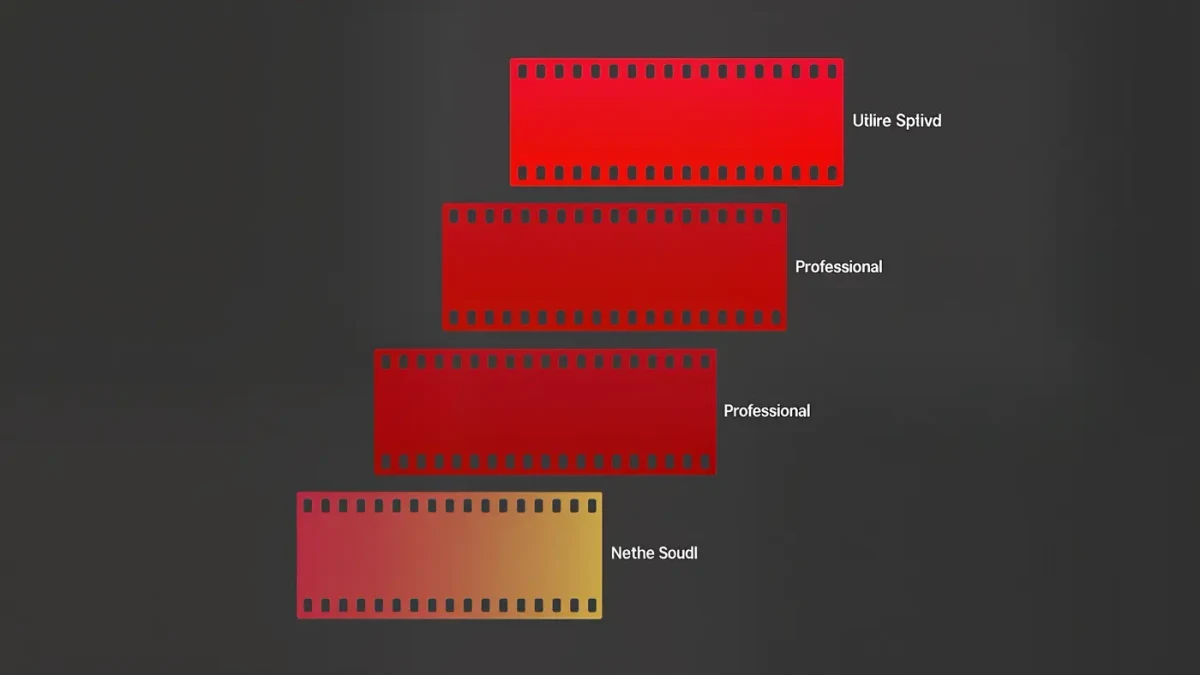
Think of Kodak's color shelf as a ladder of intentions. Gold 200 is the bottom rung on purpose: cheapest, warmest, most casual. Ultramax 400 sits one rung up for speed — grainier, a touch cooler, built for flash snapshots and gloom. Ektar 100 occupies the saturation corner; the Portra family owns the professional middle, priced accordingly.
The interesting question is not which film is best but which failure mode you prefer. Miss exposure on Gold and you get amber mush; miss on Portra and you get expensive neutrality; miss on Ektar and you get blue shadows with attitude. Gold's failures are at least warm, which is more than can be said for most cheap mistakes in photography.
That tolerance for error explains the film's second life among serious shooters. In an era when a roll of professional film costs what a restaurant dinner used to, Gold 200 remains the stock you load for the walk home, not just the vacation — and every published film guide since prices began climbing has kept it on the shortlist for exactly that reason.
What habits get the best out of it?
Expose for faces, not for skies. Gold 200's curve protects highlights well enough that a bright background can blow out gracefully, while underexposed faces go muddy fast — so bias metering toward whatever has a pulse. In backlit situations, walk close, meter the skin, step back, shoot.
Keep it fresh and cool. Consumer film is not built for years of trunk storage; a roll that has spent a summer in a glovebox shifts and fogs. Buy from retailers with turnover, refrigerate what you will not shoot within a few months, and let cold film warm up before loading to avoid condensation.
Scan warm, grade lightly. Because the film's palette is already an aesthetic decision, heavy correction in post simply produces a worse version of Portra. Let the amber be the point; if a frame demands neutrality, the honest answer was a different film.
Who should shoot it — and who should skip it?
- Beginners: the best-value film on the shelf for learning metering without financial dread.
- Family and travel shooters: fast handling, warm rendering, easy scanning, easy dev anywhere.
- Golden-hour portraitists on a budget: the amber bias does half the color grading for free.
- Skip it if you need neutral color, low light, or fine-grain enlargement — Ektar, Portra, or a faster stock serve those jobs better.
The verdict: Kodak Gold 200 is not a compromise; it is a decision. At roughly $9-11 a roll as of 2025, it delivers a look people associate with memories, in a format every lab on Earth still runs through C-41 daily. Buy it by the five-pack, shoot it shamelessly, and let the warmth do the talking. The look arrives on schedule because it was engineered to: consumer film built for everyone, still good enough for people who care.