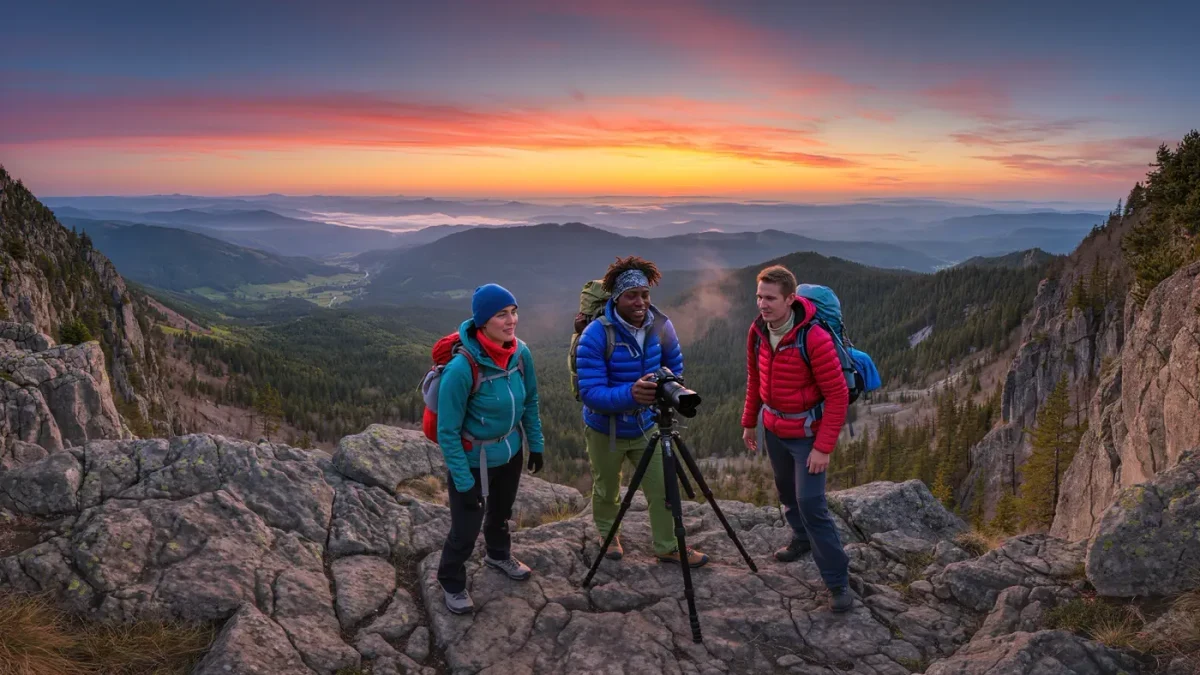
Kodak Ektar 100 is the loudest color negative film Kodak makes — marketed since its 2008 launch as the world's finest-grain color negative, rated ISO 100/21° per Kodak's datasheet, and sold at roughly $10-13 a roll as of 2025. It exists for one purpose: maximum color, delivered in C-41 with the scanning ease of ordinary negative film.
How vivid is it, really?
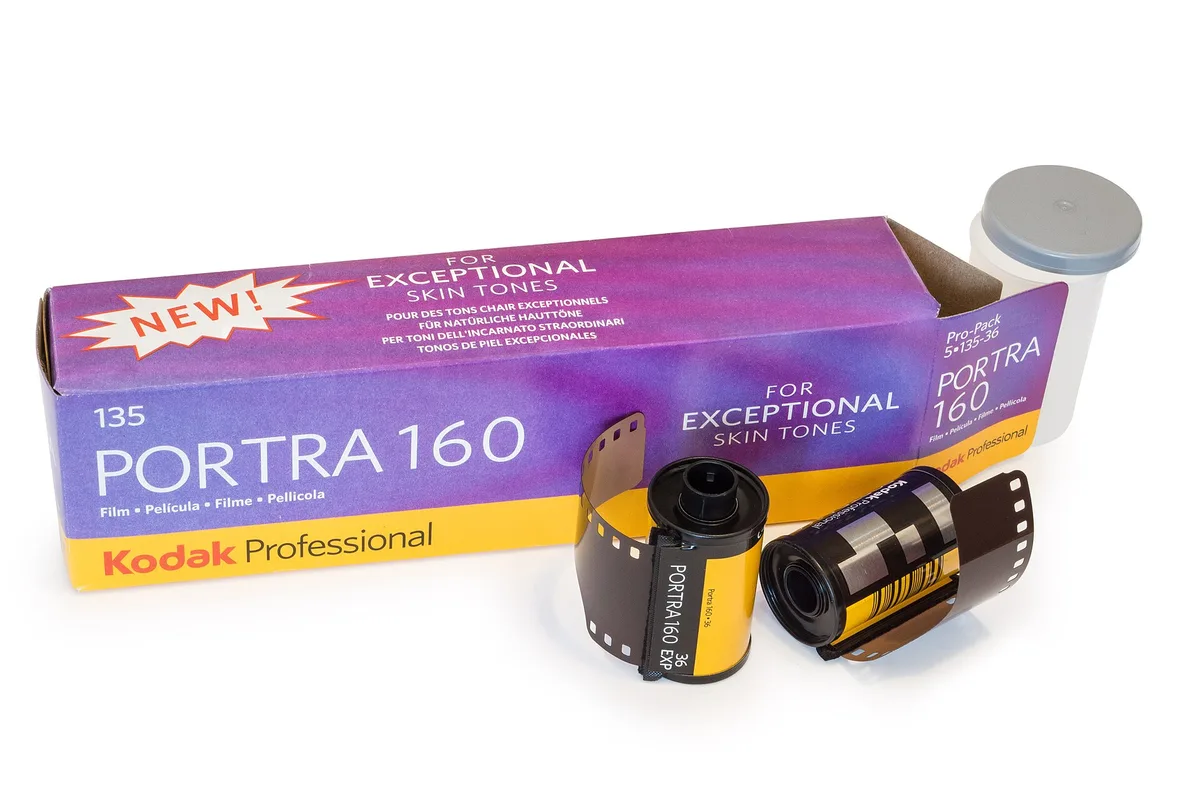
Vivid enough that Kodak's own positioning leans on saturation first and grain second. Reds press toward the edge of the negative-film gamut, blues go dense and clean, and greens hold saturation instead of drifting olive the way consumer films allow. Side by side with Portra — engineered neutral for skin — Ektar reads like Portra after a grading pass: same underlying Kodak smoothness, chroma turned hard right.
The grain claim holds up in practice. Ektar scans smooth at sizes where 200- and 400-speed films show texture, which matters because saturation magnifies grain visibility — coarse grain plus vivid color reads as noise, and Ektar escapes that trap. Architecture, product photography, and big scenic prints are its natural home for exactly this combination.
| Spec | Value |
|---|---|
| Speed | ISO 100/21° (Kodak datasheet) |
| Color balance | Daylight, 5500K |
| Process | C-41 |
| Positioning | Most saturated, finest grain color negative (Kodak) |
| Rough price | $10-13 per 36 exposures, as of 2025 |
How much exposure discipline does it want?
More than Portra, less than slide film. Kodak publishes no latitude window for Ektar the way professional datasheets once did, and the practical guidance that has accumulated since 2008 treats it as a film that prefers correct exposure: underexpose and the shadows turn blue-black and grainy; overexpose and the saturation that defines it goes nuclear. A diligent stop of grace exists in the highlights, but this is not the meter-and-pray stock its Portra sibling is.
Pushing deserves a firm paragraph: generally, don't. Ektar's saturation and contrast climb steeply with pushed development, and the results read as harsh rather than dramatic; the film is slow by design, and the honest answer to low light is faster stock. Shoot it in the light it was built for and everything about it improves.
Light matters as much as numbers. Hard sun makes Ektar's palette punch like slide film; flat overcast leaves it capable but muted, wondering why it was loaded. It is a film with a favorite weather, and the favorite is dramatic.
What about skin tones?
The famous caveat. Ektar's warmth plus its saturation pushes pale skin toward ruddy and can push rich complexions redder than life — a trade-off repeated across published reviews since launch and acknowledged even by its fans. It is not a portrait film by design; Kodak built Portra for that job. Ektar photographs people the way a wide-angle lens photographs rooms: accurately, dramatically, and not altogether flatteringly.
Workarounds exist — careful metering on faces, open shade, restrained scanning — and some shooters make the look theirs deliberately. But choosing Ektar for a portrait session is choosing color intensity over skin neutrality as a stated priority.
Open shade is the workable compromise. Without direct sun the saturation engine idles down, and fair skin in particular photographs plausibly — a known technique among shooters who want Ektar's blues and greens in frames that include people. It is still a decision to work around the film, which tells you the priority order.
What do shooters say about the results?
The consensus since 2008 has been stable: Ektar is the landscape and travel negative for people who miss slide film's punch but not its exposure tyranny. Reviews consistently praise the grain-to-saturation ratio and the way big prints hold their impact at distance. The recurring complaints are skin rendering, a slightly cool shadow cast in mixed light, and the sense that in flat light the film has nothing to amplify.
For a sense of what vivid, faithful color at extreme fidelity looks like when budget is no object, NASA's image and video library archives decades of Kodak-film photography from the Apollo era forward — a reminder that saturation and accuracy have always been in tension.
Ektar versus the rest of the color shelf
Against Gold 200, the division is temperature: Gold's amber warmth against Ektar's clean punch, snapshot nostalgia against postcard intensity. Against Portra, it is purpose: Portra renders people faithfully and scenery politely; Ektar renders scenery brilliantly and people rudely. Against Velvia, it is risk: the slide film goes further into saturation but charges in exposure fragility and processing scarcity.
In price terms as of 2025, Ektar sits a dollar or two above the consumer films and well below Velvia — the middle of the shelf, priced as a semi-premium choice. That positioning is honest: it is the film for photographers who want most of the drama without the ceremony.
The blue-sky test tells the story fastest. Shoot the same sky on Gold, Ektar, and Velvia: Gold goes warm-cyan, Ektar goes dense cobalt, Velvia goes something almost moral in its intensity. Ektar is the rationalist's choice of the three.
What scanning and exposure habits suit it?
Expose for the highlights you care about. Ektar's saturation amplifies whatever the negative holds, so blown highlights bloom into color fringes rather than clean white; bias exposure toward correct-and-slightly-over rather than under, and protect skies with careful metering or a gradual approach.
Scan with restraint. The film already delivers its maximum color; scanning suites that auto-boost vibrance push Ektar into caricature within seconds. Neutral scans, mild contrast shaping, and honest saturation let the emulsion do the talking — it was engineered to need no help.
Pair it with a polarizer for the full effect. Stripping glare from foliage and glass deepens Ektar's already dense colors into territory people mistake for slide film — the single most effective accessory for this emulsion.
Who should shoot it?
- Landscape and travel shooters: the strongest saturation argument in negative film.
- Architecture and product photographers: fine grain plus dense color holds up in reproduction.
- Slide-film émigrés: Ektar scratches the Velvia itch with C-41 tolerance.
- Skip it if people are your primary subject, light is flat, or you want push headroom — Portra and faster stocks cover those cases better.
The verdict: Ektar 100 is a one-decision film. Commit to color as the subject — sun on rock, paint on steel, dye on fabric — and it repays roughly $10-13 a roll as of 2025 with the most intense clean palette in C-41. Point it at faces in flat light and you have simply bought the wrong film. Point it at paint, rock, foliage, and hard sun — the subjects it was engineered for — and a single frame explains the purchase better than any guide.